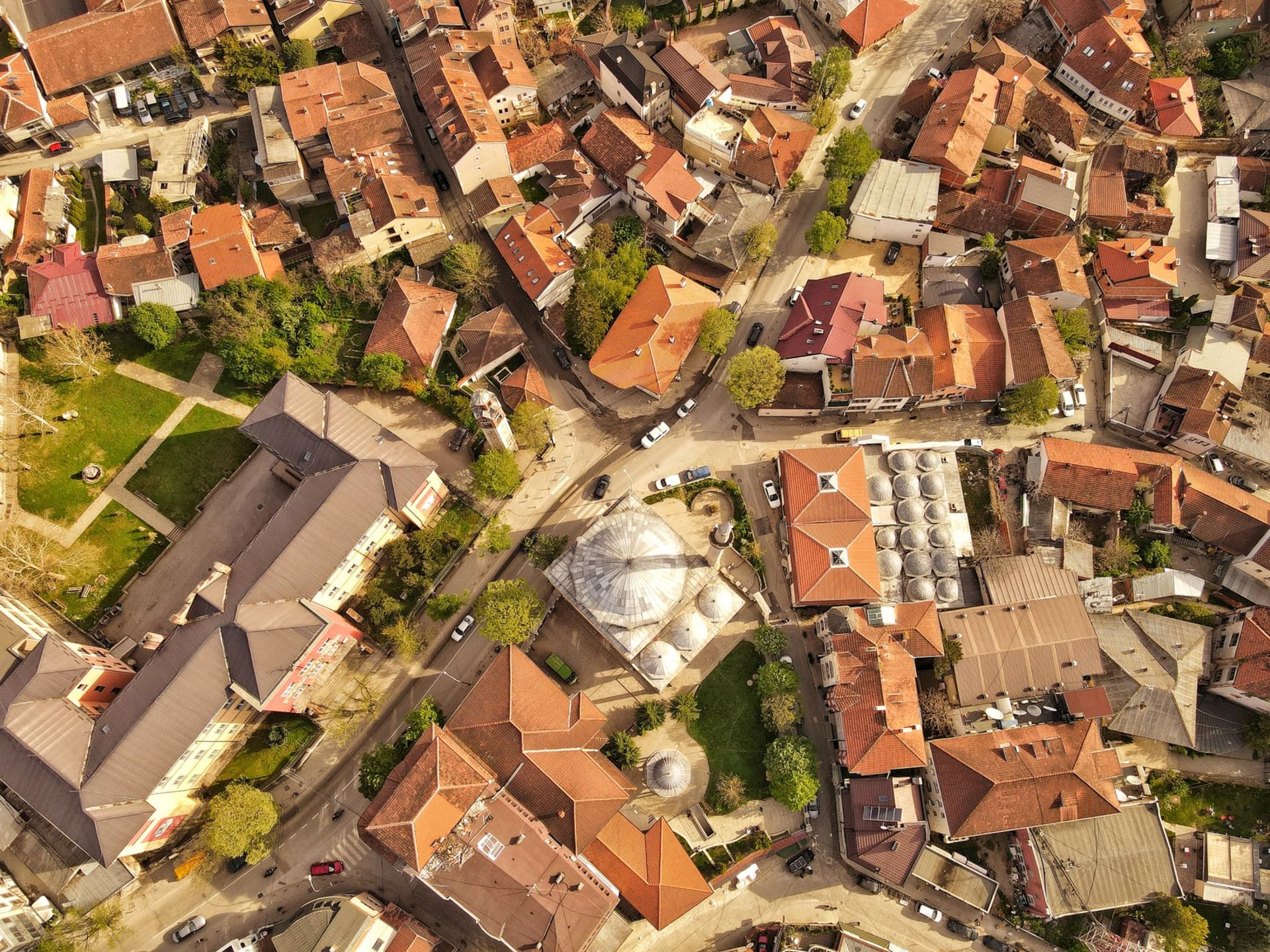
Peja
"I walked from the Patriarchate to the bazaar in fifteen minutes and crossed about six centuries."
I arrived in Peja by bus from Pristina and walked from the terminal toward the old bazaar entirely by smell — wood smoke and roasting peppers and the diesel sweetness of the buses turning in the square. The city sits at the mouth of Rugova Canyon, which means it has this dramatic geological backdrop: the limestone walls rearing up behind the rooftops like a standing wave. You become aware of the mountains very quickly here. They are not in the distance. They are at the end of every street that runs west.
The Old Bazaar of Peja — the Çarshia — is one of Kosovo’s finest, which is saying something in a country where the Ottoman bazaar tradition survived when so much else did not. The lanes are covered with a timber-framed canopy that creates a dappled, shifting light even in the middle of the day. Coppersmith workshops sit alongside tailors and cobblers and a coffee-roaster whose bags of beans perfume the whole quarter. I spent an hour talking to a man who makes traditional Albanian fila hats — the white felt pillbox caps you still see older men wearing on market days. He had been making them in the same shop for thirty years and had opinions about the quality of the felt that I had no way to verify but completely believed.

The Patriarchate of Peć sits about two kilometres from the bazaar, at the canyon’s mouth, surrounded by high walls and old walnut trees that make the approach feel genuinely ceremonial. This is a UNESCO World Heritage site and the historical seat of the Serbian Orthodox Patriarchate — three interconnected medieval churches built between the 13th and 14th centuries, their interiors covered in Byzantine frescoes whose colours have survived the centuries with unsettling vividness. Even arriving as an outsider with no particular stake in the Orthodox Christian tradition, I found the candlelit interior overwhelming. The faces in the frescoes look back at you with an attention that the centuries have not dulled.
The monastery is maintained by Serbian Orthodox nuns who still live within the compound, and the visit requires appropriate dress and a certain degree of quiet. I watched a group of Serbian pilgrims arrive while I was there — three minibuses, elderly women mostly, who crossed themselves at the gate and moved through the churches with the purposeful calm of people who have been making this journey their whole lives. There was something in that calm that I found I had been wanting to see.

Back in the city, the bar life runs younger and louder than Prizren — less refined but more unselfconscious about it. The café conversations turn frequently to Kosovo’s future: recognition, status, the European question. People here want to discuss it. They are not tired of the subject; they are still in the middle of it. There is something clarifying about being in a place where the large questions have not yet been filed away as settled.
When to go: April through October for the full canyon and mountain experience. The Rugova mountains peak in beauty in June and September. Peja’s Jazz Festival each summer takes over the old bazaar area with an intimacy that large festival venues cannot replicate. Avoid January and February, when the canyon road can close after snowfall.