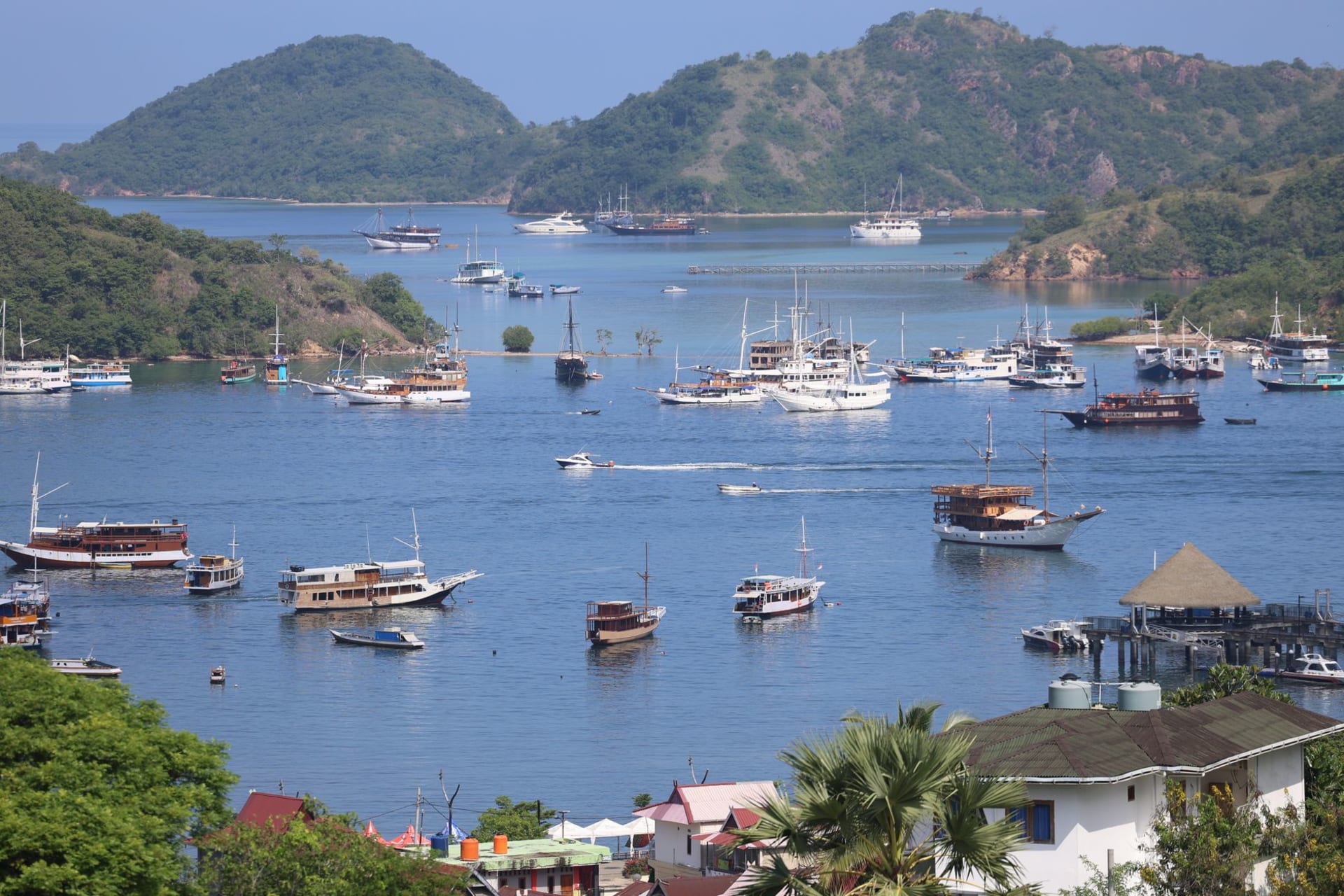
Labuan Bajo is the kind of town that has been discovered recently enough that you can still see both versions of it at once: the original fishing settlement, with its morning fish market and workaday docks and old men repairing nets in front of houses that have been there for generations, and the new layer that has been placed over it — the dive shops, the guesthouses painted in pastels, the rooftop bars with their identical views of the bay. Both versions are real and neither cancels the other out. I spent an evening at the fish market buying grilled skipjack wrapped in newspaper from a woman who has been selling there since before Komodo became a national park, and the next evening watching the sun go down from a bar built on stilts over the water. The town contains multitudes.
I arrived off a propeller plane from Bali that banked low over the bay before landing, giving everyone on the left side a sudden view of the islands we’d be spending the next week on. The bay is something that photographs badly: too much water, too many islands, too wide a scale for a phone lens to do anything useful. From the air it made sense — a cluster of volcanic shapes rising from improbably blue water, connected by channels you could navigate in a small boat if you knew where the currents ran.
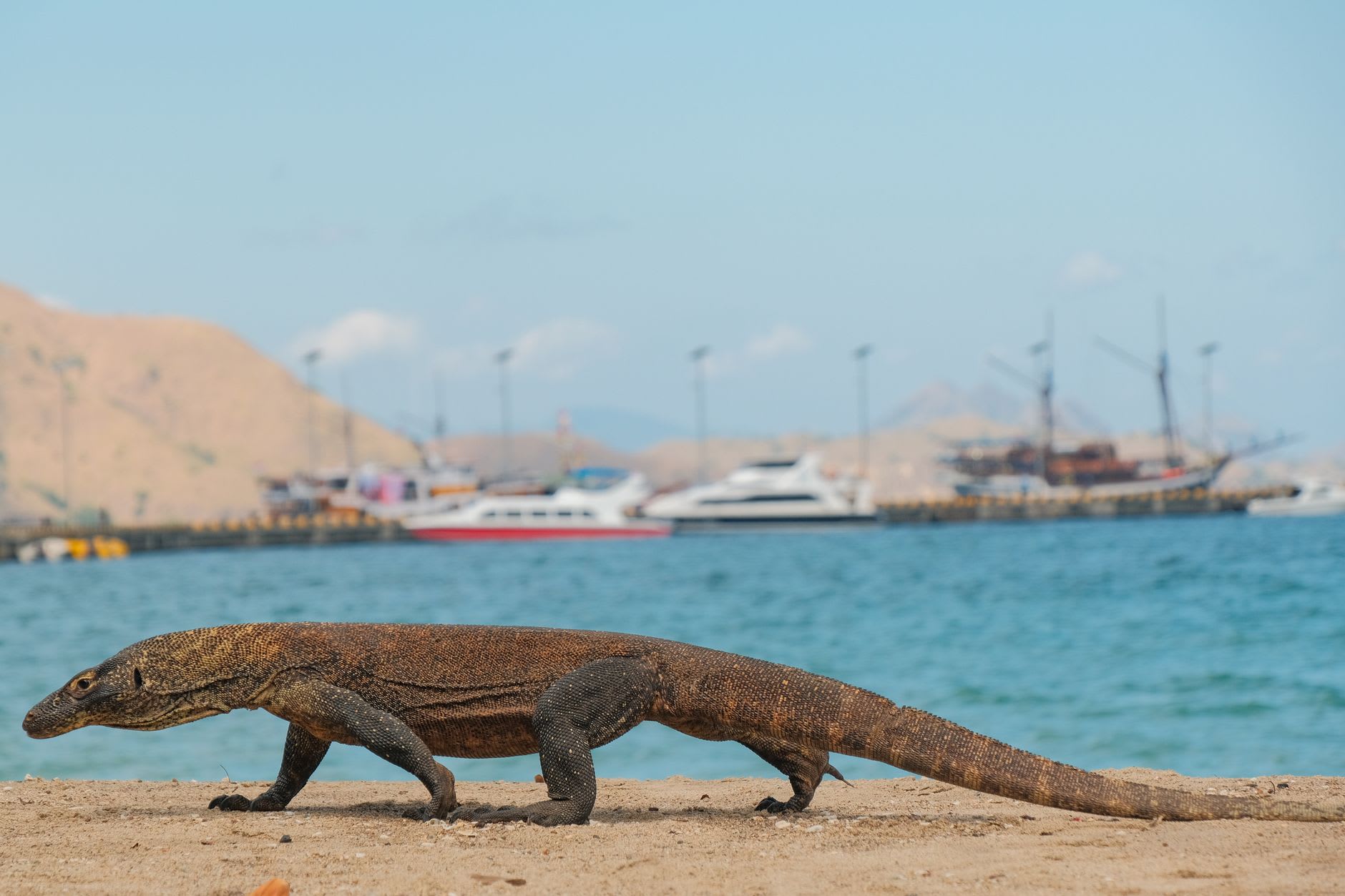
The main street runs along the waterfront and holds most of what you need: dive operators ranging from budget operations with slightly tired equipment to serious professional outfits with proper safety protocols and knowledgeable guides. The difference matters — Komodo diving involves real currents and real depth, and I spent an afternoon visiting three shops before booking, asking each the same questions about dive-to-deco ratio and emergency oxygen protocols. The better operators answer these questions with specificity. The weaker ones offer you a discount instead.
Food in Labuan Bajo is better than it has any right to be for a town of this size. A warung called Bu Elly near the market has been cooking Flores seafood since the 1990s — the grilled fish comes with a sambal that is built from local peppers and makes your eyes water slightly in a way that is pleasant, not alarming. Down the main strip, a place run by a family from Sulawesi does ayam taliwang, the fiery grilled chicken from Lombok, that I ate every other day. In between, a cafe above a dive shop serves proper Indonesian coffee — kopi tubruk, thick and sweet, the grounds settling while you talk — that served as the framework for every conversation I had about where to go next and what to do first.

The sunsets are the shared ritual. Every evening around five-thirty, the population of the town’s guesthouses migrates toward the waterfront or up to the hillside viewing points and watches the light go. The islands to the west catch it first, turning purple and gold before the sky does. The fishing boats that have been out since before dawn come back through the gold water. A rooster crows from somewhere in the lower part of town, apparently without reference to the time of day. The coffee grows cold in your hand.
When to go: April through November for the most reliable boat days and calmest diving conditions. The airport has flights from Bali daily via the main carriers; book ahead in peak season (July-August) when liveaboard berths and good guesthouses fill up fast. Labuan Bajo has enough to justify two days in town before heading out on the water — the market, the evening walks, the reconnaissance dive through the dive shops.