Asia
Komodo Island
"I came for the dragons and stayed for the water — the most alive ocean I have ever swum in."
The first dragon I saw was sunbathing on the wooden dock at Loh Liang, twenty meters from the ranger station, as indifferent to me as a cat on a warm windowsill. It was enormous — nearly three meters from snout to tail — and it smelled faintly of carrion, which makes sense when you understand what it does for a living. A ranger walked me past it with a forked stick, not as a prop for tourists but as actual protocol. This is still a functional wilderness. The dragon could outrun me over short distances. The whole place felt less like a national park and more like a negotiation.
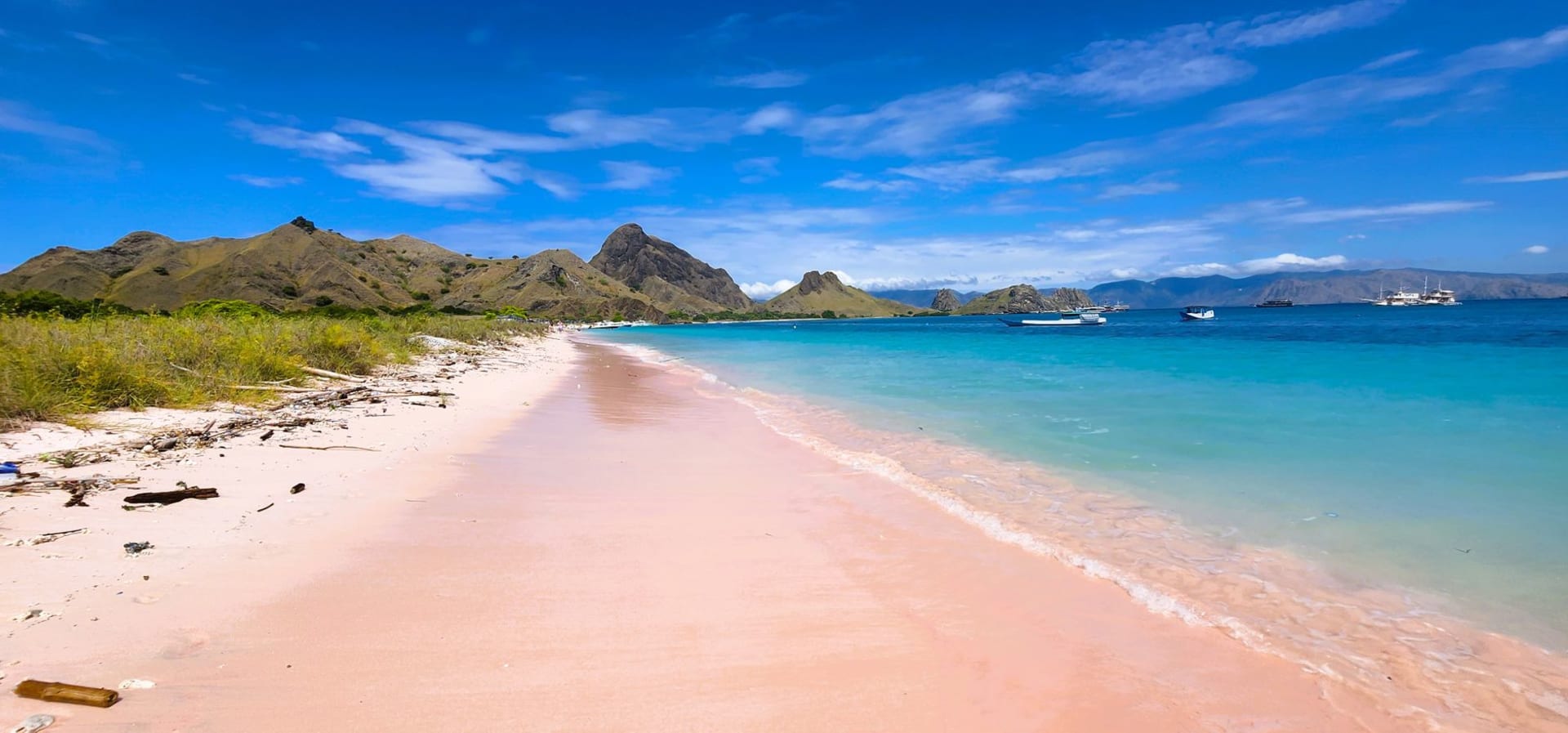
Komodo National Park spans three major islands — Komodo, Rinca, and Padar — plus several dozen smaller ones, and the dragons are only part of the story. The landscape itself is almost hallucinatory: dry savanna hills the color of straw, ringed by water that shifts between turquoise, jade, and deep indigo depending on the depth. The famous pink beach gets its color from crushed red coral mixed into the white sand, and it is real — not a filter, not an exaggeration. I sat there at six in the morning before any other boat arrived and ate a rice cake I had bought the night before in Labuan Bajo, and I genuinely could not decide which direction to look.
The diving and snorkeling here operate on a different level from anything else I have done in Southeast Asia. The currents around Komodo are strong and cold, which is exactly why the underwater life is so extraordinary — nutrients get pulled up from deep water, feeding everything from pygmy seahorses to manta rays to whale sharks. I spent a morning drifting through a channel at Crystal Rock watching a school of jackfish move like a single silver thought. A manta ray the size of a dining room table turned lazy circles beneath me. I have dived in the Maldives, in Raja Ampat, in the Yucatan. This was different. This was wilder.
When to go: April through November is the dry season and offers the calmest seas and best visibility underwater. The peak manta ray season runs from December to March, when the northwest monsoon brings plankton-rich water — but seas can be rough and some boats won’t go out. May and June hit the sweet spot: dry, clear, and less crowded than August.
What most guides get wrong: They present Komodo as a day-trip from Bali, which is technically possible and genuinely wrong. You need to fly into Labuan Bajo on Flores, spend at least two nights on a liveaboard or local boat, and go at dawn before the tour groups. The dragons are secondary to the ocean. Most people leave without diving and miss the entire point of the place.