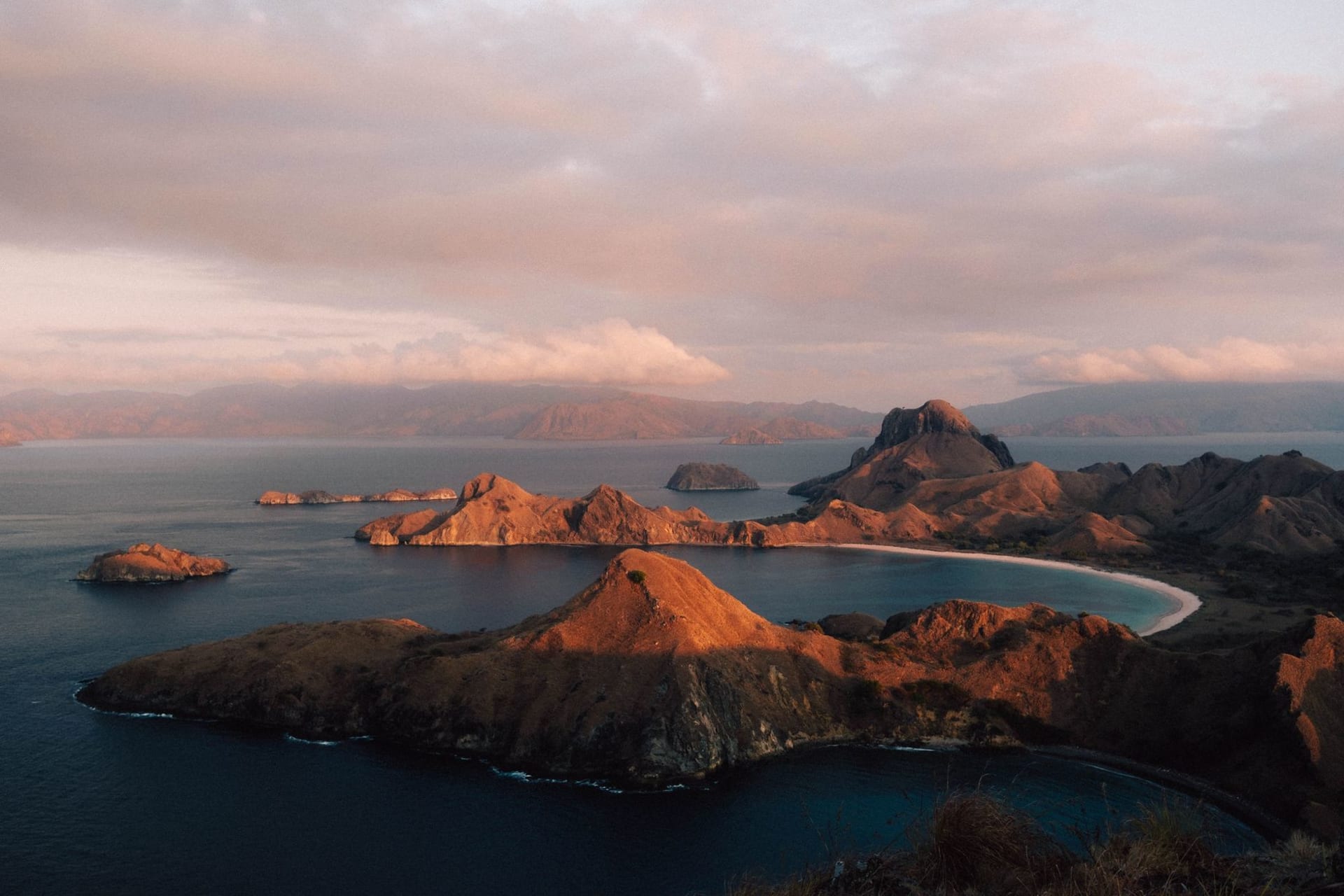
Gili Lawa Darat
"From the top of Gili Lawa Darat, the whole archipelago spread out like something a geographer once dreamed."
We anchored off the southern beach of Gili Lawa Darat at five-thirty in the morning, which the dive master explained was necessary if we wanted to reach the summit before the heat made the climb unpleasant. This was accurate. We were on the dinghy by five-forty, stumbling up a dark beach with headlamps on, and the trail began immediately at the treeline — a narrow path of loose volcanic rock that cut straight up the hillside without regard for switchbacks or mercy.
The climb takes twenty to thirty minutes depending on your pace. The trail is steep and the rock gives underfoot, and in the dark the headlamps illuminated about two meters of ground in front of each foot, which turned out to be exactly enough. I could hear the sea on both sides of the island from partway up — the strait to the east, the bay where the boat was anchored to the west — and then as I climbed higher the wind came in from the south and brought with it the smell of salt and something floral I couldn’t identify, a night-blooming plant somewhere on the hillside.
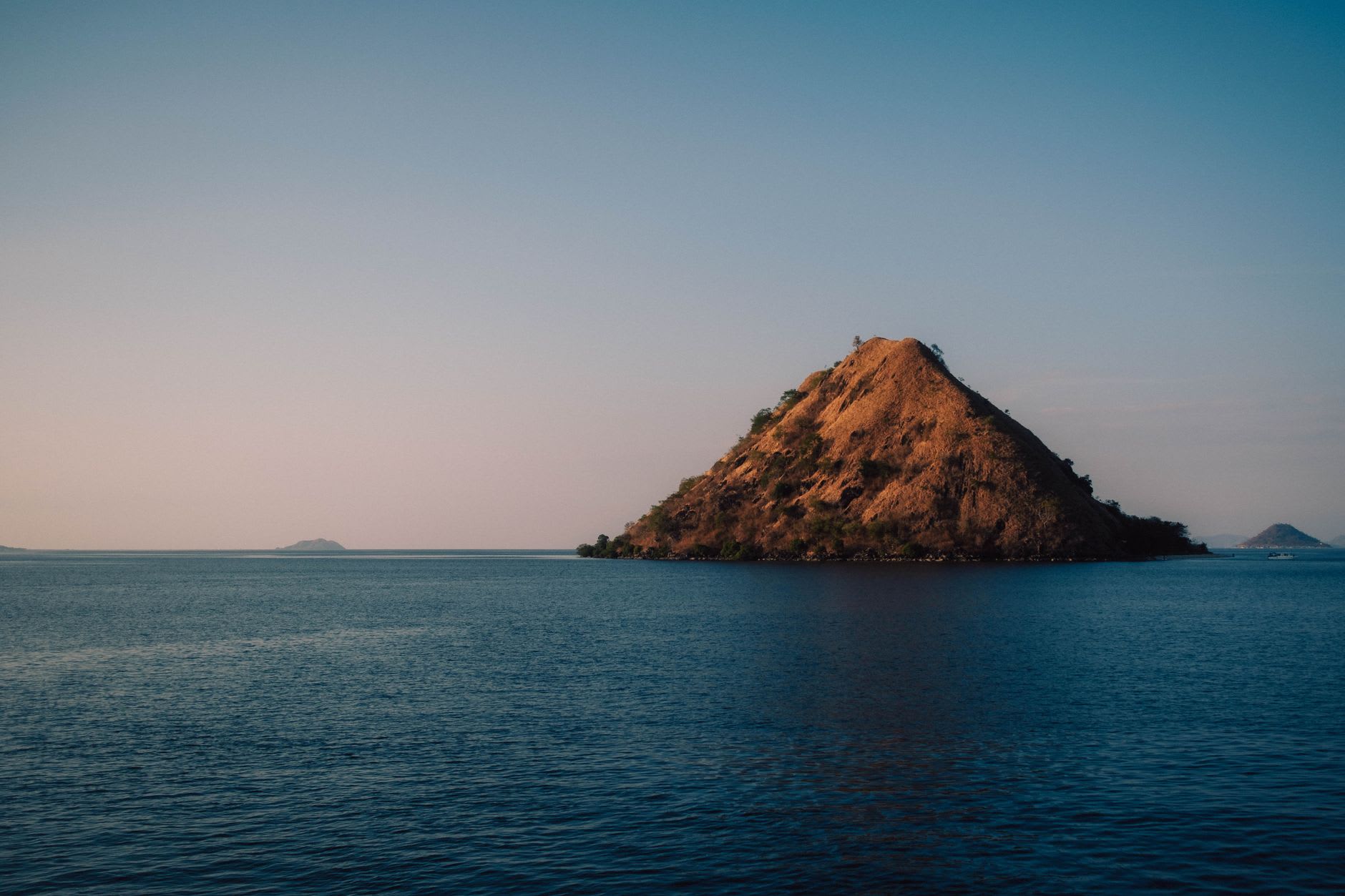
The summit is a narrow ridgeline of volcanic rock with a small flat area on the highest point, and when the sky began to lighten I understood why the climb was worth the 5am alarm. The view from here is total. To the north, the bulk of Komodo Island fills the horizon, its ridges catching the first light. To the south, Padar’s three-peaked silhouette is unmistakable. To the east, a chain of smaller islands stretches toward Flores, each one separated by channels that run from blue-green in the shallows to deep navy at the center. To the west, the bay where our boat was anchored lay in shadow still, the water gunmetal and still.
I had seen Komodo National Park from the water, from underwater, from the deck of the liveaboard. Seeing it from this height gave it a completely different kind of meaning. You could see the pattern — the way the islands clustered, the channels between them, the way the tidal flow would concentrate in those channels and create the current conditions that made the diving what it was. The geography explained the ocean. The ocean explained the marine life. It all became legible from up here in a way it wasn’t from water level.
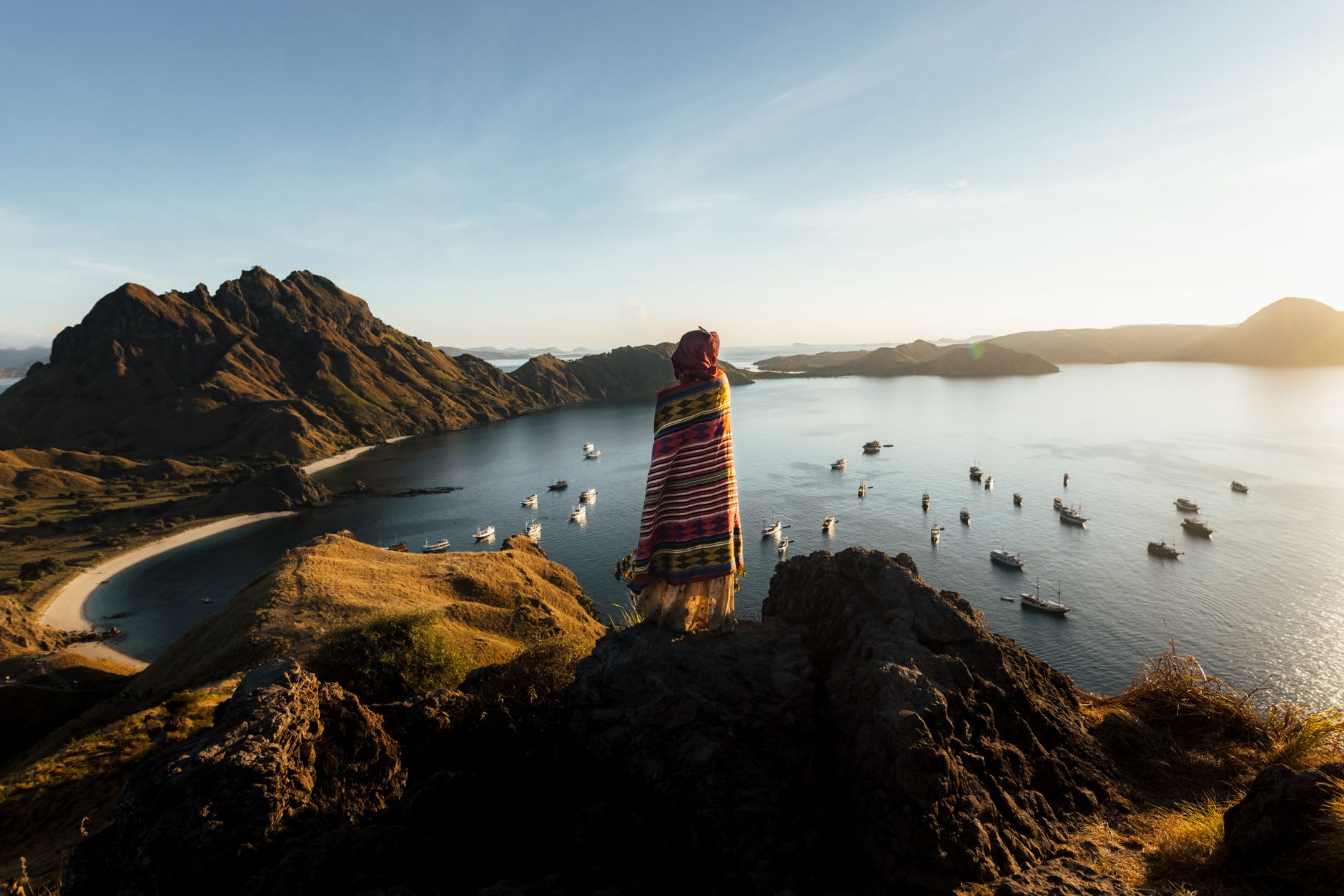
We sat up there for forty minutes, until the sun was fully up and the heat was beginning to build and the first boat from Labuan Bajo was visible on the northern horizon, making its way toward Loh Liang. Someone in our group had brought a flask of coffee and it was passed around without comment. A pair of frigatebirds worked the thermals below the summit, their forked tails unmistakable. The island smelled of warm rock and dry grass and that same unidentifiable floral note from the night.
The descent is faster and more aggressive than the climb, the loose rock requiring attention on every step. We were back at the beach by seven-thirty, back on the liveaboard by eight, and by nine we were in the water at Crystal Rock. The sequence seemed right: first the view that puts everything in context, then the dive that lives inside that context. Some days in travel have a satisfying structure that you didn’t plan for.
When to go: The viewpoint is worth climbing any time of year, but the sunrise view from April to October — when the air is dry and the visibility is absolute — is exceptional. Bring a headlamp for the pre-dawn climb, grippy shoes, and something warm for the summit wait; it is cooler at altitude than you expect. The island also has a sheltered anchorage that makes it a popular overnight stop for liveaboards.