Crystal Rock
"A school of jackfish moved like a single silver thought. I stopped breathing to watch."
My dive master held up three fingers as we descended the line — current level three, which is strong, which is good. The current at Crystal Rock is what makes it what it is: a cold upwelling that drags nutrients up from the deep channel between Komodo and Gili Lawa Darat, feeding a food chain that stacks up like a skyscraper. You descend through water that is chilly for the tropics, somewhere between twenty-two and twenty-six degrees, and when you reach the top of the pinnacle at around twelve meters you understand immediately what you are dealing with.
Crystal Rock is a submerged volcanic formation that rises to just below the surface, its flanks draped in hard coral and soft coral in colors that seem excessive — orange, purple, yellow, white. Around and above it, the water moves. Fish move through it. Clouds of anthias pulse in the current like breathing. And then you look past the reef and into the blue and the jackfish are there: a school of perhaps ten thousand, rotating in a slow, dense vortex that catches the light from the surface and throws it back in fragments. I stopped swimming and let the current hold me in place and watched them for what the dive computer later told me was eleven minutes but felt like two.
The sharks come with the current. Whitetip reef sharks and grey reef sharks cruise the edges of the pinnacle, unhurried, making wide passes before disappearing back into the blue. On my second dive here the following morning, a Napoleon wrasse — a fish the size of a golden retriever, with the same apparent level of self-regard — appeared from nowhere and spent ten minutes following our group at close range, curious in a way that seemed almost editorial. When it finally lost interest and slipped away, the group surfaced to find that everyone had been grinning into their regulators the whole time.
The dive profile at Crystal Rock tends to follow the pinnacle’s contours — down one side in the current, around the base, up the other side where the current breaks into eddies. It rewards patience and stillness. The divers I saw working hardest against the current saw the least; the ones who found a coral head to hold onto and waited were the ones the manta rays came to investigate. A manta passed beneath me on my afternoon dive, close enough that I could see the individual pores along its underside, and then banked into the current and was gone in three seconds.
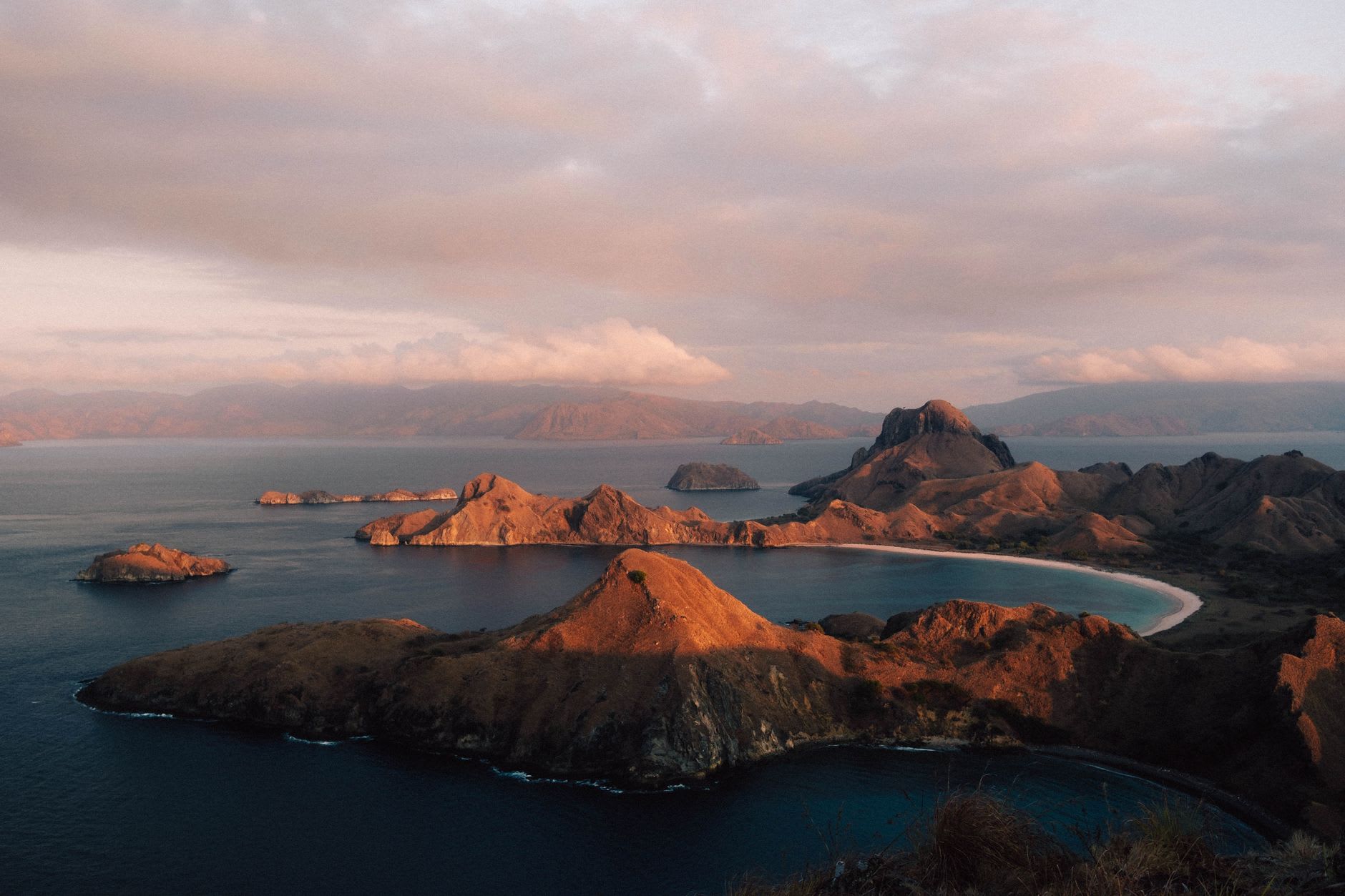
After the dives, our liveaboard anchored in the lee of Gili Lawa Darat for the night, and I sat on the top deck with wet hair watching the stars appear over the silhouette of the islands while the cook prepared dinner below. There are places in the world that justify the complexity of getting there, and Crystal Rock is one of them. The logistics — the flight to Labuan Bajo, the liveaboard booking, the early morning briefings — collapse entirely when you are sitting still in that current watching ten thousand fish decide to turn left together.
When to go: April through November for the calmest conditions and best visibility, though the dive site is accessible year-round for experienced divers. Morning dives catch the current at its most active and the light at its best angle for photography. A minimum of Advanced Open Water certification is recommended; the current can be demanding.