
Maiana
"From the water, Maiana looks like a line someone drew between sky and sea and then forgot to erase."
The canoe that took me to Maiana was an outrigger with a sail patched in three places, handled by two brothers who had grown up sailing between the atolls and whose relationship to wind and current had the quality of something learned so young it had become pre-verbal. We left the lagoon at Tarawa before sunrise, and within an hour the lights of South Tarawa had disappeared behind us and we were alone on open water with the stars going out one by one as dawn came. The brothers talked to each other in I-Kiribati, adjusted the sail angle in ways I couldn’t interpret, and periodically checked our position by looking at the horizon with an attention that was not navigation equipment but was clearly navigation.
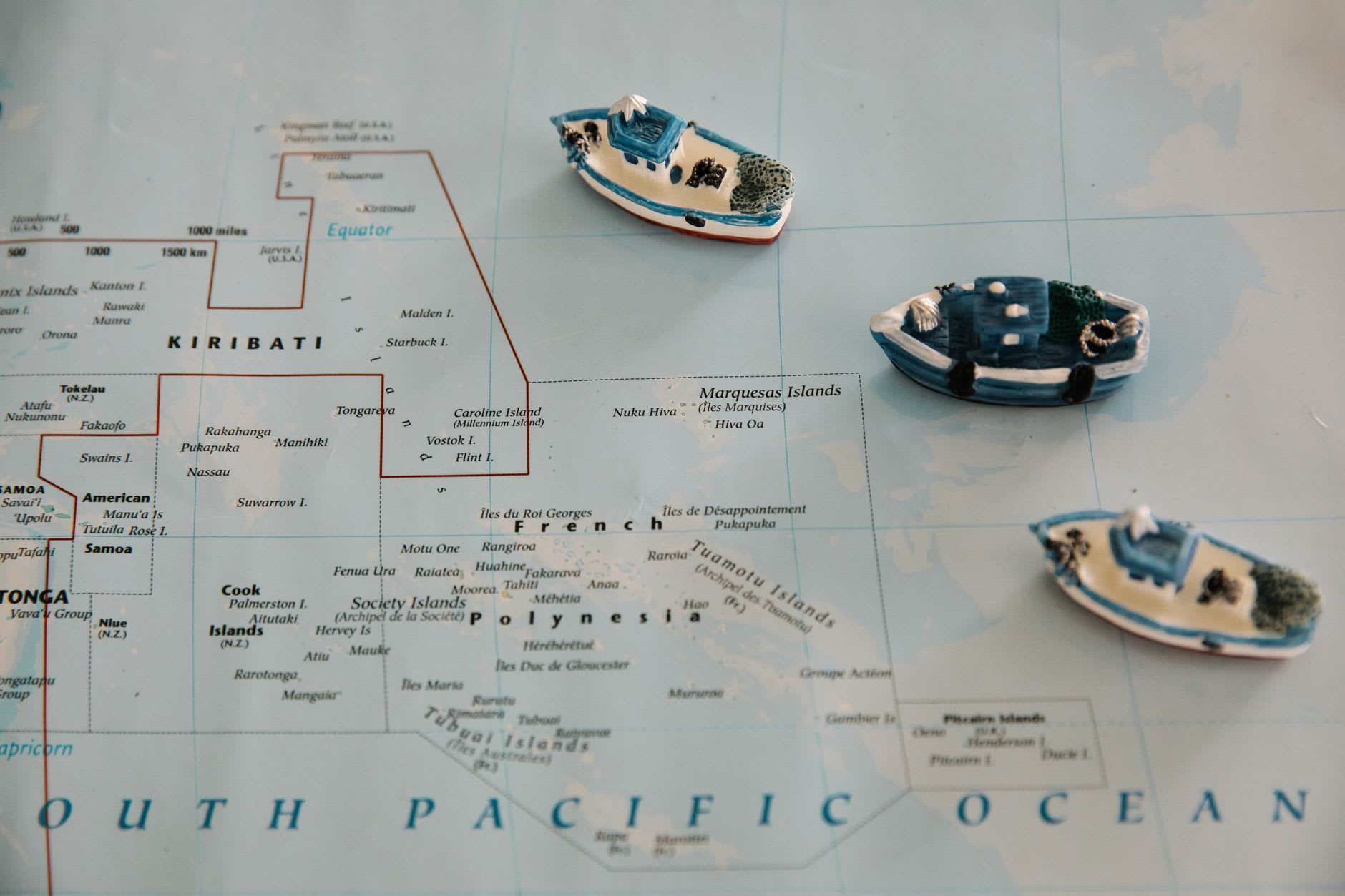
Maiana is about forty kilometers south of Tarawa — close enough that on a clear day the palms of one are visible from the shore of the other, though the crossing still feels like a genuine ocean transit when you make it in a small boat. The atoll is smaller and quieter than Tarawa in ways that are immediately palpable. There is one main settlement, Tebikenikora, and beyond it the island resolves into coconut and pandanus and the particular deep quiet of a place where the loudest regular sound is the reef. I arrived mid-morning with a stiffness in my legs from sitting cross-legged for four hours, stepped onto the beach, and stood for a long moment doing nothing at all.
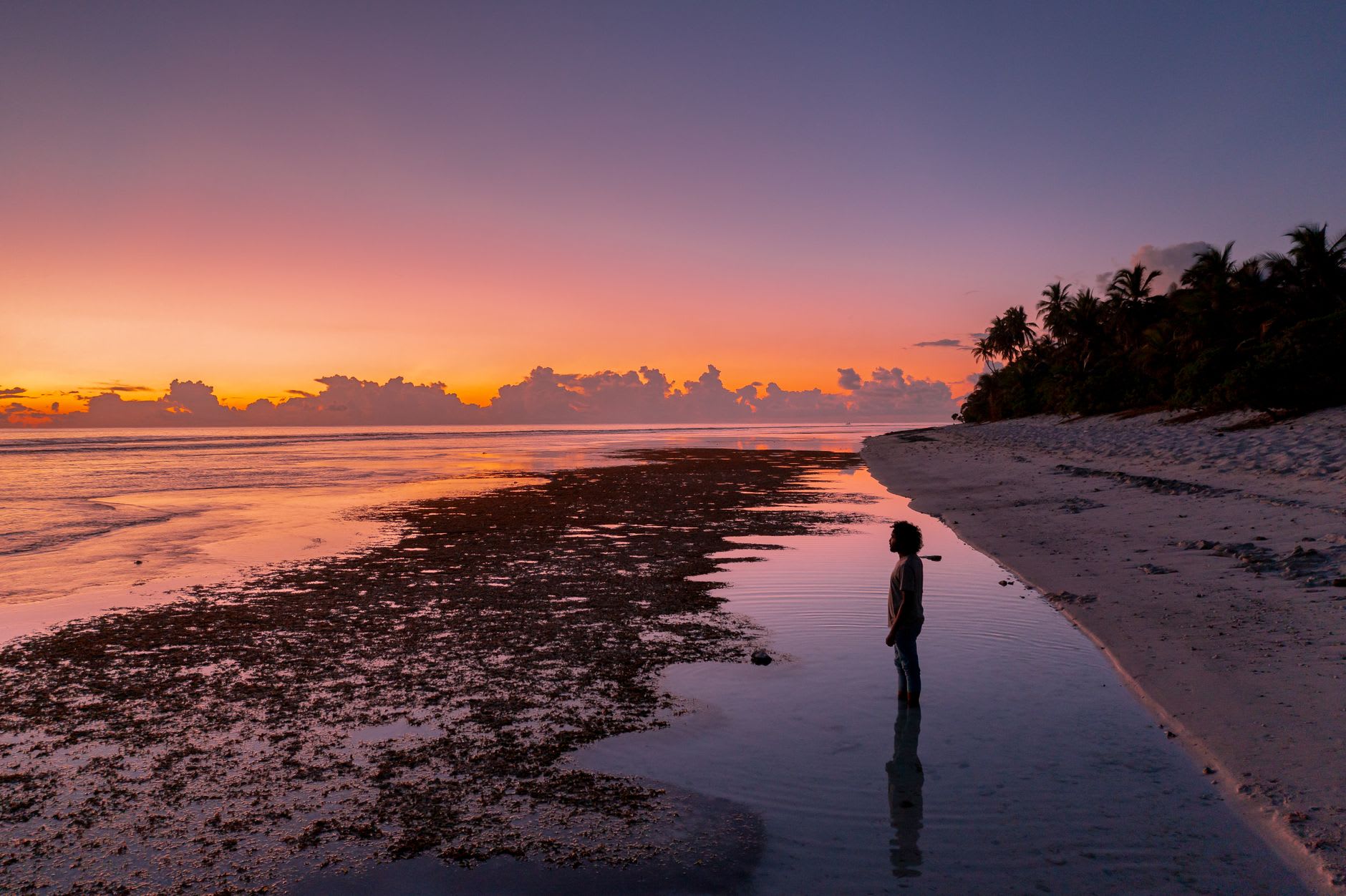
The fishing on Maiana runs on a different scale than the lagoon fishing of Tarawa. Men go out to the outer reef edge and to deep water beyond it, trolling for tuna with lines rigged in ways that have changed little in generations — the techniques preserved not through conservatism but because they work. I went out once with a man named Kabwere who had been fishing Maiana’s waters for thirty years, and watched him read the ocean surface for the signs of baitfish that indicate larger fish below — a nervous, patterned disturbance on the water’s surface, the flicker of something silver just beneath. When he found what he was looking for, he moved with economy, deploying lines with a smoothness that had no wasted motion. We came back with two yellowfin tuna that were, that evening, eaten by more people than I had the language to count.
What Maiana offers that Tarawa cannot is the experience of Kiribati at a different register of density. The maneaba here has a weight of use you can feel in the smoothed posts and the polished floor of woven mats — generations of community decisions embedded in the wear patterns of the building itself. Evenings are social in a way that feels unhurried: people move between houses, children run in the last hour of daylight, elders sit in the open air discussing things in voices too low to carry. I slept on a mat in a family’s house and was woken at five by the sound of someone sweeping the coral outside — the crisp scrape of a palm-frond broom on stone — and lay there listening to the island negotiate its morning before I joined it.
When to go: April through October for calmer seas. The crossing from Tarawa can be made by outrigger with a local captain or by the occasional motorized boat — ask at the Betio port. Maiana has no formal guesthouse; local families accommodate visitors through an informal system, and a small contribution to food costs is appreciated.