Pacific
Kiribati
"The first country to see sunrise — and the first the ocean will take back."
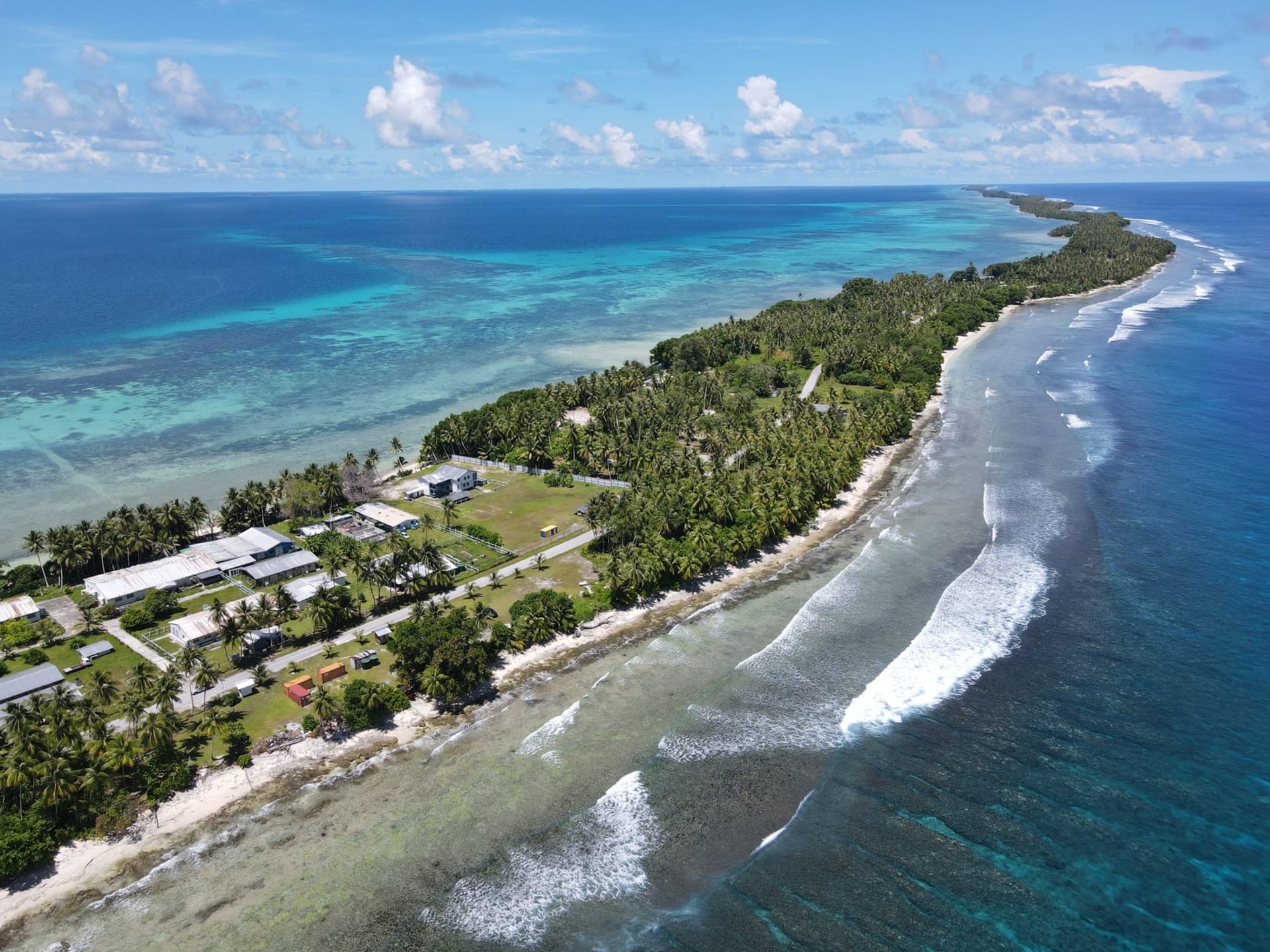
The flight into Tarawa doesn’t feel like landing so much as slowly touching down on a sandbar someone forgot to remove from the middle of the Pacific. From the window, the atoll is almost comically thin — a thread of green and beige surrounded on both sides by a blue so saturated it looks edited. I remember thinking: people live here. A hundred thousand people live here, on land that in most places is no wider than a city block, nowhere higher than three meters above the tide. That arithmetic sat with me for a long time after I landed.
South Tarawa, the capital, is dense and chaotic in a way that surprised me completely. I’d expected quiet — the kind of sleepy isolation that remote Pacific islands project in travel writing. Instead I found gridlock on a single-lane road, kids on motorbikes, Chinese fishing trawlers visible from the market, and a canteen near Betio serving freshly caught yellowfin tuna with rice and coconut cream that was one of the better meals I’d eaten in months. The infrastructure is strained, the drinking water is a legitimate concern, and the seawall along the western edge of Betio is eroding in visible, sobering ways. This is not a place performing paradise. It is a real place with real problems, and that is precisely what makes it stick.
The outer islands are a different register entirely. Getting to Abaiang or Abemama requires either a domestic flight on a plane that will not inspire confidence or an overnight boat trip that will demand a particular tolerance for discomfort. Once there, though, time does something different. Fishing happens at dawn in outrigger canoes. Coconut toddy — the fermented sap of the palm flower — is drunk at midday in the shade. Robert Louis Stevenson lived on Abemama for months in 1889 and the island still carries a strange literary gravity for something so remote. I spent two days there and barely wanted to leave. The reef is largely intact, the snorkeling is extraordinary, and the silence at night is absolute in the way that only places genuinely far from everything can manage.
When to go: November through March is the wetter season and brings stronger swells. April through October offers calmer seas, better diving visibility, and slightly cooler temperatures — though “cooler” on the equator means 28°C instead of 32°C. Book domestic flights well in advance; they fill up and cancel with equal unpredictability.
What most guides get wrong: They frame Kiribati almost entirely through the lens of climate change — the disappearing island narrative — and while that story is real and urgent, it reduces a living culture to a eulogy. The I-Kiribati people are not waiting to be rescued or mourned. They navigate, fish, maintain elaborate dance traditions, and are deeply ambivalent about what outside attention actually brings them. Go because it is one of the most genuinely remote and culturally coherent places left on earth, not to witness something dying.