Kiritimati
"The bonefish here move like shadows under the flat. You see the tail first — a silver flag in six inches of water."
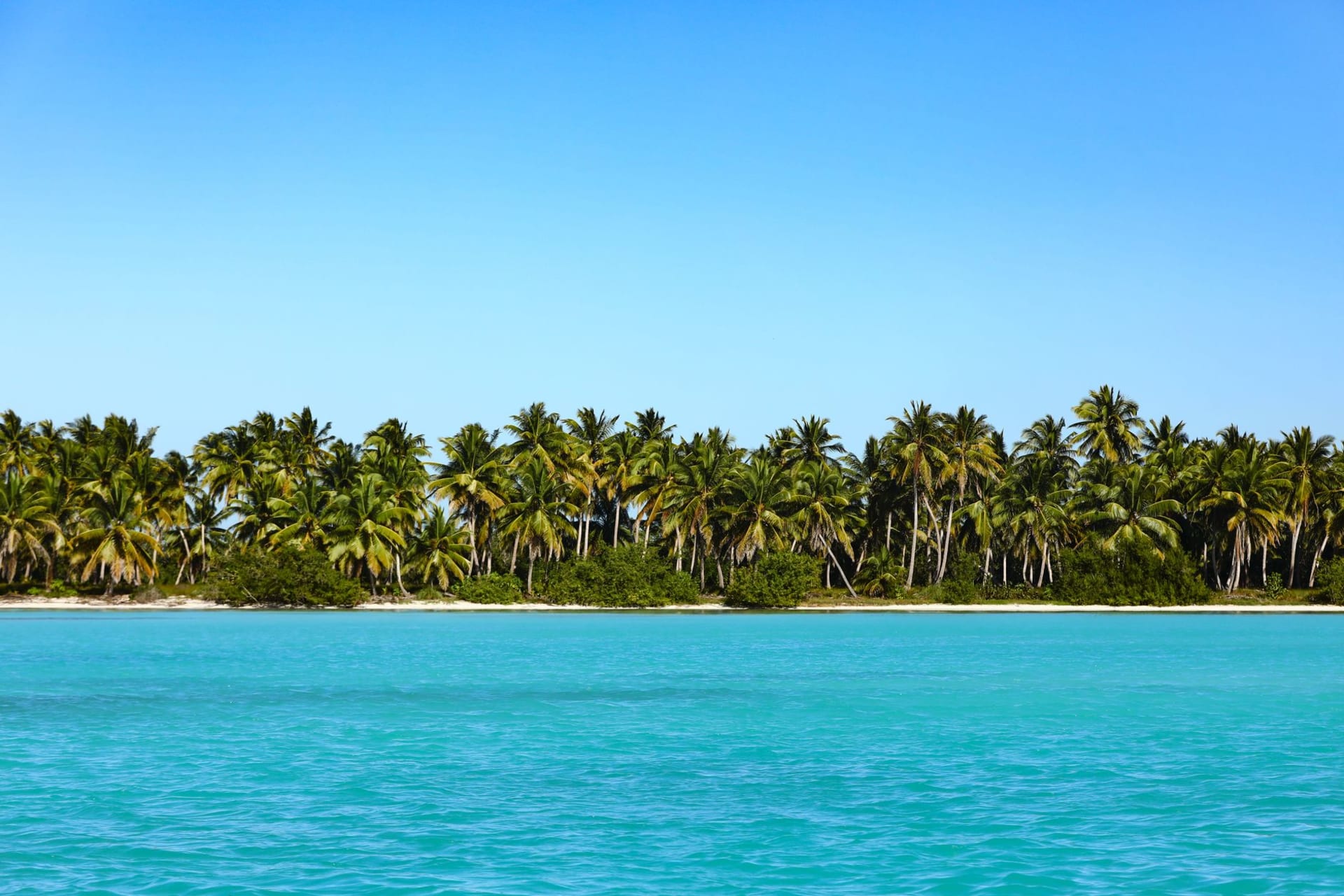
Christmas Island — Kiritimati in I-Kiribati, a transliteration that once seemed arbitrary until I heard a local say it aloud and the logic snapped into place — is the kind of place that makes you feel the scale of the Pacific in your body. It is enormous for an atoll: over 400 square kilometers of land, making it the largest in the world by area, sitting roughly 2,000 kilometers north of Tarawa in the Line Islands group. The landscape is flat in a way that feels geological rather than incidental — a flatness that came from the sea and has not quite departed, with interior lagoons and tidal flats covering more territory than the actual land. I flew in from Honolulu on a small aircraft and spent the entire descent looking out the window trying to identify where the island ended and where the ocean began. The line kept moving.
The reason serious fly fishers make the journey — and it is a serious journey; there are no casual stops here — is the bonefish. The tidal flats of Kiritimati hold some of the largest and most accessible bonefish populations anywhere in the Pacific, and they move in schools through the shallows in numbers that can take your breath away if you come from a fishing background where counting a dozen fish in sight is considered abundance. I am not a dedicated angler, but I went out with a guide named Teatata on a morning when the tide was running and the light was low and flat over the water, and within forty minutes I had seen more fish than in all my previous experience combined. They moved through the shallows in coordinated pulses, their tails breaking the surface as they fed in water shallow enough that wading was the only option.

Beyond the fishing, Kiritimati is one of the great seabird sanctuaries in the Pacific. The interior of the island — particularly around the large central lagoon — hosts colonies of Christmas frigatebirds, red-tailed tropicbirds, and Polynesian storm petrels in numbers that require a recalibration of what the word “colony” implies. I walked inland one afternoon along a track that deteriorated into a path and then into a line someone had made by walking it twice, and arrived at the lagoon shore to find the sky above it in constant motion — birds cycling in thermal columns, landing, departing, calling in a sustained noise that operated below conversation and above thought. The scale of it, in a place with no city sounds to compete, was overwhelming in the specific way that very large natural things are when you have no frame for them.

The town of London — yes, London — is the administrative center of Kiritimati, a small cluster of government buildings and houses that feels slightly provisional, as though it hasn’t yet decided how permanent it wants to be. There is a guesthouse, a fuel station, and a shop selling tinned goods at prices that reflect the cost of shipping them across two thousand miles of open ocean. The population is just a few thousand, concentrated in London and the two other settlements of Tabwakea and Poland — Poland, again, a colonial-era name that sits incongruously on an equatorial Pacific atoll. I ate dinner at my guesthouse both nights: rice and fish, cooked simply, with a papaya from the garden that had been picked at exactly the right moment and tasted the way papayas are supposed to taste and rarely do.
When to go: April through October, when trade winds keep the heat bearable and the tidal flats are in optimal condition for fishing. January through March brings calmer seas but hotter, wetter conditions. Fishing lodges book many months in advance; budget travelers can arrange homestays through the local community with more flexibility.