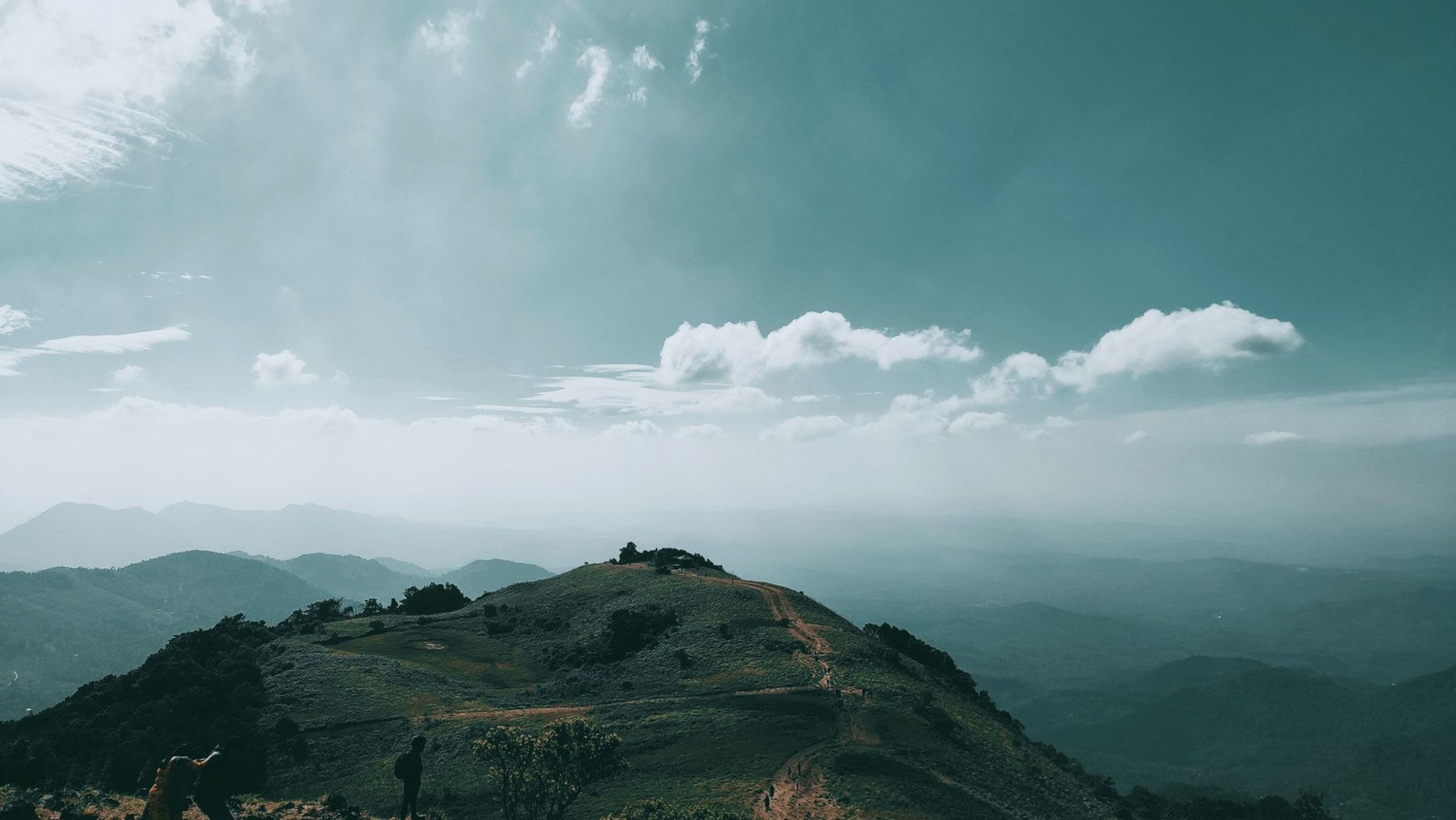
Wayanad
"I stood in front of a 6,000-year-old drawing of a deer hunt and felt something closer to vertigo than awe."
I first understood that Wayanad was different when I drove through the cloud. The road from Calicut climbs steeply through switchbacks and at around 900 meters the mist closes in — not fog exactly but cloud, the real article, so thick the headlights barely register. You emerge eventually into a different country: rolling hills covered in tea and coffee and pepper, valleys of banana plantations, stands of bamboo so dense they produce their own darkness. The air smells of damp earth and something flowering that I spent the whole trip failing to identify.
Wayanad is Kerala’s roof. The district sits between 700 and 2,100 meters in the Western Ghats, and it has a character distinct from the rest of the state — slower, cooler, predominantly agricultural, with a significant tribal population that includes communities who have lived here for millennia. The Adivasi villages are present throughout the district, though most operate without any reference to the tourism industry and most visitors see them only at a distance.

The Edakkal Caves are one of the genuine wonders of peninsular India and remain remarkably unknown outside the region. They are not caves in the conventional sense but natural rock shelters formed by a massive split in a granite boulder — two chambers accessible by a steep stone staircase — whose walls contain petroglyphs dating from 6,000 BCE to the Bronze Age. Stick figures, animals, geometric symbols, human forms in motion: the drawings layer on top of each other across thousands of years, a palimpsest of human presence on this hill so long and continuous it reframes your sense of history entirely. I stood in front of a particular deer-hunt scene for a long time trying to feel something adequate to its age, and in the end I felt something closer to vertigo.
The coffee estates of Wayanad operate on a scale that is invisible until you walk into them. From the road you see dense forest; inside the estates the trees are Robusta coffee plants growing under the shade of silver oak and rosewood, their fruit red and heavy in November and December. Many estates offer homestays in the planter’s bungalow tradition — old British and later Indian plantation houses, thick-walled, with wide verandas and views over the canopy — and mornings there include a cup made from that estate’s own beans, picked last week, roasted on the property, served black with a quiet pride.

Wayanad’s wildlife is serious. The district is part of a larger protected corridor connecting Bandipur, Nagarhole, and Mudumalai reserves, and animals move through freely — including elephants, which are present in the plantations with a frequency that makes driving at night genuinely inadvisable. The more memorable wildlife encounters I had were at dusk at the edge of estates: a family of elephants crossing a road fifty meters ahead of my car with unhurried authority, the calf in the middle, the matriarch pausing to look back at us before moving on into the tea.
When to go: October to May. The plateau gets cold in January (sweaters required at night) and the coffee harvest runs November to February, when the estates are most active. Edakkal Caves close during the monsoon when the paths become dangerous. Do not drive in Wayanad after dark in any season — elephant crossings are not hypothetical.