Asia
Kerala
"The place that made me understand what green actually means."
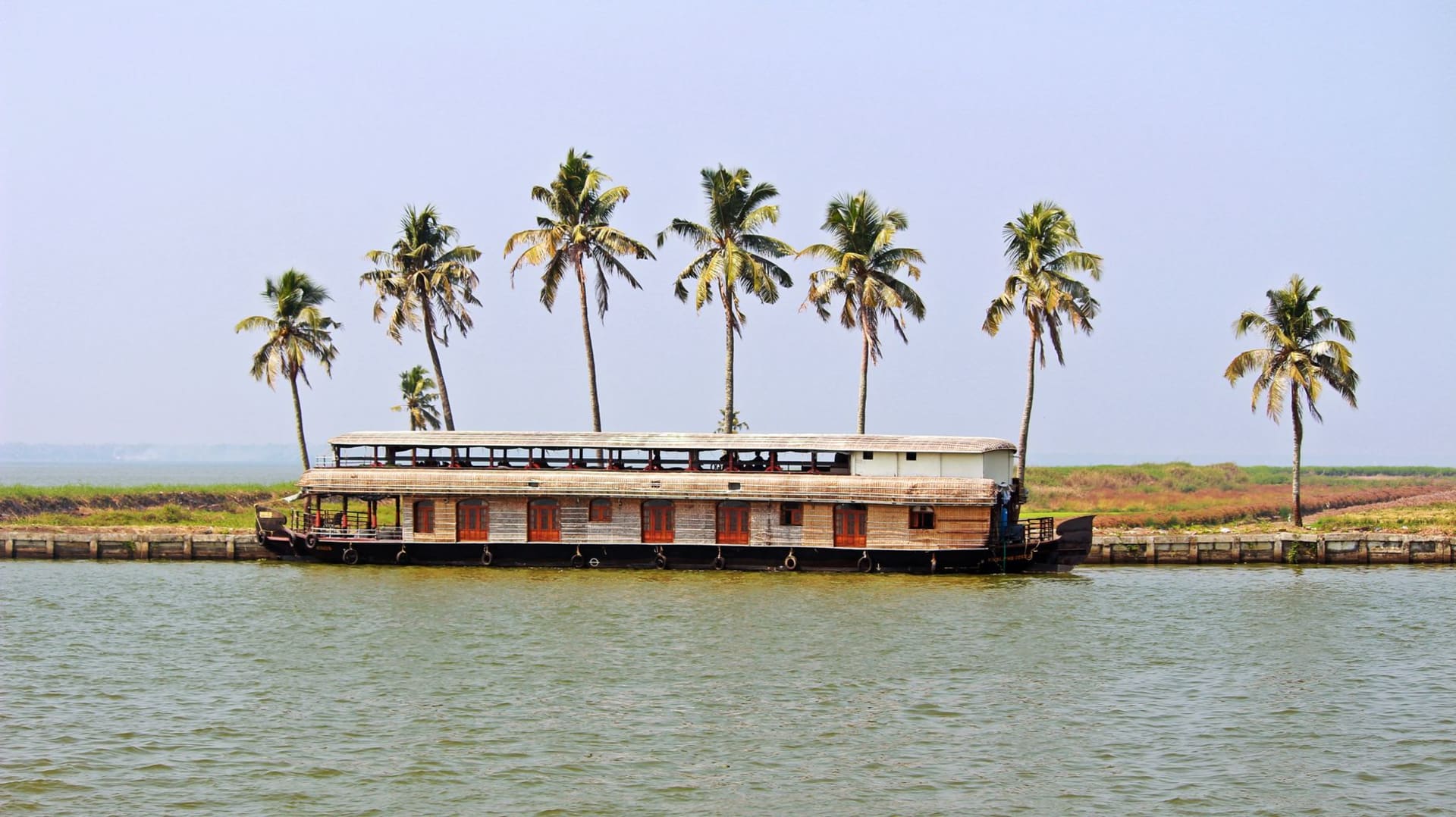
I arrived in Alleppey by overnight train from Bangalore and stepped onto the platform into air so humid it felt like a warm towel pressed to my face. Not unpleasant — laced with something floral and faintly fermented, the kind of smell a place produces when it has been growing things for ten thousand years without interruption. A man with a battered auto-rickshaw drove me twelve minutes to a canal bank, and there it was: a kettuvallam, a traditional rice barge converted into a floating bedroom, moored between walls of pandanus and coconut. I was on the water within the hour. I did not need to be anywhere else.
Kerala operates by a different logic than the rest of India. It is the country’s most literate state, its most equitable, its greenest. Ayurveda is not a wellness trend here — it is architecture, economics, daily life. The food is built on coconut in every form: oil, cream, fresh-scraped, toasted. Fish curries arrive in clay pots with tamarind and raw mango. Breakfast is appam and stew, the lacy rice crepe sitting in a pool of thin coconut milk with chunks of chicken that fall apart at the touch. In Fort Kochi, the Chinese fishing nets that have hung at the water’s edge since the fourteenth century still work at dawn, and the fishermen auction the catch an arm’s length from where you drink your first coffee.
The Western Ghats press up against the eastern edge of the state like a green wall. Munnar sits inside that wall at nearly 1,600 meters, and its tea gardens are the kind of landscape that makes you understand why empires went to war over territory. Rows of pruned Camellia sinensis bushes covering every slope, women in bright saris moving through them with bags. From Munnar you can hike into Eravikulam National Park and watch Nilgiri tahr — shaggy, prehistoric-looking mountain goats — graze on ridgelines without much concern for your presence.
When to go: October to March is the driest and most comfortable stretch. The southwest monsoon arrives in June and Kerala receives it fully — green deepens to an almost hallucinatory intensity and the backwaters swell. Traveling in the monsoon is possible and beautiful if you accept that you will get wet. Avoid April and May: the heat before the rains is heavy and without reward.
What most guides get wrong: They turn the backwaters into a day trip. One afternoon on a houseboat is not Kerala — it is a photograph of Kerala. Stay two nights. Allow the pace to change you. The point is not to see the canals; it is to stop moving fast enough that you start noticing what is actually there.