Kovalam
"Kovalam is two things at once — and that's precisely what makes it worth staying."
I came to Kovalam for a week and stayed for twelve days. That ought to tell you something, though what it tells you may depend on what you make of a place that is, on one hand, one of Kerala’s most developed beach resorts and, on the other, still a genuinely beautiful stretch of coast if you know where to look.
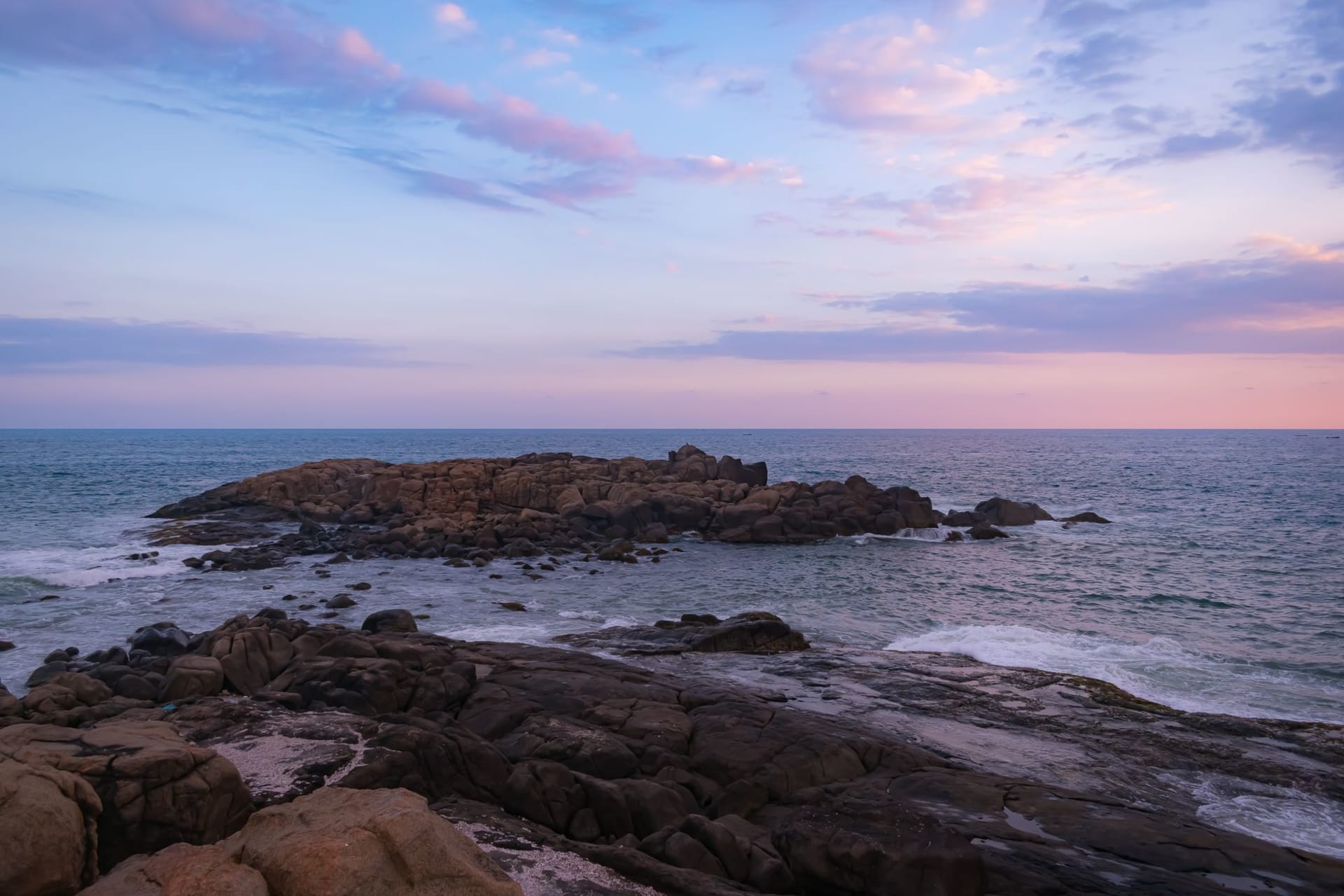
The lighthouse at the southern end of Lighthouse Beach is the organizing landmark of the whole place — a white-and-red striped tower standing above the headland, making it into a thousand photographs. Below it, a crescent of sand curves north, and at its far end the curve continues into Hawa Beach and then into the quieter Samudra Beach beyond. Each section has a slightly different character. Lighthouse Beach is where the tourist infrastructure runs thickest: the seafood restaurants perched above the sand on terraces, the Ayurvedic clinics advertising treatments in three languages, the masseuses who approach you on the beach with professional persistence. Samudra is where the fishermen’s boats are still pulled up in the mornings, the nets spread to dry in the sun, the catch sorted on the beach in the early afternoon.

The seafood here would be reason enough to stay. I found a small restaurant run by a woman named Leela who bought directly from the fishing families each morning and posted a chalk menu on a board by the door. The specialties changed daily: some days karimeen — pearl spot, a freshwater fish from the backwaters — grilled with coconut paste and curry leaves, its flesh sweet and dense; other days tiger prawns in a red masala that carried the smoke of a wood fire. I ate lunch there every day for a week and it was never the same and it was never anything other than excellent.
Beyond the beach, Kovalam rewards slow exploration. The fishing village of Vizhinjam, a few kilometers south, has been a trading settlement since at least the 9th century — there are rock-cut cave temples here with carvings of Shiva and Vishnu, half-hidden behind a fence in a compound that the fishing boats have parked next to with characteristic Kerala pragmatism. The harbor is also where Kovalam’s largest infrastructure project is happening: a new container port that has transformed the skyline and brought construction workers and cranes to a coast that previously operated on a different time scale entirely.

What I would defend about Kovalam against those who dismiss it as too touristy is this: a place can be many things at once. In the evenings, when the heat softens and the lighthouse begins its rotation and the fishermen mend their nets on the sand while the restaurants light up behind them, Kovalam manages to be a resort and a working coast simultaneously, and that tension makes it more interesting than a place that is only one of those things.
When to go: October to March when the sea is swimmable and the risk of riptides is manageable. December and January are the busiest months. For relative quiet at the same quality of weather, aim for late October or early February. The monsoon turns the sea dangerous and the beach largely unusable.