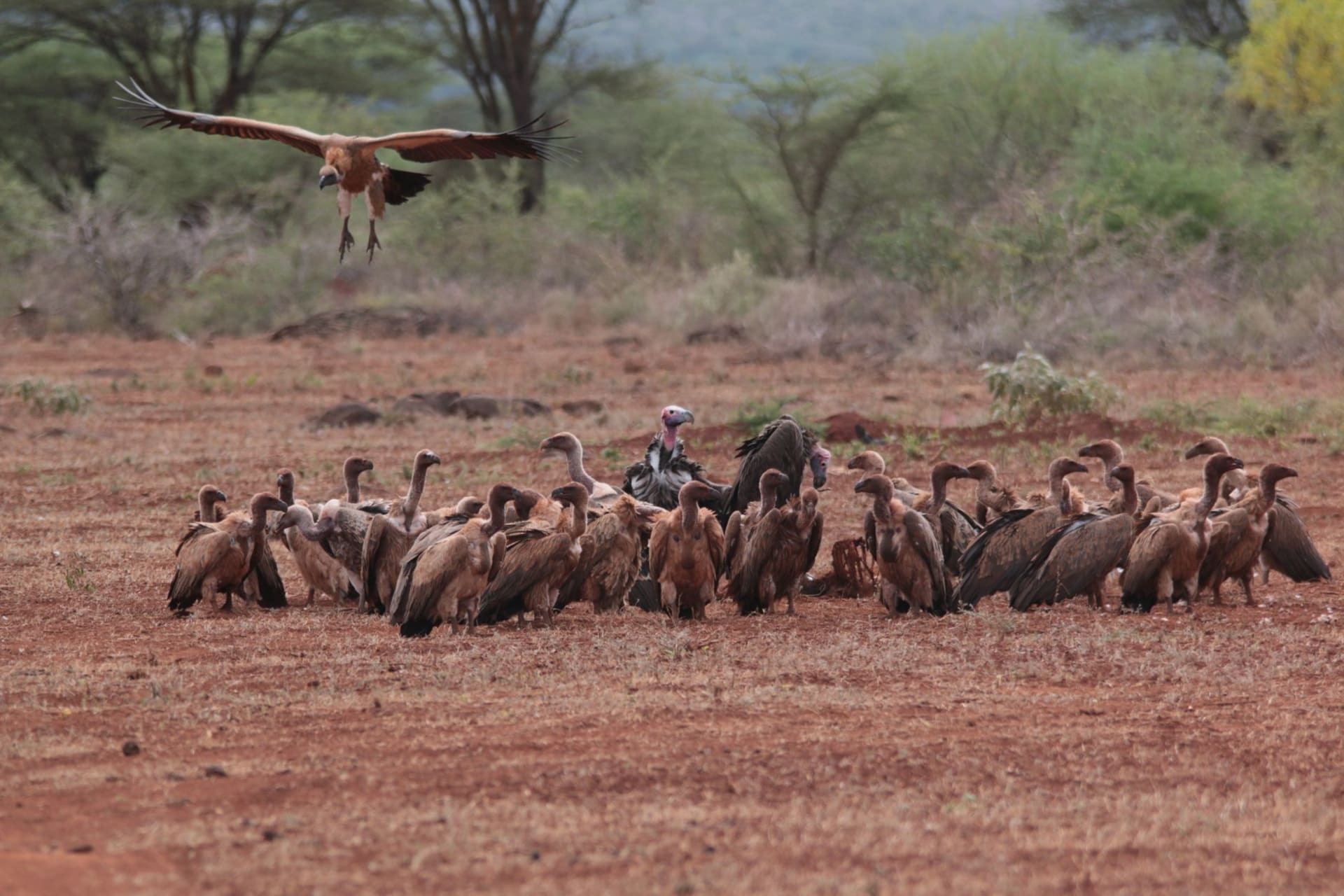
I arrived at Samburu after a flight north from Nairobi in a twelve-seater so small the propeller wash felt personal. The landscape below shifted almost immediately — greener gave way to dust-red, the farms thinned, the thornbush took over. By the time we touched down on the dirt airstrip, I already knew this was going to be a different Kenya.
The Ewaso Ng’iro Does All the Work
Samburu National Reserve survives because of one river. The Ewaso Ng’iro cuts a brown line through an otherwise punishing landscape of dried grass and cracked earth, and every living thing within range of it knows this. You watch from the bank in the early morning and the animals queue almost politely — elephant families, buffalo, impala, the occasional hippo dragging itself out to dry in the sun. The light at seven in the morning is still cool and flat, and the dust the elephants kick up catches it perfectly. I sat there for almost two hours without taking a single photo. Sometimes you just watch.
The Samburu Five
What makes the reserve distinct from the Mara or Amboseli is the species list. Here you find what the guides call the “Samburu Special Five” — animals that exist in the north but not in the savanna south. Reticulated giraffe, patterned like stained glass. Grevy’s zebra, with narrower stripes and enormous mule ears. Beisa oryx, rigid and heraldic. Somali ostrich, the males blue-legged instead of red. And the gerenuk — a gazelle with a neck so exaggerated it stands on its hind legs to browse acacia leaves like a small, elegant dinosaur. I watched one do exactly that for a long minute before it registered how strange it looked.
The Samburu Themselves
The reserve borders Samburu community land, and the people here are related to the Maasai — same Nilotic roots, similar beadwork and cattle culture — but distinct, and they’ll tell you so if you ask. I spent an afternoon with a guide named Francis who grew up nearby and had worked in the reserve for eleven years. He talked about the gerenuk the way a city person talks about a neighborhood bar — familiarly, affectionately, with the occasional complaint. He’d noticed their numbers shift with the rains. He knew which riverbank the lions used at night. The animal knowledge people accumulate here over decades is something no field guide touches.
Dry Season Textures
What I remember most about Samburu is texture. The bark of the acacia trees, layered and peeling. The red laterite dust that got into everything — my shoes, my bag, the folds of my notebook. The sound at midday when the heat settled and everything stopped: just wind, a distant cawing, the creak of a branch. It felt genuinely remote in a way that some busier parks in Kenya don’t anymore. Samburu has not yet been loved to death. I hope it stays that way.
When to go: January to February and June to October are the dry seasons, when animals concentrate around the Ewaso Ng’iro and viewing is clearest. Avoid April and May — long rains make tracks impassable. October and November bring short rains but thinner crowds and cheaper rates; it can be worth the trade.