Mount Kenya
"At four in the morning, at altitude, the cold gets personal. It stops being weather and starts being an opinion about you."
Everyone going to Kenya for a mountain goes to Kilimanjaro, across the border in Tanzania. Mount Kenya is the one the Kenyans keep for themselves, and I think they’re right to. It’s the second-highest mountain in Africa, an old eroded volcano whose true summits — Batian and Nelion — are sheer rock spires that require ropes and proper climbing. The peak most trekkers aim for is Point Lenana, a touch under 4,985 metres, reachable on foot by anyone reasonably fit and unreasonably stubborn. I am the second of those two things. Lia, sensibly, declared she’d meet me at a coffee farm on the lower slopes, and I have never envied a decision more than I did at four the next morning.
Up through four climates
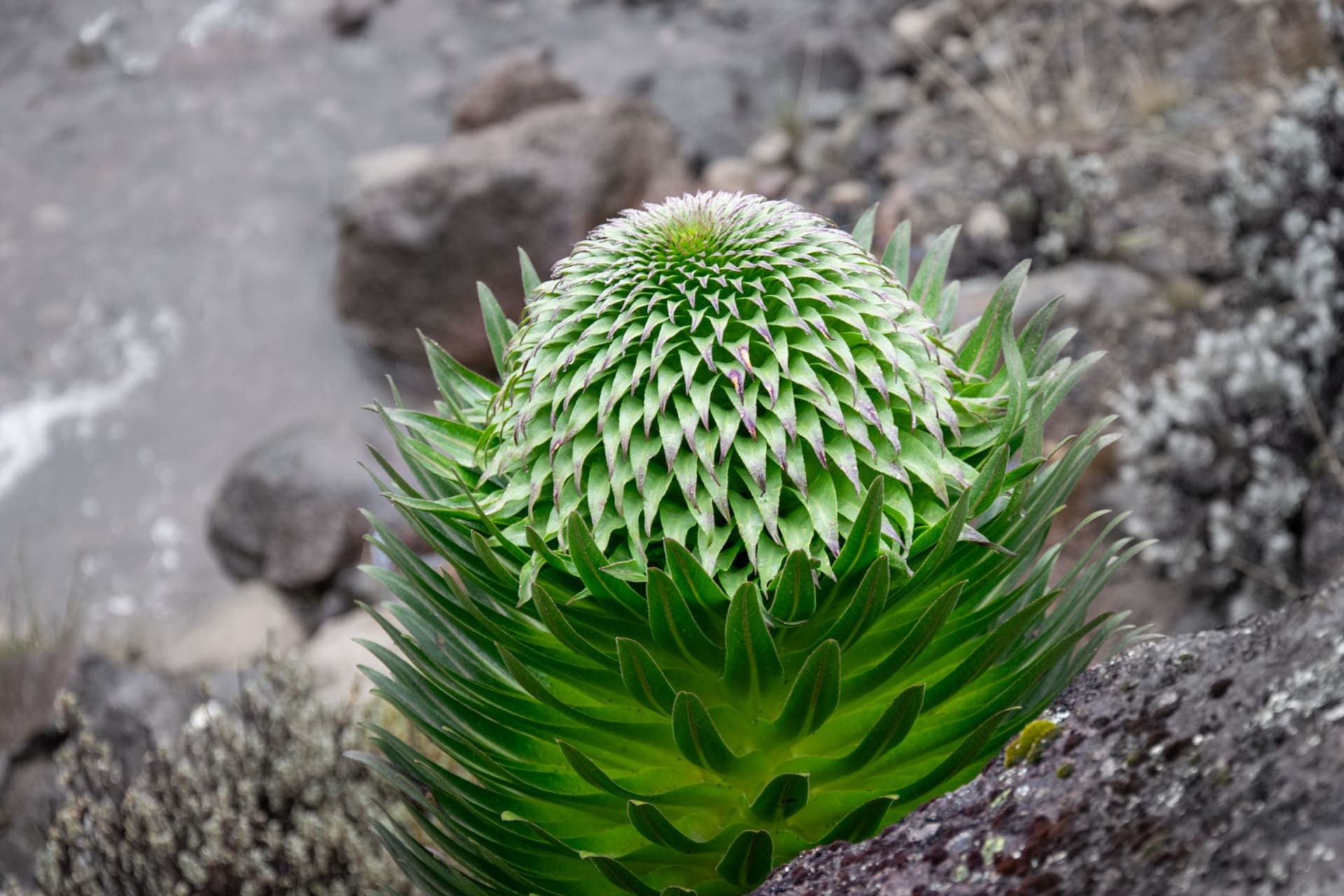
What I hadn’t grasped before going is that you don’t climb one mountain — you climb through about four different worlds stacked on top of each other. We started, my guide Joseph and I, in dense afromontane forest, all dripping moss and the distant crash of a colobus monkey moving through the canopy. By the second day the forest gave out into bamboo, then into a strange high moorland studded with giant groundsels and lobelias — plants found almost nowhere else, growing several metres tall, that look less like vegetation than like something invented for a film. Joseph called them the old men of the mountain. In the cold morning mist, dripping, they earned the name.

We climbed the Sirimon route up and planned to descend by Chogoria, which everyone told me is the beautiful one, and everyone was right. The huts are basic — Shipton’s Camp sits in a bowl beneath the peaks where the air is already thin enough to make tying a bootlace feel like a cardio event. I slept badly, woke at three, and ate nothing because at altitude my appetite simply resigns.
The cold gets personal
The summit push to Point Lenana goes in the dark, deliberately, so you reach the top at dawn. At four in the morning at that altitude the cold gets personal — it stops being weather and starts being an opinion about you. My water froze. My fingers stopped reporting in. Joseph kept up a steady, infuriating cheerfulness, pointing his headtorch at scree and saying “pole pole,” slowly slowly, the two words that get everyone up these mountains. And then the sky behind the rock spires of Batian went grey, then gold, and the glaciers — there really are still glaciers, shrinking fast, but there — caught the first light, and the whole Rift Valley lay below in cloud like an ocean. I won’t pretend I didn’t get emotional. Altitude makes you leaky.

The descent by Chogoria was the reward: down through the Gorges Valley, past tarns and waterfalls and the high plateau, the whole mountain unfurling beneath me in reverse. I met Lia two days later at the coffee farm, sunburnt and limping and insufferably pleased with myself. She let me have it for about an hour before pointing out, accurately, that I smelled like a goat.
When to go: The two dry seasons — January to early March, and July to October — give the most reliable summit weather. The long rains from April to June and short rains in November make the trails treacherous and the views nonexistent. Take at least four to five days to acclimatise; rushing it is how altitude sickness ends your trip early.