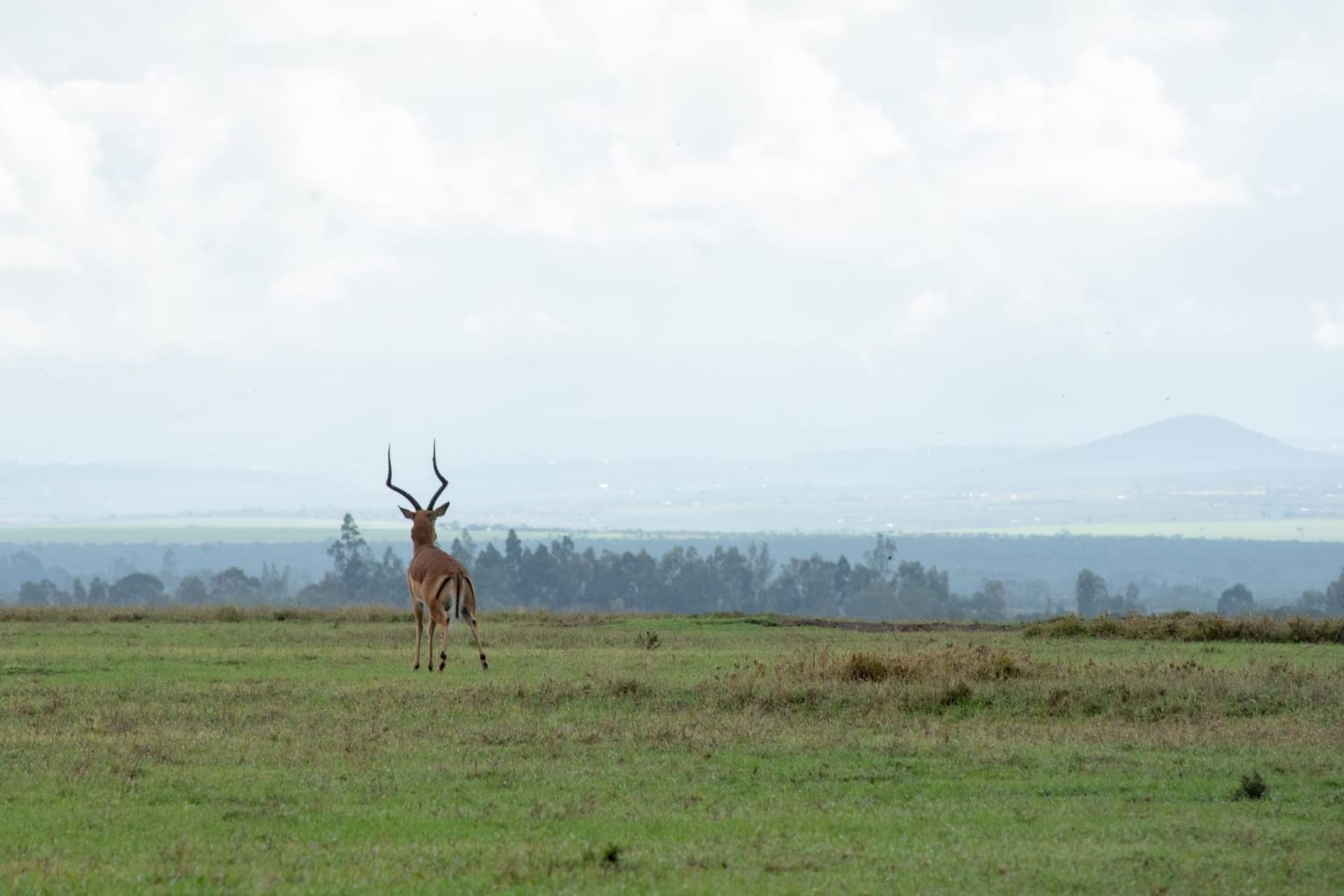
A community conservancy plateau north of Mount Kenya where black rhinos roam private ranches alongside Maasai cattle.
The road from Nanyuki climbs slowly, losing tarmac about twenty minutes north of town, and the landscape unspools into something that feels geological rather than geographical — ancient, wrinkled, dry at the edges and improbably green where the rains caught the hollows. By the time we reached the gates of Lewa Conservancy, the dust had turned the inside of the Land Cruiser a fine terracotta and Lia had her arm out the window, palm flat against the rush of late-afternoon air.
The Plateau That Belongs to Everyone and No One
What strikes you immediately about the Laikipia Plateau is the improbable coexistence of things that shouldn’t coexist. The ranches here — Il Ngwesi, Ol Pejeta, Lewa, Mugie — are not game reserves in the old colonial sense, cordoned and curated. They are community conservancies, negotiated arrangements between Maasai landowners, private ranchers, and conservation trusts. The cattle graze at the margins of the thornbush. The black rhinos — critically endangered, brought back from fewer than a dozen individuals in the region — move through the same acacia corridors. At dusk, from the ridge above the Ewaso Nyiro River, I watched a small herd of oryx pick their way past a Maasai boma, indifferent to the cooking smoke rising from inside.
The light at that hour on the plateau is extraordinary. Not the golden-hour cliché of safari brochures, but something harder and more amber, like looking through old glass. Mount Kenya sits to the south, perpetually socked in cloud above 4,000 metres, and its presence weights the air even on the clearest days.
The Surprise at Il Ngwesi
I did not expect the lodge at Il Ngwesi to move me the way it did. Six open bandas built by the local Maasai community, perched above a waterhole. No walls on the sleeping side — just a canvas blind and the dark beyond it. What I didn’t expect was to wake at 2 a.m. to the sound of something enormous drinking fifteen metres below, and to lie there completely still, listening to the wet, heavy pull of a black rhino’s lips on water, unable to see a thing, aware of every breath I took.
That is a particular kind of wildness. Not spectacle. Proximity.
Eating on the Plateau
Meals at the conservancy lodges lean on whatever the kitchen gardens produce — sukuma wiki sautéed in groundnut oil, ugali pressed firm and served with a braised goat that had been slow-cooked with tomatoes and green chilli until it fell apart at a touch. Simple food, eaten at long tables, with guides who had grown up on the plateau and knew every kopje and dry riverbed by name.
When to go: The dry seasons — January through March and July through October — offer the clearest game viewing, as animals concentrate around waterholes. July through September is peak rhino-tracking season, when the grass is short enough to spot movement at distance.