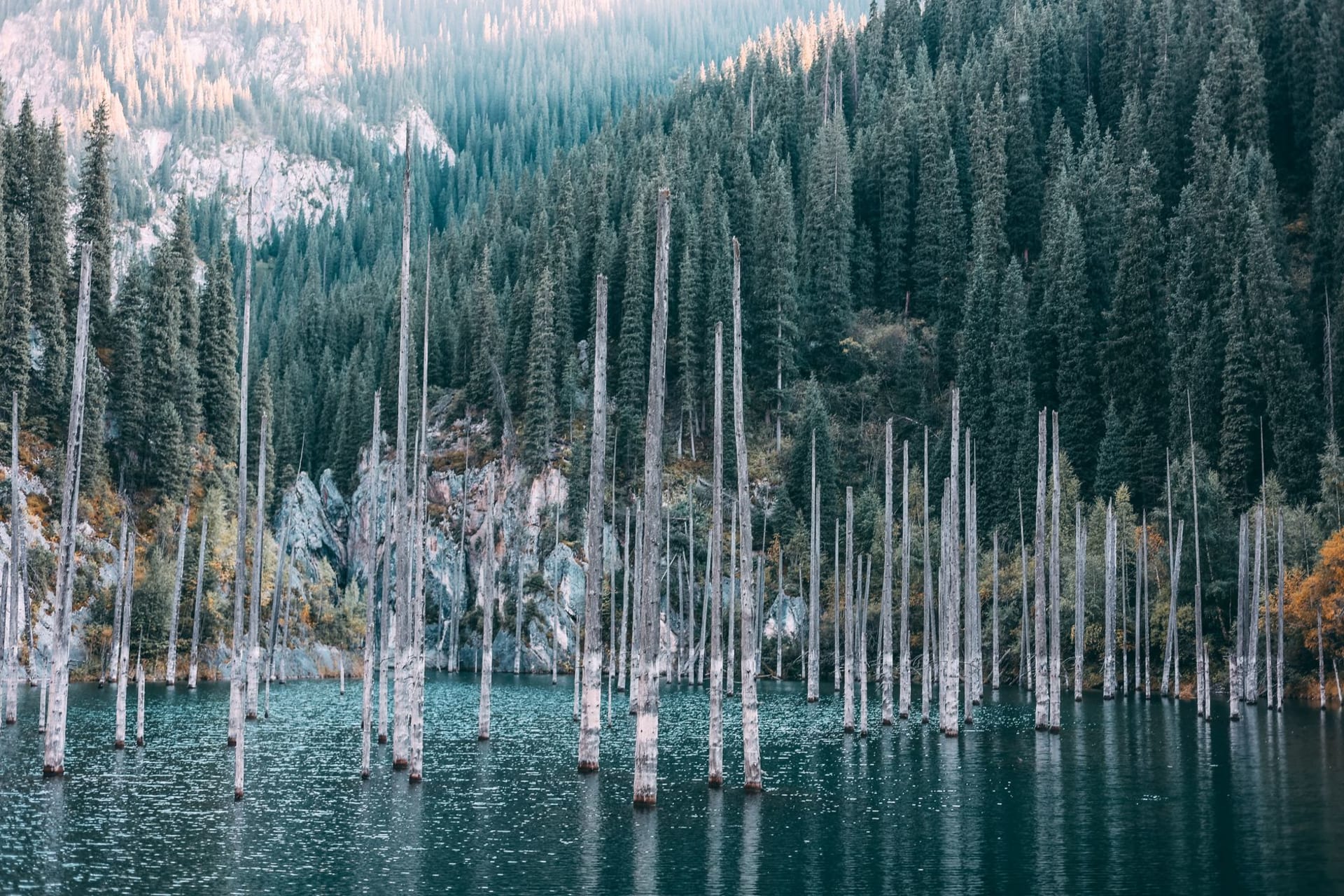
The drive from Almaty takes three hours and proceeds with a steady logic: the city’s outer districts giving way to the flat farmland of the Ili River valley, which gives way to the low Tian Shan foothills, which begin to rise and fold and eventually open into the Kolsai valley where the first lake sits in a bowl of pine forest and mountain silence. I went in late September and the aspens had turned yellow and the cold had settled in at altitude like something permanent. The village of Saty at the trailhead had a few guesthouses, a small shop with the usual Central Asian inventory of instant noodles and chocolate bars, and a row of horses tethered near the path entrance being hired out by their owners for the climb up.
I walked rather than rode, which meant the two-kilometer climb to the lower lake arrived slowly and on my own terms. The lower lake is the one that earns the photographs — it opens suddenly after a final curve of the trail, perfectly oval, turquoise and dark and very still, backed by pines that rise without interruption to the snowline. A wooden jetty extends a few meters from the bank. I sat on it for a long time without quite believing the scale of the quiet. No boat engines, no music from speakers, no distant highway. The occasional creak of a pine, a bird I couldn’t identify, and the sound of water moving very gently against the bank.
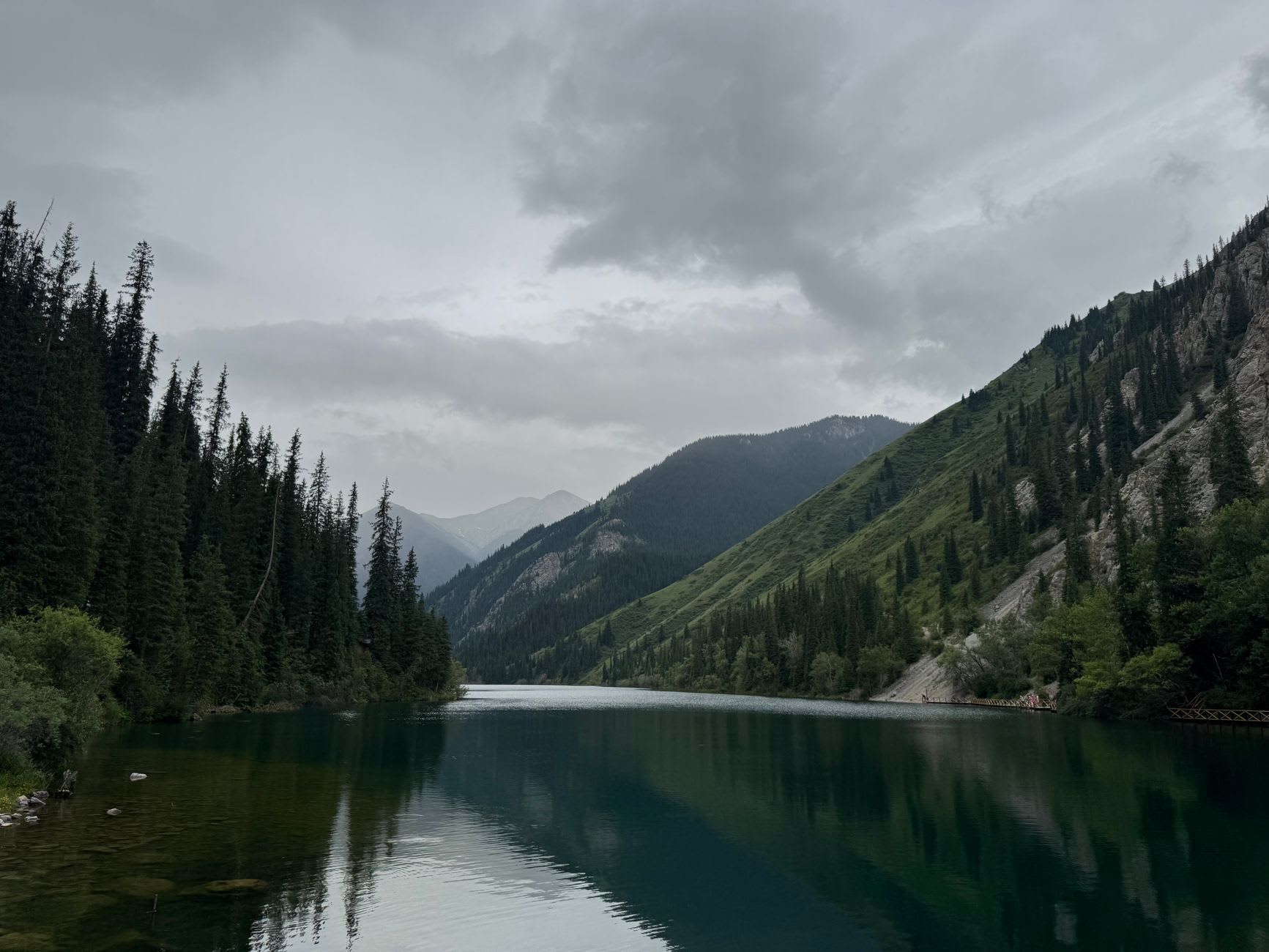
The middle lake is the reward for another four kilometers up a steeper path, and it is — if you can believe it — better. Larger, wilder, with a shore of grey pebbles and exposed rock and a feeling of genuine remoteness that the lower lake, reachable in under an hour, can’t quite claim. I crossed paths with a group of Kazakh hikers coming down who looked at me with mild curiosity and offered me kurt from a small bag they were passing between them. I ate two. They tasted intensely of something I’ve started to think of as specifically Kazakh — sour, dense, slightly smoky, the flavor of the steppe in a small white ball.
The uppermost lake sits close to the Kyrgyz border, accessible only on foot or horseback, and at that elevation the landscape strips back to something very simple: rock, water, sky, and the cold wind that moves through it all. I didn’t make it to the top that day — the middle lake had used the afternoon — but I spoke to a German couple who had camped there and they described waking up to the lake frozen at the edges and the absolute silence of early morning at altitude, and I put it on the list of things I need to go back for.
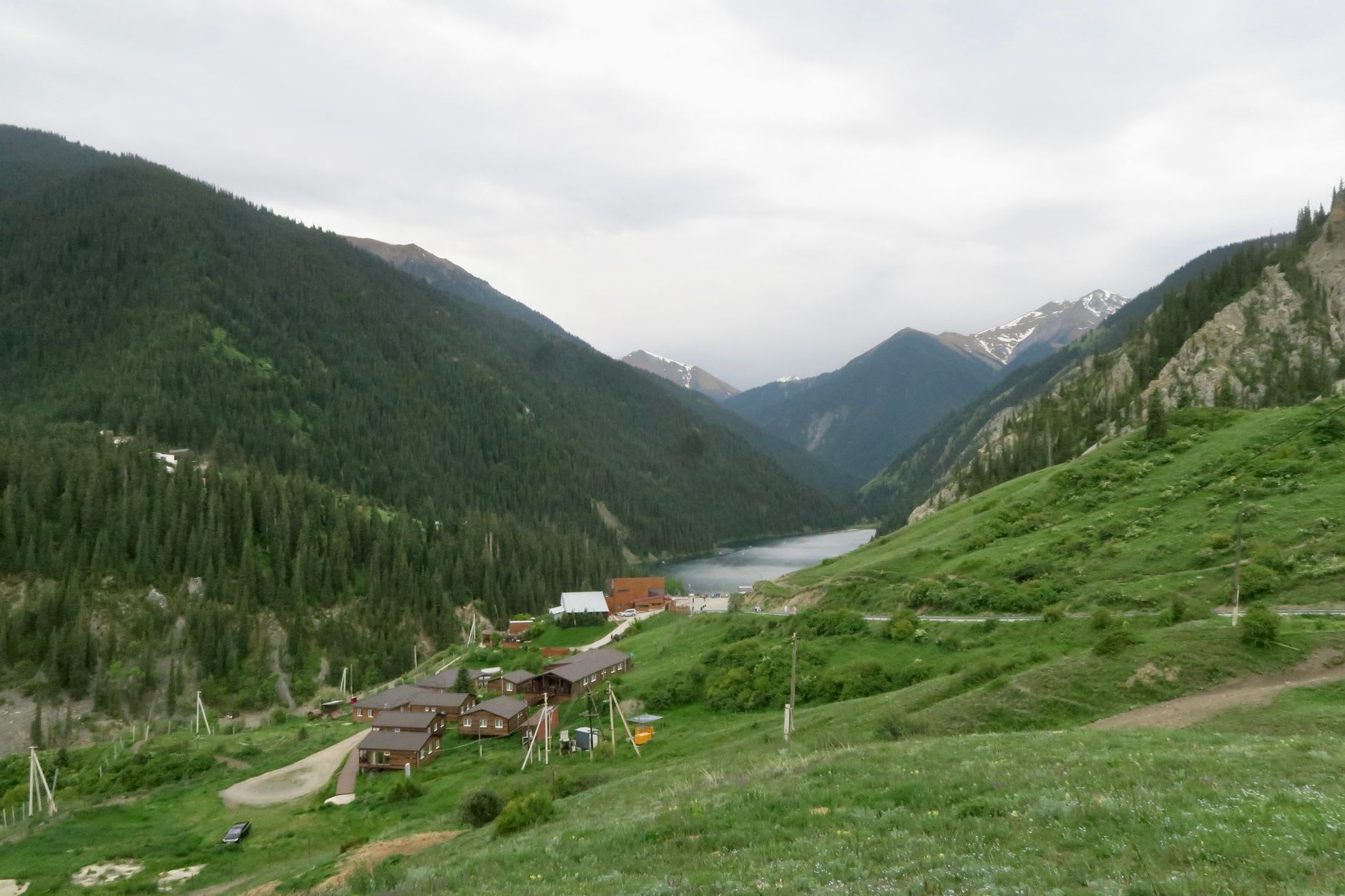
The yurt camps near the lower lake offer the right kind of basic accommodation: warm blankets, a woodstove that starts smoking before the temperature drops, lagman for dinner cooked by whoever is running the camp that season. In the morning the mist comes off the water in long slow columns and the horses graze at the edge of the forest and the whole arrangement feels so precisely right that you forgive yourself for thinking so.
When to go: June through September for hiking; the lakes are accessible from around late May when the snow has cleared the passes. September is extraordinary for the autumn color — yellows and golds against the turquoise water. Winter closes the upper trails but the lower lake remains accessible and eerily beautiful under snow.