Asia
Kazakhstan
"I came expecting nothing and left rearranging everything I thought I knew."
The bus dropped me at Almaty’s old terminal at 6am, still dark, the air sharp with cold and coal smoke. I’d come from Bishkek with no real plan — just a general direction and a month to fill. Kazakhstan was never the destination. It became one.
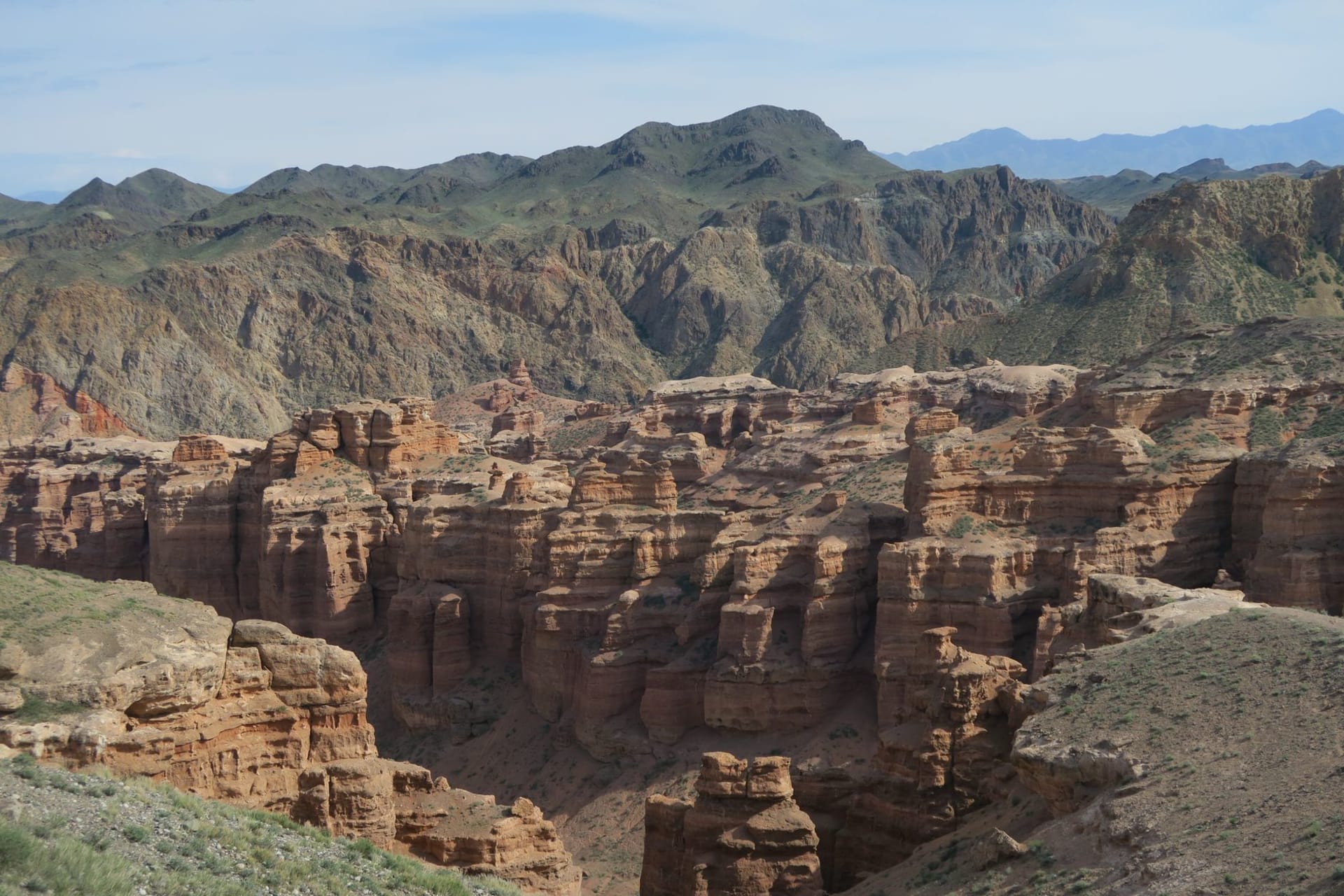
What catches you off guard isn’t the Charyn Canyon, though that place does something violent to your expectations — it’s a Grand Canyon-scale gash in the earth, deep rust and orange, entirely unpromoted, an hour from a city of two million. No shuttle buses, no gift shops selling magnets. Just a rutted road, a few Kazakh families setting up a picnic at the rim, and the kind of silence that makes you realize how rarely you experience actual silence. I sat there for three hours and ate a bag of dried apricots and felt genuinely stunned. What catches you off guard is how little Kazakhstan seems to be trying to impress you. After weeks in countries where the tourist infrastructure was so thick it had developed its own ecosystem, Kazakhstan felt almost refreshingly indifferent.
The steppe is the thing everyone mentions and almost no one prepares you for. Photographs flatten it into boredom. In person, driving east toward Kapchagay or out past Turkistan, it’s genuinely unnerving — an immensity of pale grass that goes on until the concept of distance stops making sense. I think what I felt out there was a kind of geographical vertigo I hadn’t experienced before. The food helped ground me: lagman (hand-pulled noodles in a thick lamb broth), beshbarmak eaten with your hands around someone’s table in Shymkent, kurt — those sour dried milk balls that look harmless until you bite one. I ate a lot of kurt. I came to love kurt.
Nur-Sultan (still Astana to everyone I met) deserves its own paragraph simply because it shouldn’t exist. A capital city built almost from scratch in the middle of nowhere, full of buildings that look like architecture students were given unlimited budgets and zero briefs. It’s bizarre and fascinating and genuinely unlike anywhere else on earth. I didn’t love it. I couldn’t stop looking at it.
When to go: May–June or September–October. Summers are brutal on the steppe (40°C+), winters are serious (-30°C in the north). The canyon and mountain areas around Almaty are best in spring when snowmelt is done but before the summer heat. September is golden.
What most guides get wrong: They frame Kazakhstan as a transit country — something you pass through on the way to Kyrgyzstan or Uzbekistan. That framing is completely backwards. Kazakhstan has more surface area than Western Europe and most of it is still genuinely off the tourist trail. The real mistake is allocating four days. You need three weeks minimum just to scratch the south and the Almaty region. The country isn’t undiscovered — Kazakhs travel their own country intensively — it’s just undiscovered by people who learned geography from a Lonely Planet.