Charyn Canyon
"I sat at the rim for three hours eating apricots and forgot everything I was supposed to do next."
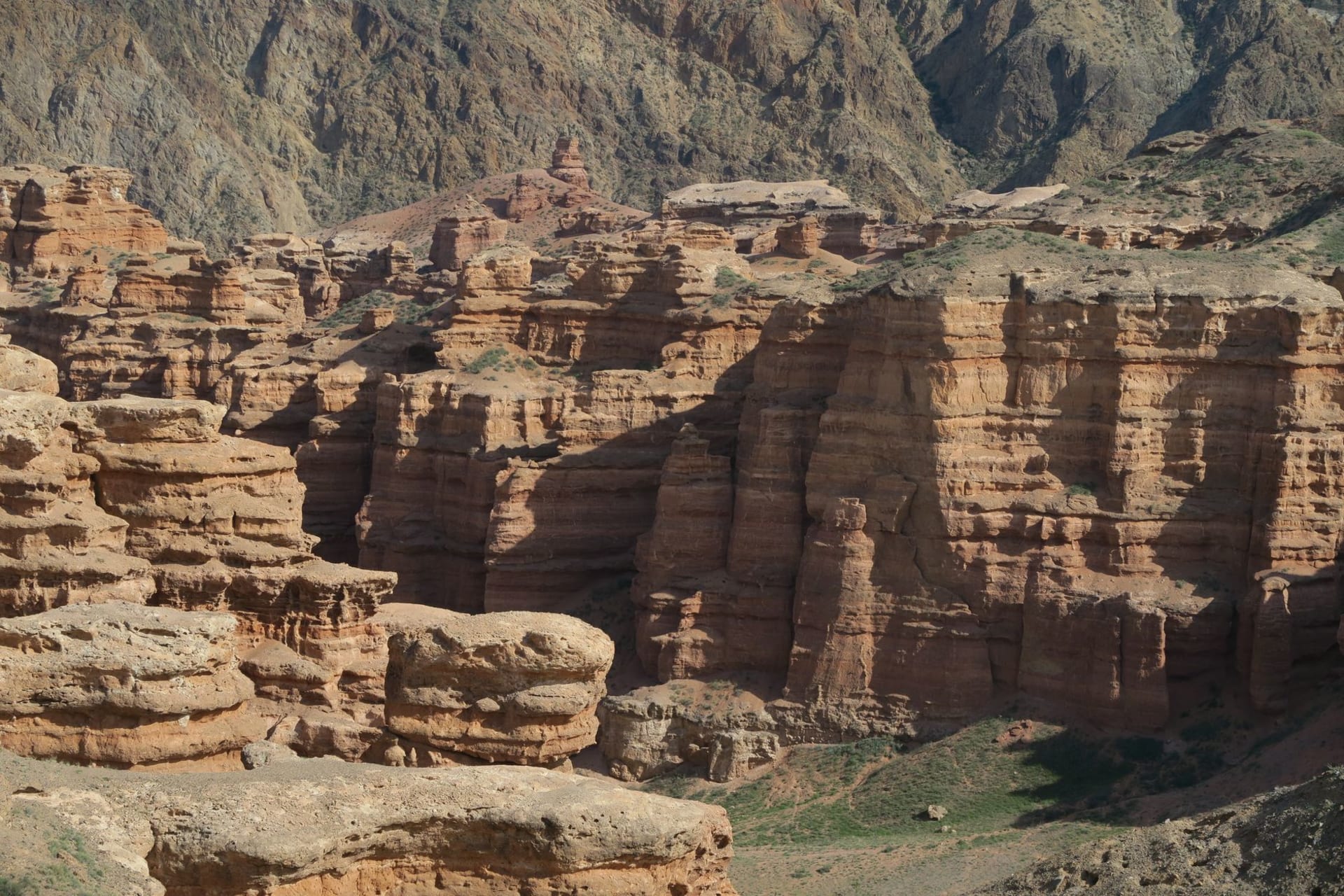
There is no moment of preparation. You drive east from Almaty on a good road through flat steppe, and then — after an hour of nothing, of pale grass repeating itself to the horizon in every direction — a crack appears in the earth. One moment you are on flat ground and then you are standing at the edge of a canyon that goes down two hundred meters in sheer rust-colored walls, wider than you can see comfortably, filled with formations that the wind and water have sculpted into something between cathedral and fever dream. The Valley of Castles, they call the most famous section. Looking at it, the name doesn’t feel like an exaggeration.
I had read almost nothing about Charyn Canyon before arriving. I knew it existed — Pierre, my guesthouse host in Almaty, had mentioned it with the particular offhandedness that locals reserve for things they know are extraordinary but have seen too many times to perform enthusiasm about. He wrote me the route on a napkin. There are no shuttle buses, no ticket booths of any consequence, no gift shops selling refrigerator magnets. There is a rutted dirt road, a modest entry gate, and then the canyon opens in front of you like something that shouldn’t be here.
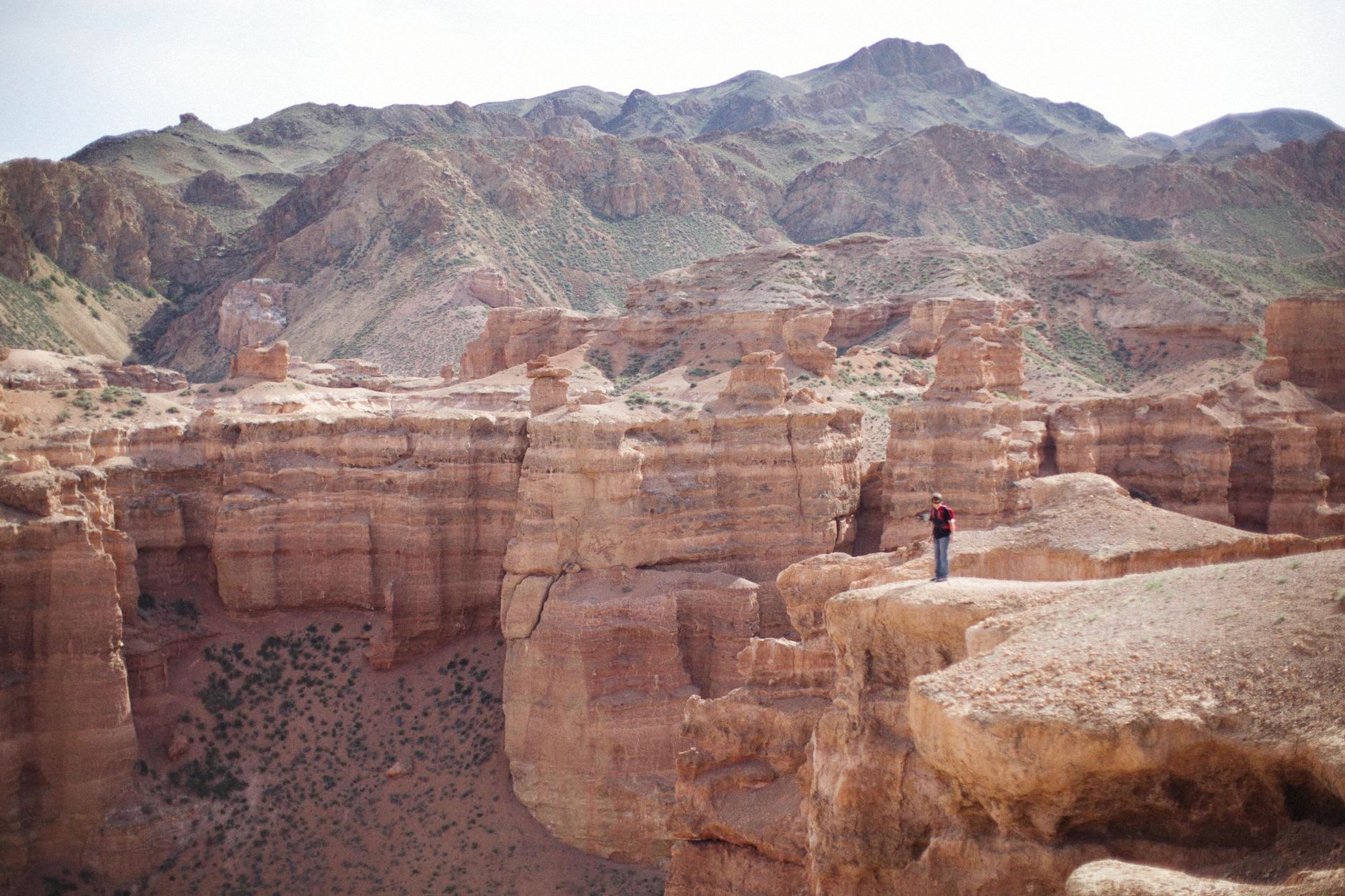
What I remember most precisely is the silence. Not the absence of noise exactly, but a quality of silence that has weight — the kind that makes you suddenly aware of your own breathing, of the small sounds your clothes make when you shift position. A few Kazakh families had set up a picnic at the rim, a tablecloth spread on the rock, thermoses of tea and packages of food being opened with the practiced ease of people who do this regularly. They barely glanced at the canyon. I sat apart from them and ate a bag of dried apricots I’d bought at the bazar that morning and watched the light change on the opposite wall. It took three hours before I felt I had given it its due.
The Charyn River runs at the bottom, green and cold, accessible by a steep path that descends through the canyon walls. Down there among the red rock the scale becomes vertiginous in a different way — you can’t see the rim, can’t see much sky, and the walls close in around you with a geological patience that puts the human timeline in uncomfortable perspective. I swam briefly. The water was cold enough to be clarifying. Climbing back out took forty minutes on legs that weren’t ready for it.

There are camping spots near the rim with basic facilities — pit toilets, a water tap that may or may not be working. Several people I met at the guesthouse had spent the night and described watching the canyon walls turn purple in the dusk and then the stars filling in with a completeness that city living had made them forget was possible. I went back to Almaty the same day and have been regretting that decision since.
When to go: May and September are ideal — warm enough to swim in the river, cool enough at the rim that standing in the sun for three hours doesn’t become a medical situation. Summer midday heat is brutal; go early and come back up before noon if you visit in July or August. The canyon is accessible year-round but the dirt road becomes difficult in wet weather.