An alpine mirror of glacial turquoise at 2,511 meters, ringed by peaks and watched over by a Soviet-era observatory.
Lia and I drove out of Almaty on a morning so clear we could already see the Trans-Ili Alatau range biting into the sky ahead of us. The road climbs fast — switchback after switchback — and somewhere past the checkpoint the air changed, thinner, colder, smelling faintly of pine and wet stone. By the time we parked near the shore at 2,511 meters, I was a little out of breath just from stepping out of the car. Then I saw the water, and I forgot about my lungs entirely.
I’d read about the color beforehand, but nothing prepares you for standing in front of it. Big Almaty Lake is this improbable, saturated turquoise, like someone mixed glacier melt with a handful of crushed jade. Our guide explained that the hue shifts through the seasons depending on the mineral sediment the glacial meltwater carries down into the basin — some months it leans more green, others a deeper blue, and we happened to catch it at its most electric. Lia kept crouching at the edge trying to photograph it, convinced her camera was exaggerating the saturation. It wasn’t.
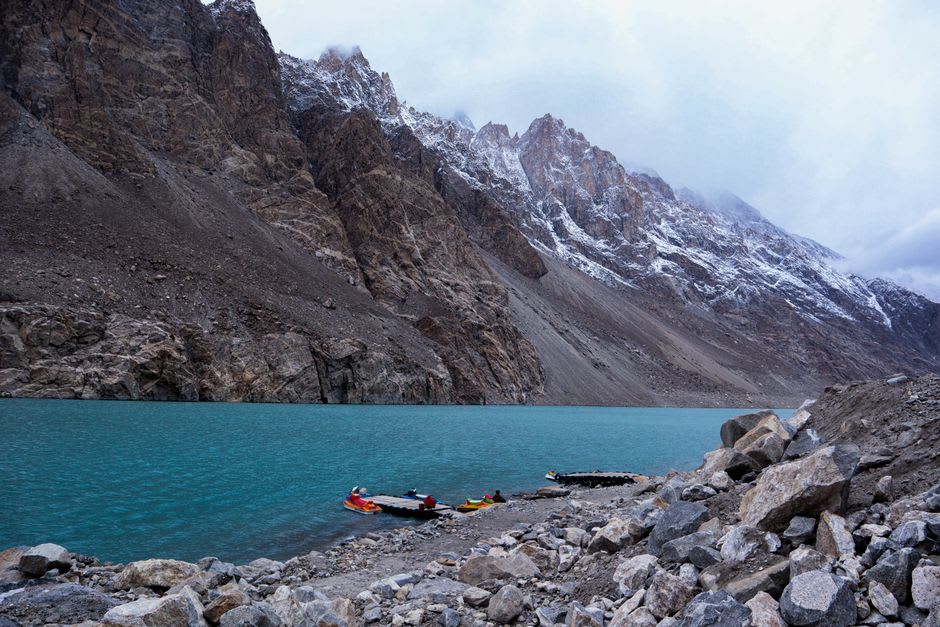
What struck me almost as much as the color was learning that this lake isn’t just scenery — it’s plumbing. The Big Almaty River carries this water down to the city, meaning nearly two million people in Almaty owe part of their daily water supply to this exact basin we were standing beside. It reframed the whole visit for me; this wasn’t a postcard lake, it was a working part of the mountains’ relationship with the city below.
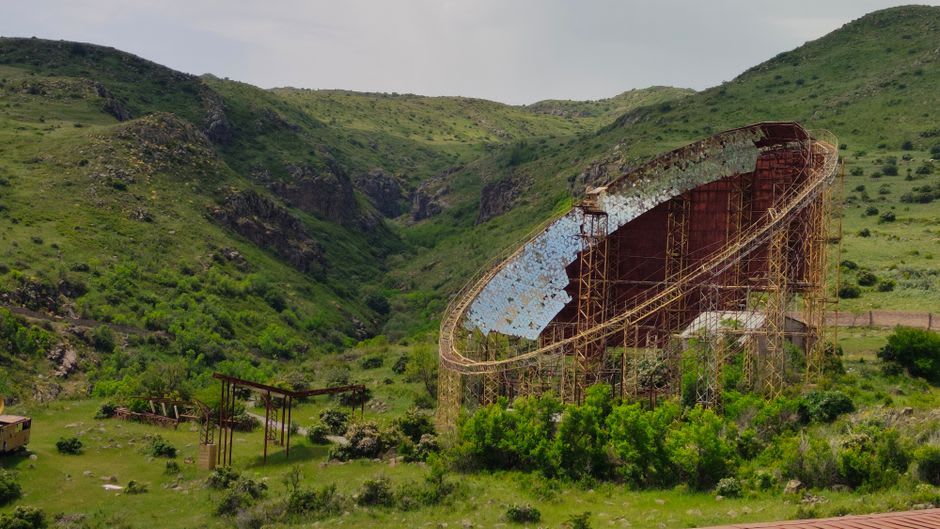
Above the shoreline, we hiked up toward the old cosmic ray station, a squat Soviet-era research building from 1941 that once counted among the highest-altitude observatories in the USSR. Half-abandoned, still faintly humming with the strangeness of Cold War science, it sits there looking out over the turquoise water like it’s still keeping watch. We sat on a boulder nearby, ate the bread and kurt we’d packed, and watched clouds drag shadows across the surface of the lake, changing its color again right in front of us.
When to go: Aim for June through September, when the mountain roads are reliably open and the lake’s turquoise is at its most vivid — earlier or later in the year, snow and ice can close the pass entirely.
Keep exploring
More from Kazakhstan
 kazakhstan
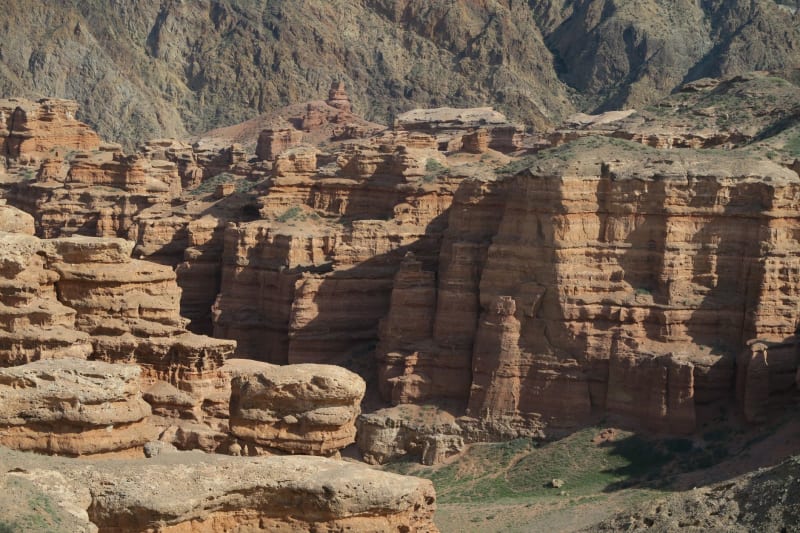
 Charyn Canyon
A Grand Canyon-scale gash in the earth two hours from Almaty that Kazakhstan barely bothers to advertise.
Explore kazakhstan
 Karaganda
A Soviet coal city built on Gulag labor that now carries its dark past with a directness that most countries managing similar histories never manage.
Explore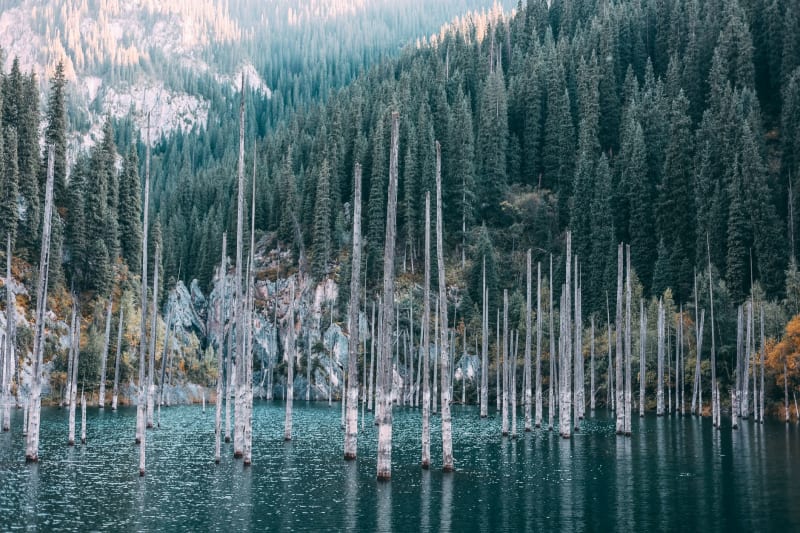 kazakhstan
 Kolsai Lakes
Three glacial lakes stacked in the Tian Shan foothills, where the pine forests smell of somewhere much further north and the silence is absolute.
Explore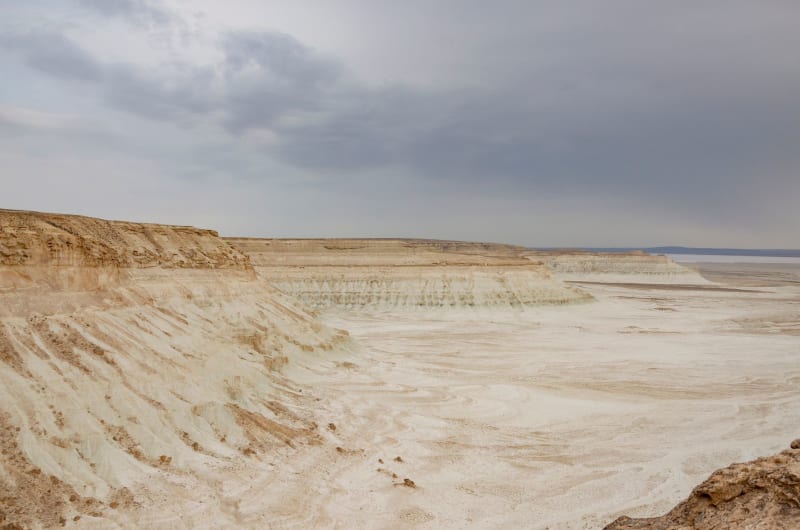 kazakhstan
 Mangystau
The otherworldly west — chalk cliffs, underground mosques carved into rock, and a landscape so alien that 'desert' is an insufficient word for it.
Explore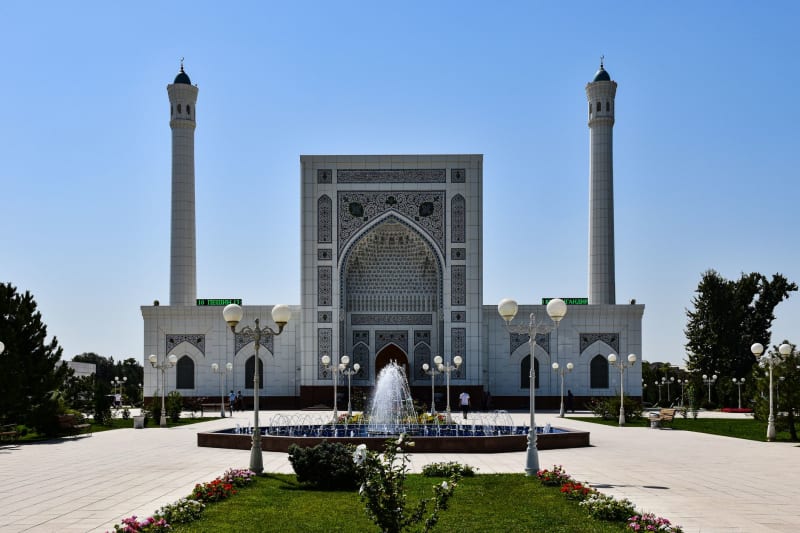 kazakhstan
 Shymkent
Kazakhstan's warmest city — where Uzbek plov drifts from bazaar kitchens, the evenings stretch long and unhurried, and the south of the country announces itself.
Explore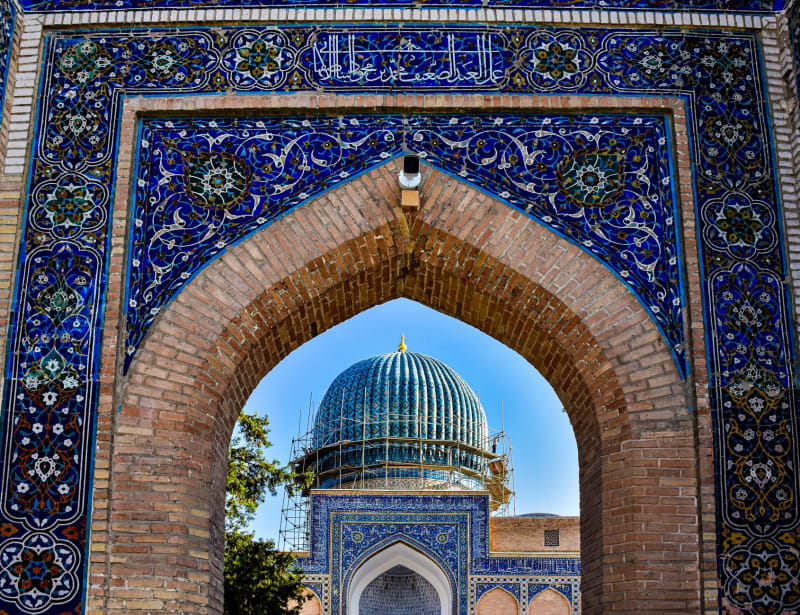 kazakhstan
 Turkistan
The ancient pilgrimage city of the steppe, where a 14th-century turquoise mausoleum still draws the faithful from across Central Asia.
Explore