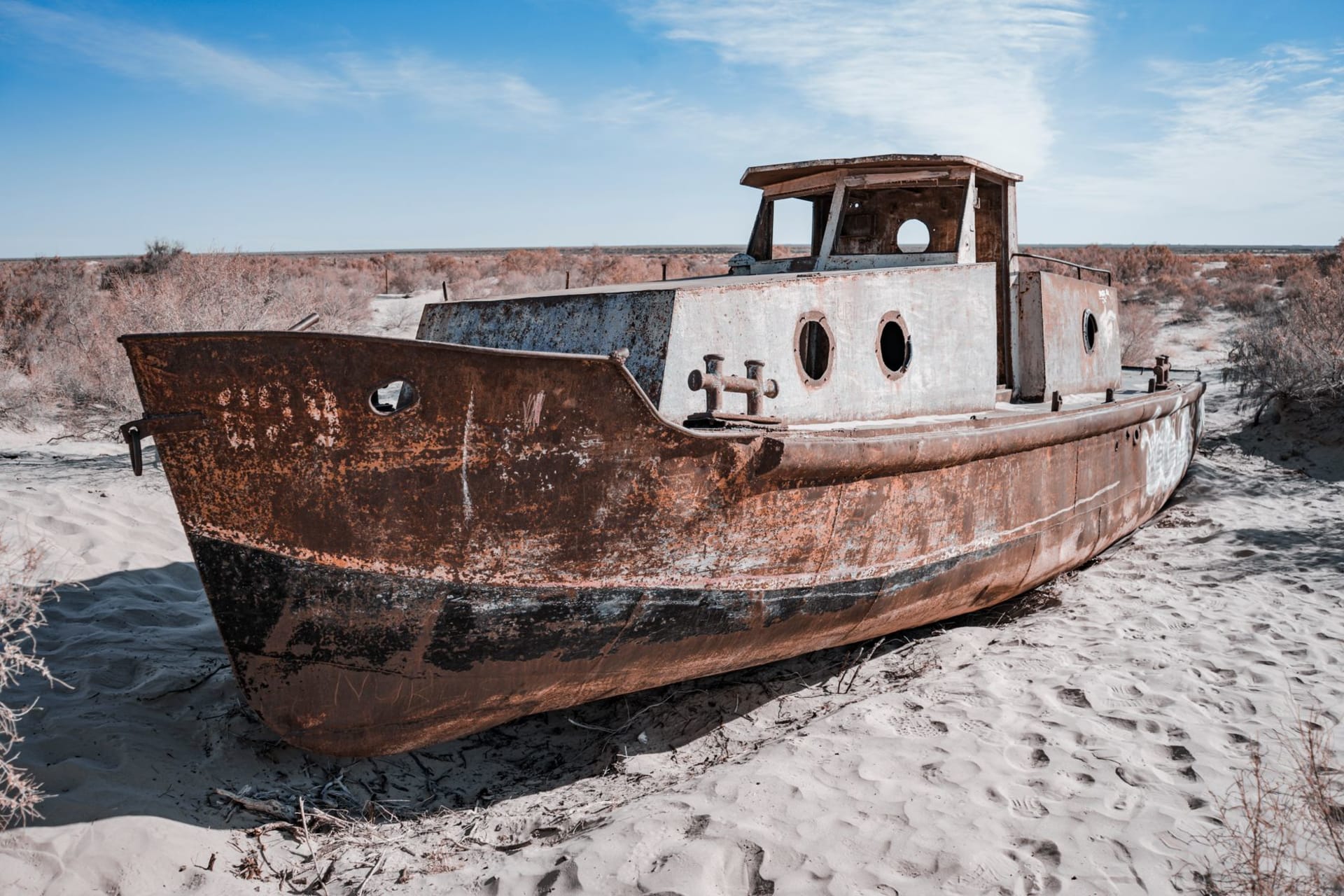
The town of Aralsk sits in the middle of nowhere with a fishing harbor at its center — a proper harbor, with docking infrastructure and bollards and a quayside — except that there is no water. The Aral Sea, which was once the world’s fourth largest inland body of water, has retreated roughly one hundred kilometers from Aralsk’s shore since the 1960s. The harbor now docks dust. Old men still walk its edges with that particular maritime slowness of people who have spent their lives watching water, except there is nothing to watch.
I arrived by overnight train from Kyzylorda, arriving at first light in a town that had the texture of somewhere still in shock. Not a recent shock — the Soviet irrigation projects that diverted the Syr Darya and Amu Darya rivers away from the sea began in the 1950s and the consequences became undeniable by the 1970s — but the slow, accumulated shock of a community watching the single thing that defined its existence disappear over decades. The local museum near the station has photographs: boats on actual water, a beach with actual swimmers, a fish market with actual fish. The exhibit is presented with a strange neutrality, as if the people who assembled it are still deciding how to feel.
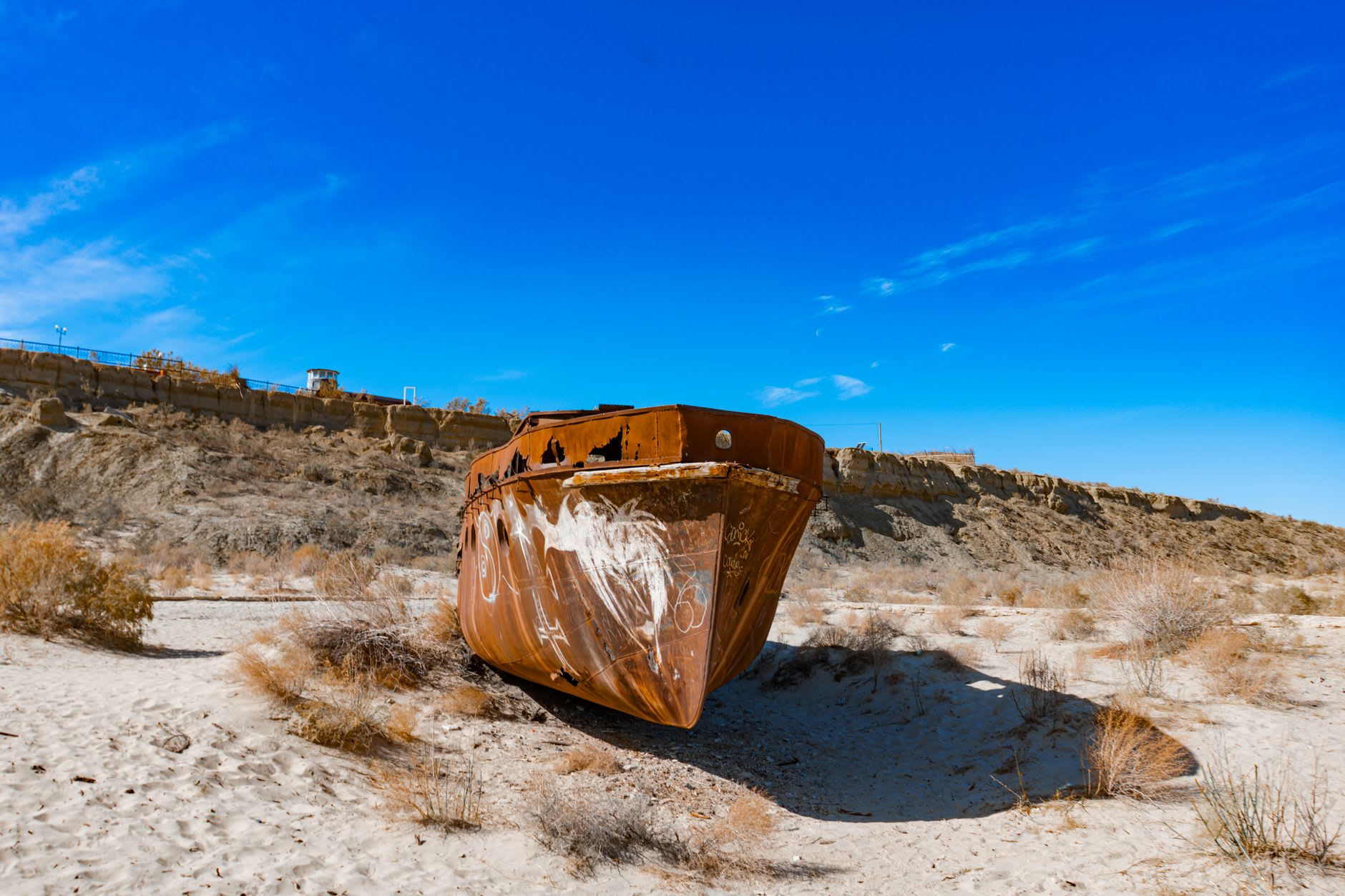
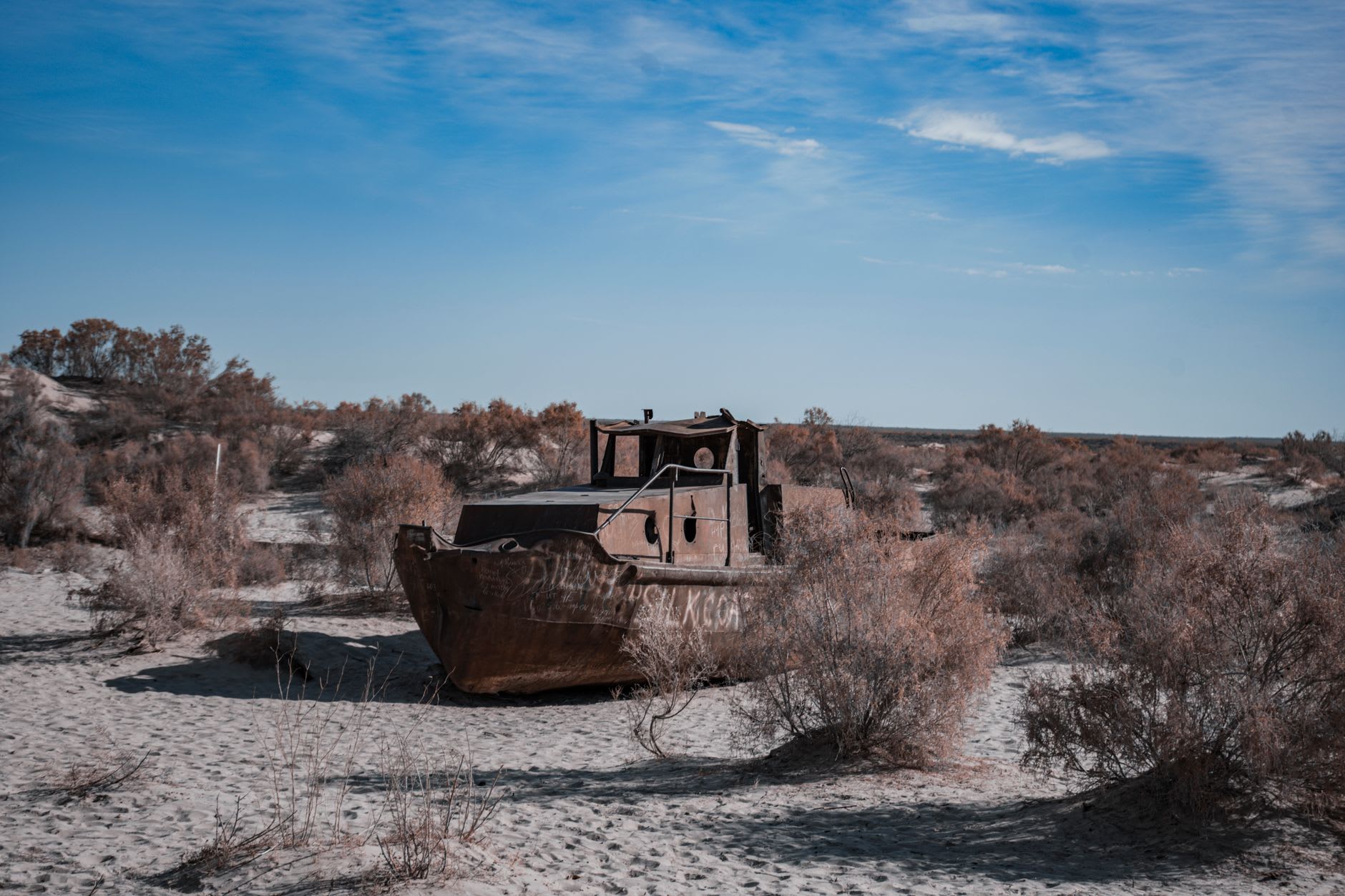
To reach the ship graveyard you drive north from Aralsk on a road that deteriorates quickly to track. The ships are spread across a several-kilometer stretch of what is now flat desert — rusting hulls listing at various angles, their paint gone, porthole frames empty, names still barely legible in Cyrillic on their bows. The largest vessels are fishing trawlers, fifty meters or more. Walking between them produces a kind of cognitive dissonance that I’ve experienced nowhere else: your feet are on sand and your eyes are reading the rigging height of ocean-going vessels. The salt flat around them carries the white crust of the sea that evaporated here.
There is, however, something that the story of the Aral Sea almost always omits. In 2005, Kazakhstan built the Kokaral Dam across the northern section of the former sea — a thirteen-kilometer earthen embankment that has allowed the Small Aral Sea to partially refill with water from the Syr Darya. The water level has risen by more than twelve meters since the dam was built. Fish have returned. The small harbor at the north Aral village of Aralsk now actually has water in front of it. Not what it was. Not enough. But something, and the fact of it matters.
I talked for a long time with a man outside the museum who had been a carp fisherman in the 1970s and now sold dried goods from a small stall. He was in his seventies. He spoke about the sea with the factual resignation of someone who has processed a grief so completely that description is all that remains. He didn’t want sympathy. He wanted me to understand the size of what had been here: boats going out for three days, holds full of carp, a city that smelled of fish and salt. Then he sold me two bags of dried fruit and went back to his stall.
When to go: May or September for bearable temperatures. The journey from Almaty requires a connection in Kyzylorda — the overnight train is the most practical option. Come with enough time to visit both the ship graveyard and the Small Aral shore to the north, where the water has returned, and you’ll understand the disaster and the recovery in the same trip.