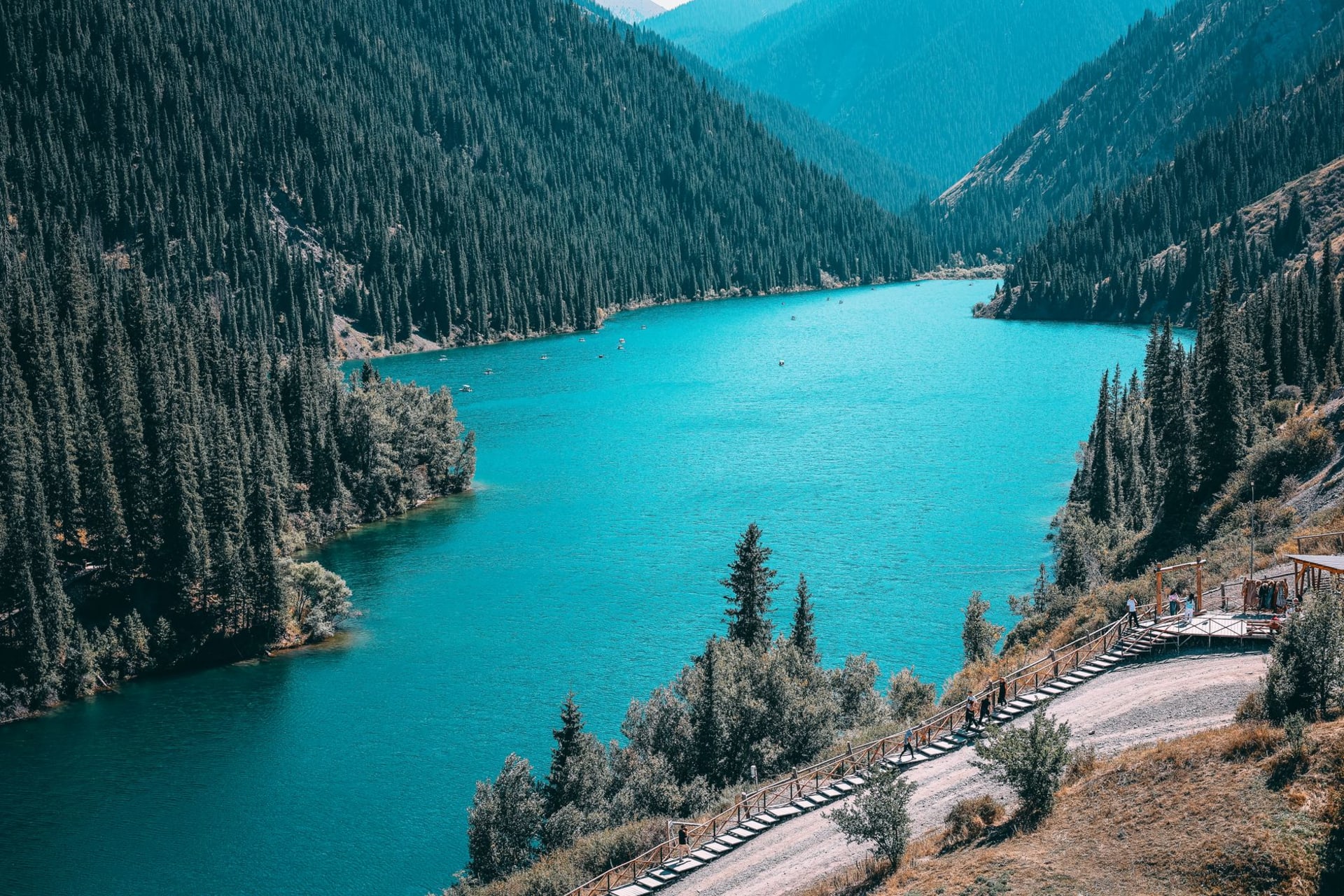
Altyn-Emel National Park
"I slid down a dune the size of a hill and it groaned beneath me like a cello — I have never heard sand make a sound before or since."
Getting into Altyn-Emel is half the experience. The park sits about three hours northeast of Almaty, and you cannot just turn up — you need a permit, and the distances inside are so large that nothing is walkable. Our driver, a leathery man named Bolat who had clearly done this drive a thousand times, met us at the gate, signed a logbook, and then drove for another two hours across gravel plains before we saw anything but heat shimmer and the occasional gazelle. Lia fell asleep against the window. I stayed awake out of stubbornness and was rewarded, eventually, by the first sight of the dune.
The dune that sings
The Singing Dune — Poyushchiy Barkhan — is the park’s headline act, and it earns it. It is a single enormous mound of pale sand, roughly three kilometers long and rising close to three hundred meters out of an otherwise stony plain, wedged between two ranges of dark mountains. The strange thing is that it stays put; the wind funnels through the valley but the dune does not migrate. Bolat told us to climb to the crest and then push the sand downhill with our feet, and when we did, the whole face of the dune began to hum — a deep droning vibration you feel in your chest as much as hear, caused by the dry grains shearing past one another. Lia thought I had a speaker hidden somewhere. I did not. It is genuinely one of the strangest natural sounds I have encountered.
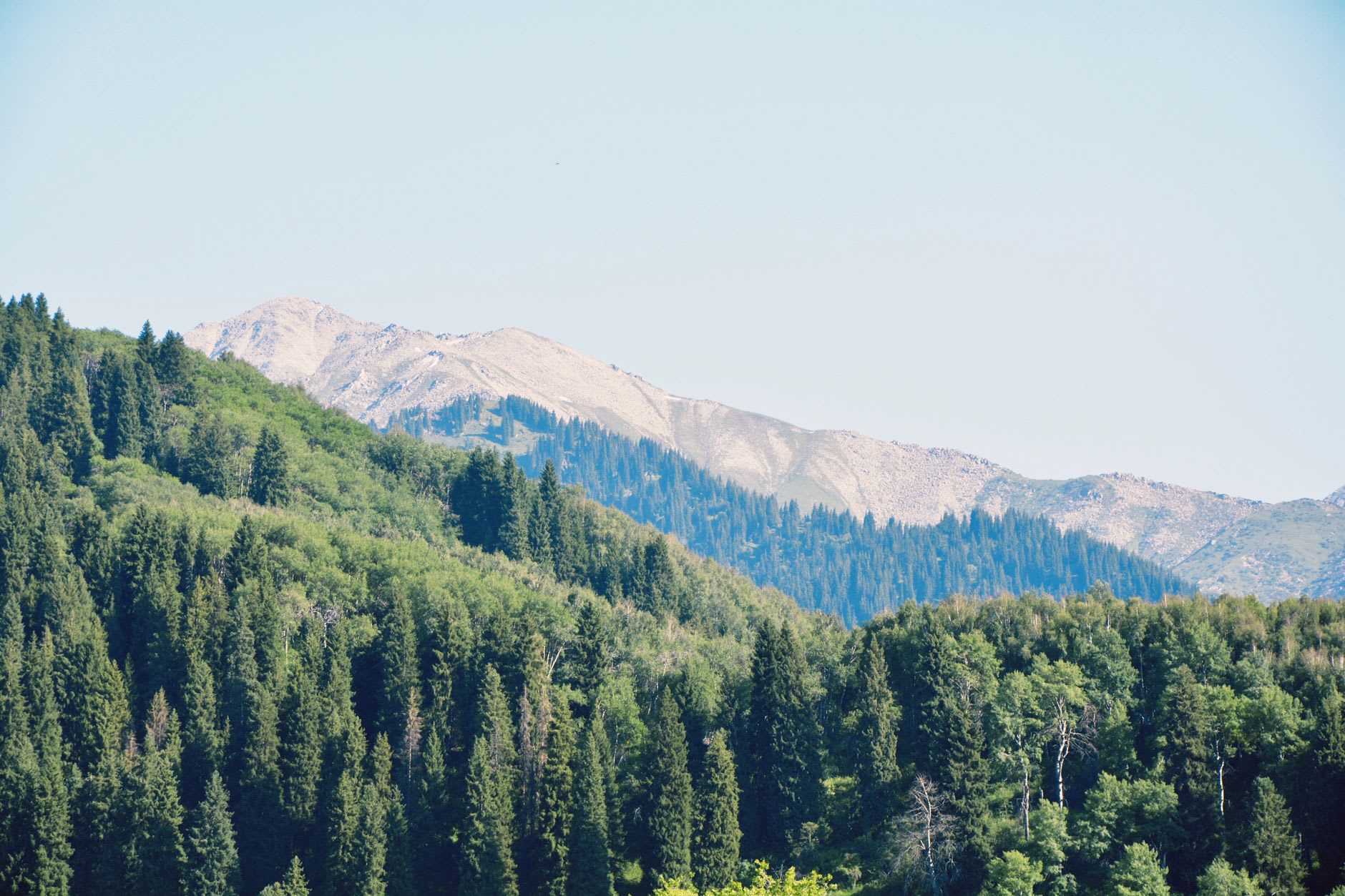
The climb up is brutal — soft sand swallows every step and you slide back half of what you gain — and we reached the top sweating and laughing, with a view down into the Ili River valley on one side and the snow-streaked Dzungarian Alatau on the other. We had the whole crest to ourselves. The park’s sheer size means even the famous spots feel deserted.
Striped hills and wild horses
The next morning Bolat drove us another hour to the Aktau mountains, and they are the reason I would go back. These are low hills of soft clay laid down on the floor of an ancient sea, eroded into ridges and gullies and banded in horizontal stripes of white, pink, ochre, and deep brick red — sixty million years of sediment stacked like a layer cake and then cut open. In the low light of late afternoon the colors saturate until the whole range looks lit from within. Nearby, the Katutau range shows the opposite story: jagged black volcanic rock, twisted and porous.
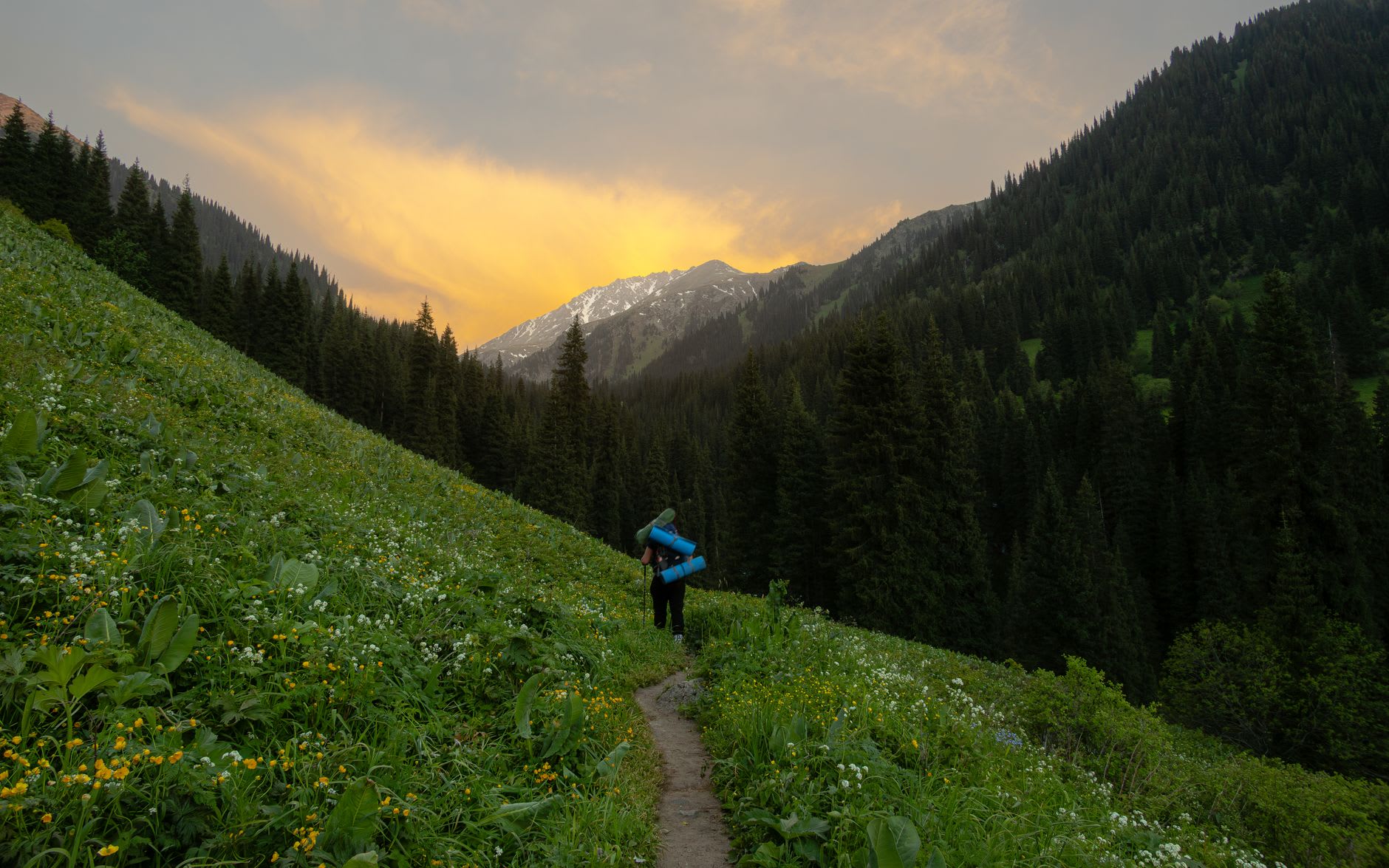
The park is also a refuge for wildlife pushed out of the rest of the steppe. We saw a herd of kulan — the wild Asiatic ass, reintroduced here and now thriving — break into a gallop across the plain in a long brown ribbon of dust, and goitered gazelles watching us from a safe distance. There is a population of the rare Przewalski’s horse too, though we did not spot one. We slept in a basic guesthouse in the village of Basshi, ate horse-meat beshbarmak by lamplight, and drove out the next day already planning a return.
When to go: April through June and September through October, when the steppe heat is bearable — midsummer regularly tops forty degrees and the open ground offers no shade. Spring brings green plains and wildflowers; autumn brings the clearest light for the Aktau colors. A permit and a hired driver are effectively mandatory.