Yusmarg
"No cable car, no chai stall with a selfie backdrop. Just a meadow at the end of a road that most people don't take."
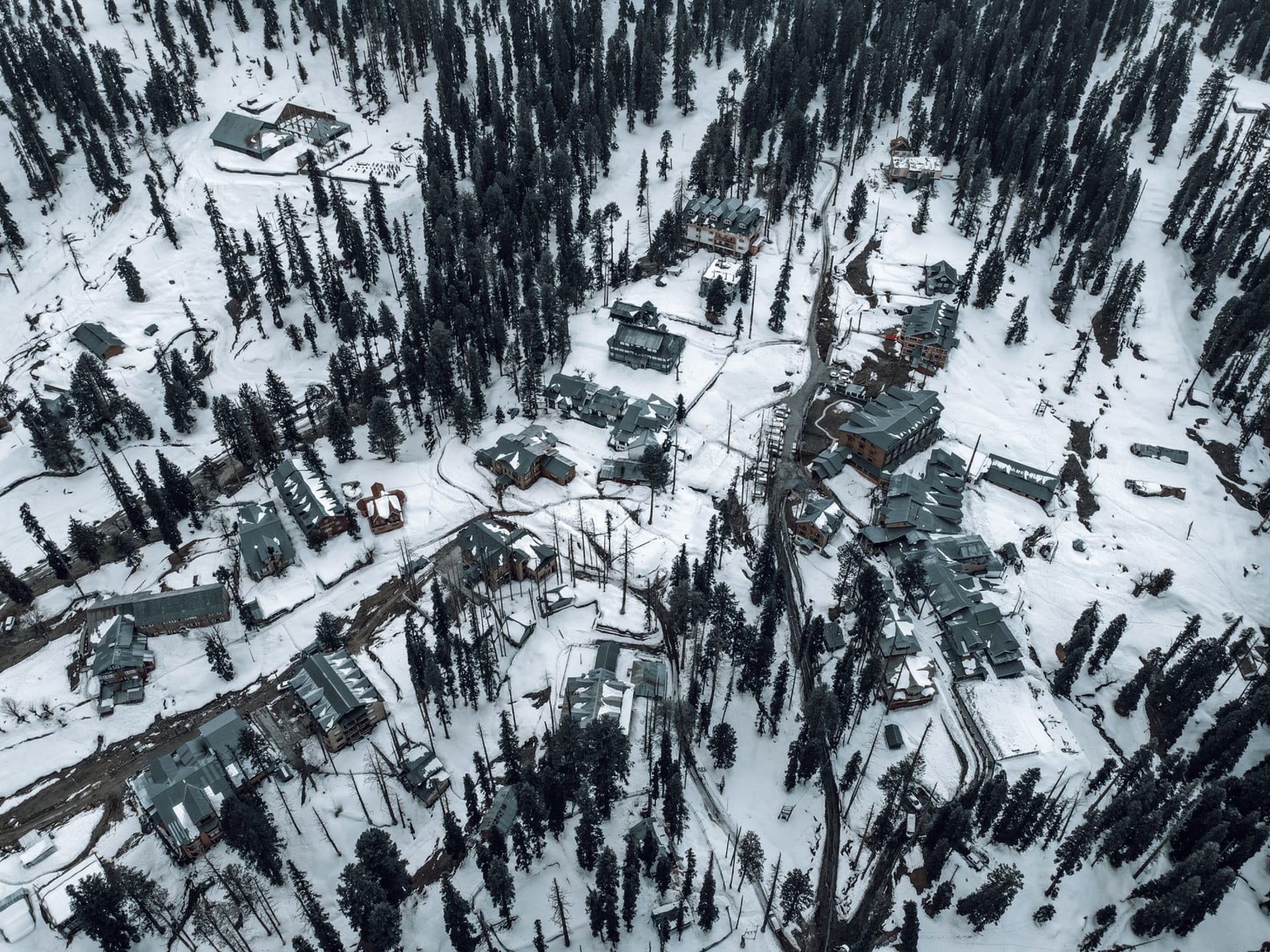
I went to Yusmarg because my houseboat owner mentioned it in passing, the way people mention something they’re slightly surprised you don’t already know. He described it as Gulmarg without the tourists, Sonamarg without the distance. I got a shared taxi from Srinagar that took me south toward Shopian, turned up a side road into the Doodhganga Valley, and climbed for forty minutes through pine forest so dense the road ran in perpetual shadow. Then the forest broke, and I was at Yusmarg — a meadow of perhaps three kilometres at twenty-four hundred metres, ringed on all sides by pines and above the pines by the bare rock and snow of the Pir Panjal.

There is no gondola here. There are no ski lifts. There is a scattering of small wooden guesthouses at the meadow’s edge, a cluster of tea stalls that run from May to October, and a population of horses available for hire. The horses are managed by Gujjar herdsmen — the semi-nomadic Muslim pastoralists who move between the valley and the high mountain pastures with the seasons, and who are one of the least-visible but most consequential communities in Kashmir’s landscape. The horse owner who accompanied me on the ride into the upper meadow spoke no English and I spoke no Gujjari, but he had the easy manner of someone very comfortable with silence, and we rode for two hours through birch forest and across meadow streams without either of us feeling the need to fill the air.
The meadow itself has a quality that’s difficult to put precisely — it’s not dramatic scenery in the way that Sonamarg is dramatic, with its glacier and its crowding peaks. Yusmarg is gentler: the light comes in at a shallow angle through the surrounding pines, the meadow is soft and well-grazed, and the mountains visible above the treeline are present but not pressing. There is a small lake called Nilnag about forty minutes walk from the meadow — a clear alpine lake ringed by reeds, with the Pir Panjal visible to the south and nothing on its shores except grass and a few boulders. I ate lunch there, sitting on one of the boulders with a cold naan from the meadow tea stall and a flask of kahwa the guesthouse owner had pressed on me before I left. The lake had wind on it, and the reeds made noise, and that was all.

What Yusmarg offers that no other Kashmir destination can match is the specific pleasure of a place that has not yet been productised. There are no branded photo spots, no selfie pylons, no guides with laminated menus of activities. The guesthouses are run by local families and the food is whatever was cooked that morning — I ate lamb with rice and a dish of bitter greens I couldn’t identify, cooked over wood, and it was the best meal I had in the valley. The family sat in the next room while I ate and watched television with the door open, which is the exact right amount of distance.
When to go: May through October, when the road is accessible. June and July bring the meadow into full bloom, with wildflowers covering the ground between the grazed patches. September is when the Gujjar families begin moving back down from the higher pastures, which adds a particular energy to the landscape — big family groups with their flocks moving through the trees.