Asia
Kashmir
"I didn't believe a lake could make me feel that small."
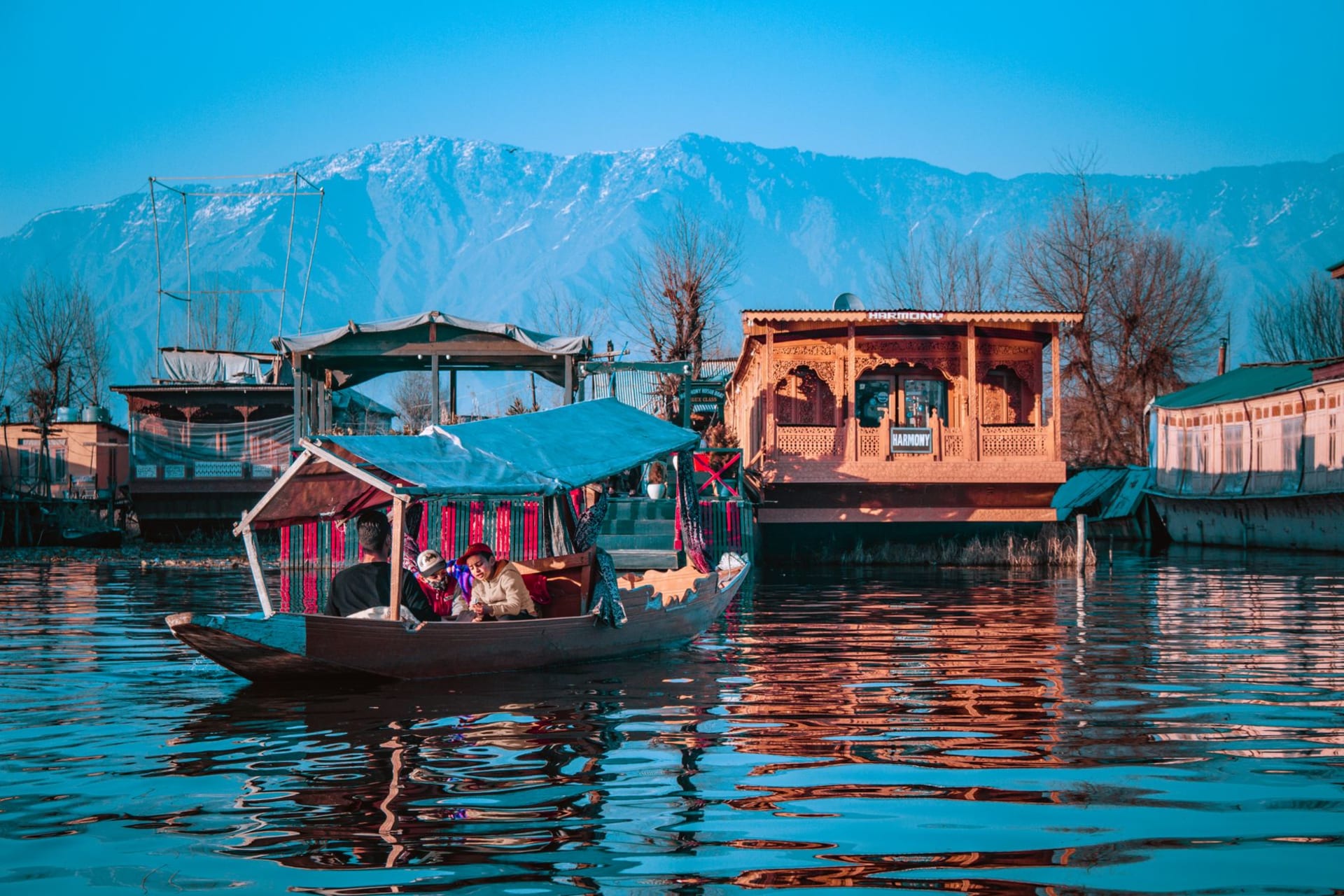
I arrived in Srinagar on a clear October morning, and the taxi from the airport drove along the edge of Dal Lake just as the light hit the water. The Himalayas were behind the city, enormous and white, and the lake was so still it looked painted. A line of shikaras — the narrow wooden boats painted in reds and greens — were already moving across the surface. I had read about this place my whole life, in books, in poems, in the half-remembered descriptions of people who said Kashmir was the most beautiful place they had ever seen. For once, the place matched the language.
I stayed on a houseboat, which is less exotic in practice than it sounds in theory — you sleep in a carpeted room that rocks slightly, someone brings you tea and eggs in the morning, the cold comes off the water at night. But waking up at five to find the lake wrapped in mist, with the calls from the mosques drifting across the water and the first vendors paddling out with their floating markets of lotus flowers and vegetables, made me understand why people keep coming back. The city itself is Mughal-layered: gardens built by emperors who came here to escape the Indian summer heat, mosques with carved walnut woodwork, street bazaars where saffron is sold by the gram and wazwan — the great Kashmiri feast of thirty-six courses, mostly lamb — is the language of hospitality. I ate rogan josh from a place near the old bazaar that had been making it the same way for three generations. It bore no resemblance to anything I had eaten calling itself rogan josh anywhere else.
The valley rewards slowness. A shikara ride at dusk, when the mountains turn orange and the surface of the lake catches the light, costs almost nothing and is worth everything. The Mughal gardens — Shalimar Bagh, Nishat Bagh — are legitimately stunning in autumn when the chinar trees go red. Day trips into the mountains above the valley, toward Gulmarg or the meadows around Sonamarg, show you a different Kashmir: high-altitude pastures, shepherds with their flocks, air cold enough to feel clean.
When to go: April to June is lush and green, with pleasant temperatures and blooming fields of mustard. September and October are the golden months — clear skies, saffron harvest, and the chinar trees in full autumn color. Avoid July and August, which brings heavy rain and, in some years, political tension that affects movement around the valley. Winter (December to February) is for the genuinely cold-tolerant: the lake sometimes freezes, and Gulmarg becomes a serious ski destination.
What most guides get wrong: They treat Kashmir as a backdrop — the lake, the mountains, the houseboats — and forget that the valley has one of the most distinctive food cultures in South Asia. Wazwan isn’t just a meal; it’s an event, a form of generosity, a multi-hour argument for why lamb is the correct animal. The Kashmiri saffron, grown in the fields around Pampore, is among the world’s finest and costs a fraction of what you pay for Iranian or Spanish varieties. And the craft traditions — the papier-mâché, the embroidered pashmina shawls, the walnut wood carving — are not tourist souvenirs but living industries that have been running for centuries. Spend less time on the lake and more time in the lanes behind the bazaars.