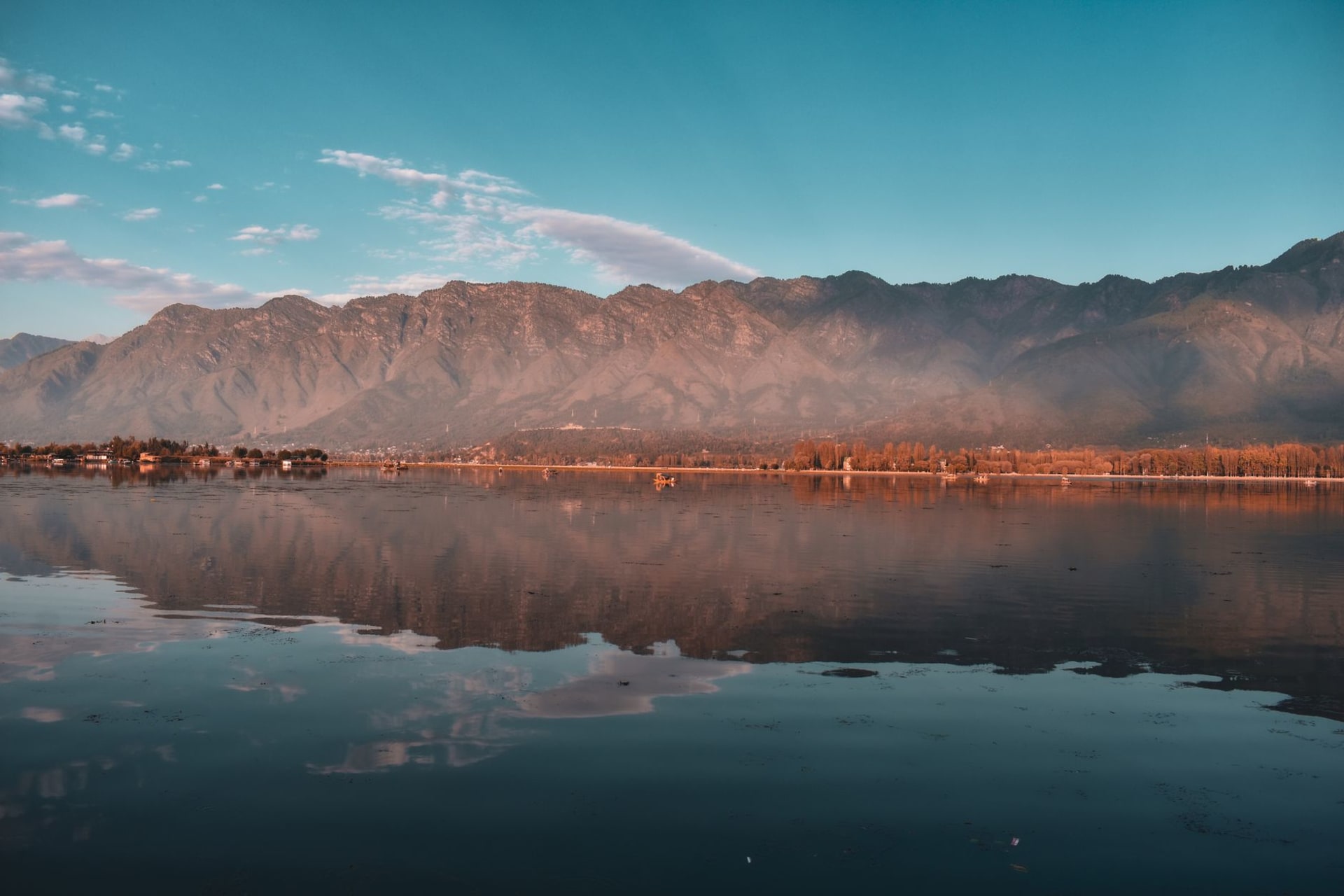
I went to Wular Lake expecting something scaled like Dal — beautiful, contained, easy to comprehend. What I found was something else: a body of water so large that standing on its bank at Bandipora I genuinely couldn’t see the far shore through the morning haze, and for a moment lost my bearings on where south was. Wular covers two hundred and seventeen square kilometres at its largest extent, though it contracts in summer. It is the largest freshwater lake in Asia and sits in the flat plain north of Srinagar, fed by the Jhelum River and ringed by the mountains of the north Kashmir range. The scale of the sky above it is unlike anywhere else in the valley.

The communities that live around Wular are the fishermen of the Wattal and Hanji communities — people whose entire economy and culture is built around this body of water. I watched the boats go out from Bandipora at four in the morning, wooden flat-bottomed vessels loaded with nets, moving in the pre-dawn dark across water that showed nothing at all. By nine, they were back with catches of the large freshwater fish that the lake produces: rohu, trout, and the local carp that end up in wazwan and in the fish dishes of the villages. The fish market that opens on the lakeside at mid-morning is one of those genuinely functional scenes that tourist-facing Kashmir rarely shows: wet stone, ice blocks, men in rubber boots, a specific smell of fresh water and fish that clings to the market lane all day.
There is no tourism infrastructure at Wular worth the name. No houseboats, no shikaras for hire, no gondola. There is a bird sanctuary on the southern shore at Hokersar that attracts serious birders in winter — the lake hosts enormous populations of migratory ducks and geese during the autumn passage and the winter months, when birds moving between Central Asia and the Indian subcontinent stop here in numbers that ornithologists count in the hundreds of thousands. I came in October and the sky over the lake had birds in it at every altitude, moving in formations that caught the low light. It is one of those natural phenomena that resists the scale your eyes expect.

The villages around the lake — Sopore, Bandipora, Sumbal — are working towns unremarkable to the eye and revealing if you stay long enough. In Sopore I ate at a local dhaba that served saag with mustard oil and bread cooked on a clay griddle, and the owner, who had a cousin in Lyon, sat and talked about the apple trade — Sopore is the largest apple market in Asia after Shimla — while his wife brought us successive glasses of kehwa and showed no interest in hurrying us along. This is what Wular offers: not a scenic destination but an encounter with a Kashmir that doesn’t perform for visitors.
When to go: October through February for migratory birds — the autumn passage peaks in October and November. The lake is most dramatic in size during spring snowmelt, April and May, when the Jhelum runs high. Summer is quieter; the lake shrinks and the heat is significant. Avoid visiting during periods of political tension, which can affect road access in the Bandipora district.