
Sonamarg
"The glacier came right down to where you could touch it, and nobody found that strange."
The Sindh Valley's crown — a glacier-fed alpine corridor where the mountains crowd so close you feel the scale of things viscerally.

The drive from Srinagar to Sonamarg follows the Sindh River the whole way — two and a half hours of watching the valley narrow, the mountains crowd closer, the vegetation shift from poplar and willow to pine and then, above the pines, to bare rock and ice. I made the drive in early June, and the road was running alongside snowmelt so white and fast it looked agitated. Every few kilometres there was a roadside dhaba selling kehwa and salt biscuits, and the truck drivers and shepherds making the same journey stopped at all of them. By the time Sonamarg’s meadow opened up at thirty-two hundred metres, I felt I had earned the view — which was considerable. The valley head was blocked by the Thajiwas Glacier, a blue-white wall of ice descending from the peaks above, and the river running in front of it was so cold the spray stung.

Sonamarg means “meadow of gold” — the name is attributed to the saffron-yellow wildflowers that carpet the meadows in summer, though the year I went the flowers hadn’t quite come through yet and the meadow was still the particular electric green of ground that has been under snow for six months and is now making up for lost time. I walked out to the Thajiwas Glacier across a flat moraine, past ponies that Kashmiri families were renting for rides, past a tea tent where a man was making rounds of bread on a flat iron. The glacier, when I reached it, was smaller than glaciers I’d seen in photographs from the 1970s — shrinking, like all of them — but still enormous, still shockingly blue in its crevasses, still producing that specific cold that a mass of ancient ice generates when you stand near it.
The village of Sonamarg itself is little more than a line of simple hotels and one main street of tea stalls and outfitters. This is not the draw. The draw is what’s beyond: the trails that lead up into the side valleys — toward Vishansar and Krishansar lakes, toward the high passes that connect to Ladakh. Serious trekkers use Sonamarg as a base for multi-day routes, but even a half-day walk up any of the tributary valleys rewards you with the specific silence of high altitude and the kind of solitude that’s increasingly difficult to find at lower elevations in South Asia. I walked three hours up the Nilagrad Valley one morning, encountering no one except a shepherd moving forty sheep past me in the opposite direction with a confidence that suggested he’d been doing this his entire life.
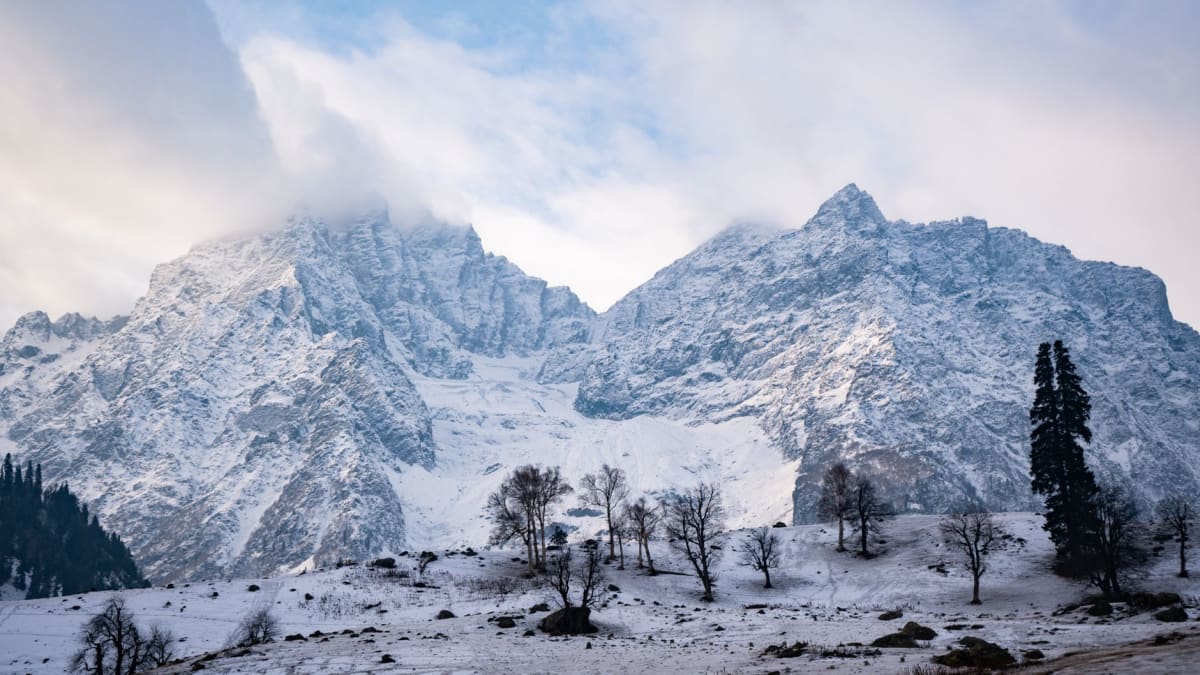
The light at this altitude has a specific quality that I’ve only found in high mountain places — it comes in sideways even at noon, clear and cold, and turns the ice on the peaks into something that looks lit from within. Evenings are fast: by six the shadows have crossed the meadow and the temperature drops sharply, and you’re glad of whatever extra layer you brought and possibly one more you didn’t.
When to go: June through September is the accessible window — the road from Srinagar is open and the meadow is clear of snow. July and August are peak months, warm enough for camping and wildflowers in full display. October sees the first early snow returning to the high ridges and the last trekking groups heading out. The road closes for winter sometime in November and doesn’t reopen until late April or May, depending on the snowfall.
Keep exploring
More from Kashmir
 kashmir
Tulip Garden
Asia's largest tulip garden, a hillside above Dal Lake turned into a three-week riot of colour every spring.
Explore kashmir
Verinag
An octagonal Mughal spring pool where the Jhelum River is born, turquoise and cold enough to make you gasp.
Explore kashmir
Wular Lake
Asia's largest freshwater lake — a vast, flat inland sea where the sky is bigger than the mountains and the fishing communities have been here longer than history records.
Explore kashmir
Yusmarg
A hidden meadow above the pines that the gondolas and ski resorts have not reached yet — just horses, silence, and the particular peace of being genuinely off the route.
Explore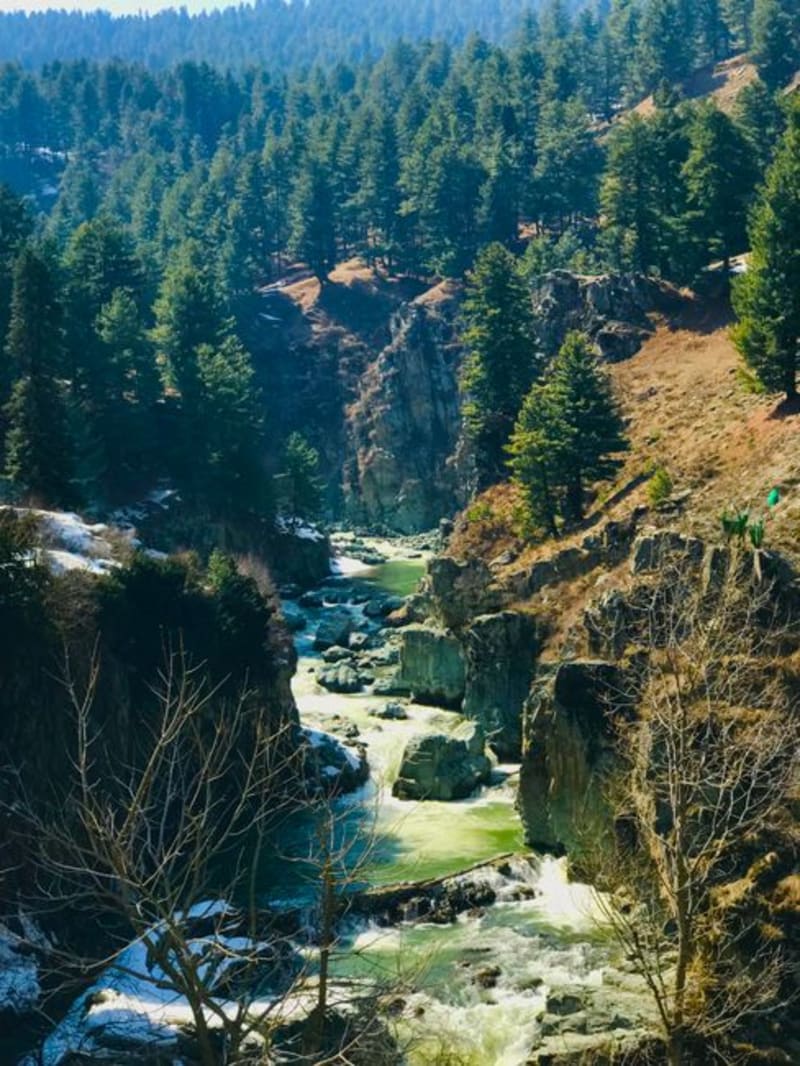 kashmir
Aharbal
A waterfall crashing through a forested gorge, and the trailhead for one of Kashmir's most striking high-altitude lakes.
Explore kashmir
Baramulla
A river town on the Jhelum where the valley narrows toward the outside world, carrying its history more openly than most of Kashmir does.
Explore