Martand Sun Temple
"Whoever built this wanted you to feel small. Thirteen centuries later, it still works."
An eighth-century ruin of colossal stone columns standing alone on a plateau, built by a king who wanted his temple to outlast his kingdom.
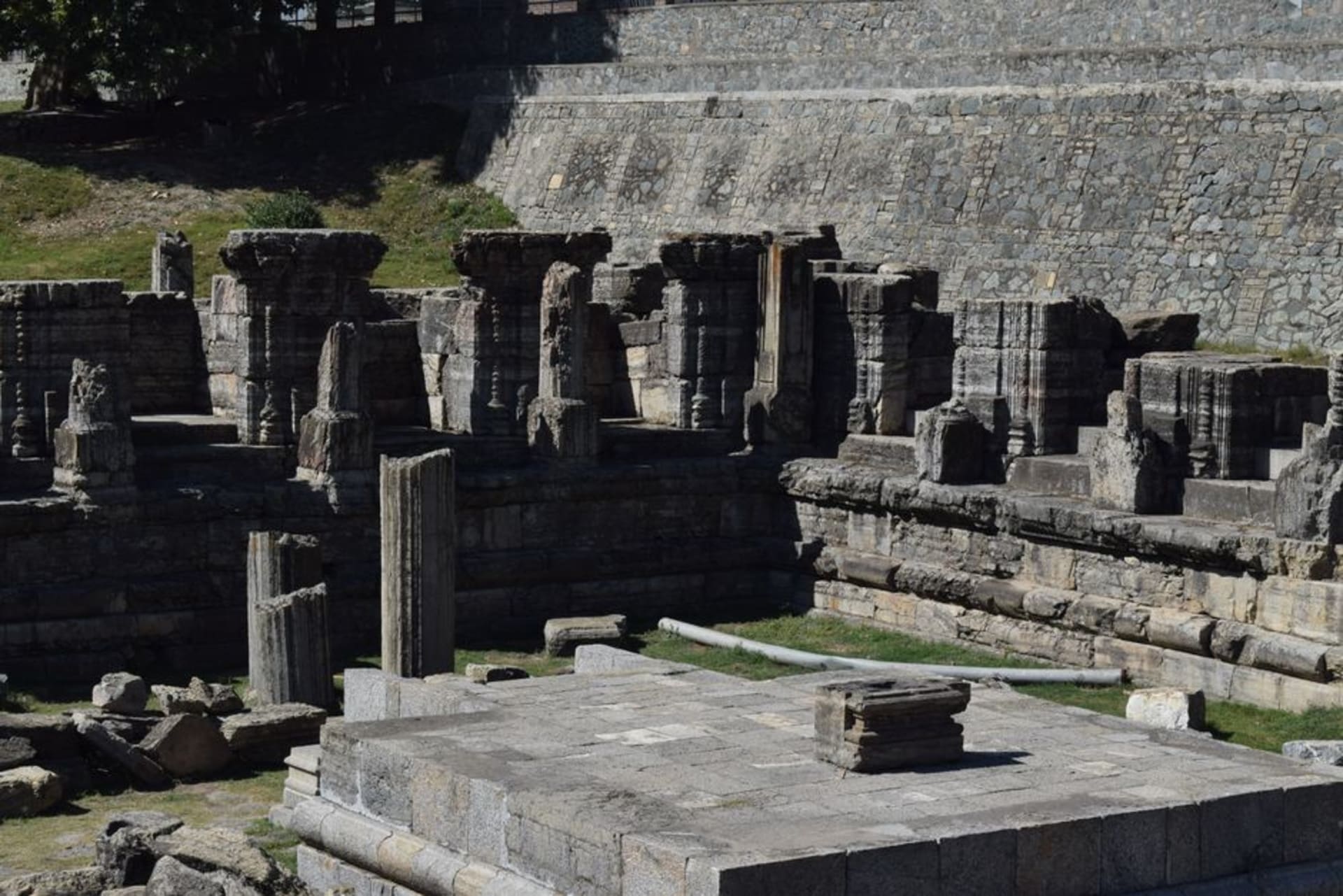
You see Martand before you reach it — the ruin sits on a plateau above Anantnag, high enough that the broken colonnade is visible against the sky from the valley road, an unmistakable silhouette of stone even from a distance. I’d read that it was built by Lalitaditya Muktapida, a Kashmiri king of the eighth century whose empire supposedly stretched from Central Asia to Bengal at its peak, though almost everything about him now survives only in this one ruined temple and a handful of chronicles written centuries after his death. Empires fade. Apparently well-built stonework does not, or at least not entirely.
Walking through the site, what strikes you first is the scale. The main sanctuary is gone, its roof and much of its structure destroyed, likely by the deliberate demolition ordered by a fifteenth-century sultan intent on erasing pre-Islamic monuments, and possibly hastened along by earthquakes in the centuries since. But the surrounding colonnade — eighty-four columns, or what remains of them — still stands in a rough rectangle around the central shrine, and the sheer size of the blocks used to build it is hard to reconcile with an eighth-century construction timeline. Some of the stones are enormous, precisely cut, fitted without mortar in a style that Kashmir shares with almost nowhere else in the subcontinent.
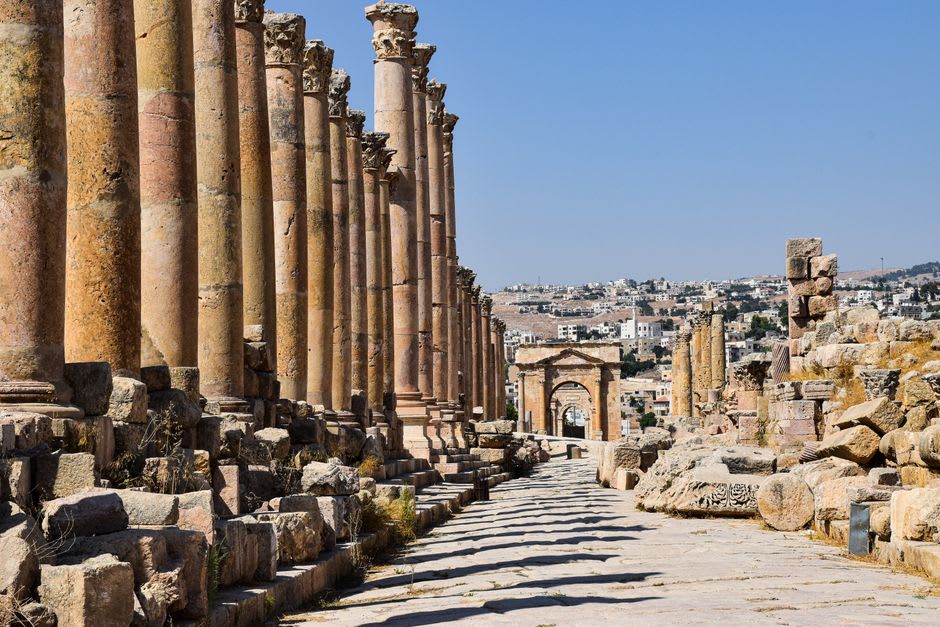
I went in late afternoon, when the light comes in low and gold across the stone and there was almost no one else there — a couple of local teenagers sitting on a fallen block, a caretaker somewhere out of sight. From the edge of the plateau, the whole southern half of the Kashmir valley opens up below: villages, poplar-lined roads, rice terraces turning gold in early autumn, the Pir Panjal range rising hazy in the distance. It’s a strange, powerful combination — a shattered temple to a sun god, standing on a viewpoint that makes you understand exactly why a king would choose this particular hill to build something meant to be seen from everywhere.
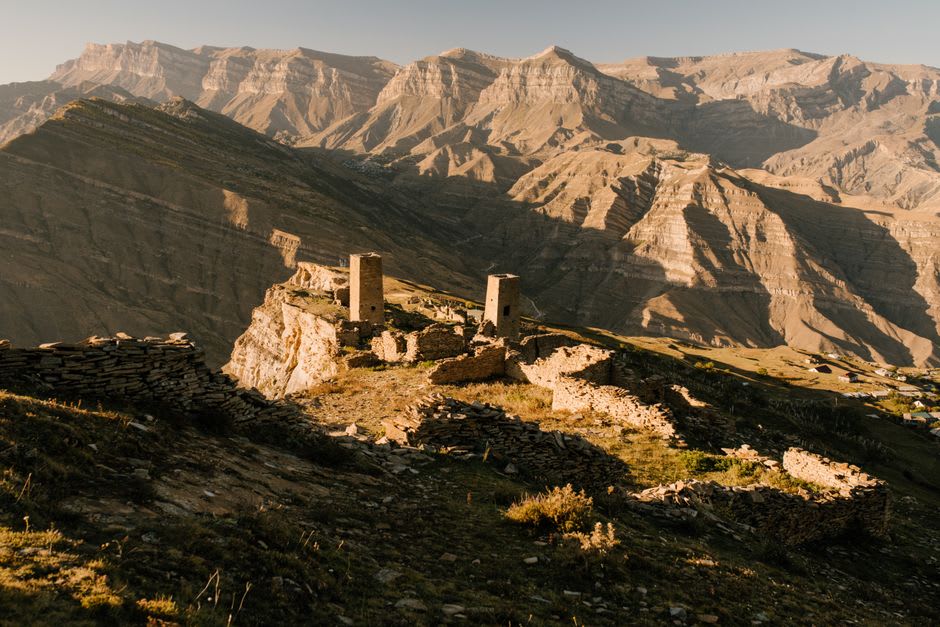
When to go: October and November for the clearest light and the best views over the valley, or April and May when the fields below are green. Go late afternoon, when the crowds (what few there are) have thinned and the stone catches the low sun.
Keep exploring
More from Kashmir
 kashmir
 Nagin Lake
Dal Lake's quieter sister — cleaner water, fewer crowds, and an evening light that makes you understand why poets kept coming here.
Explore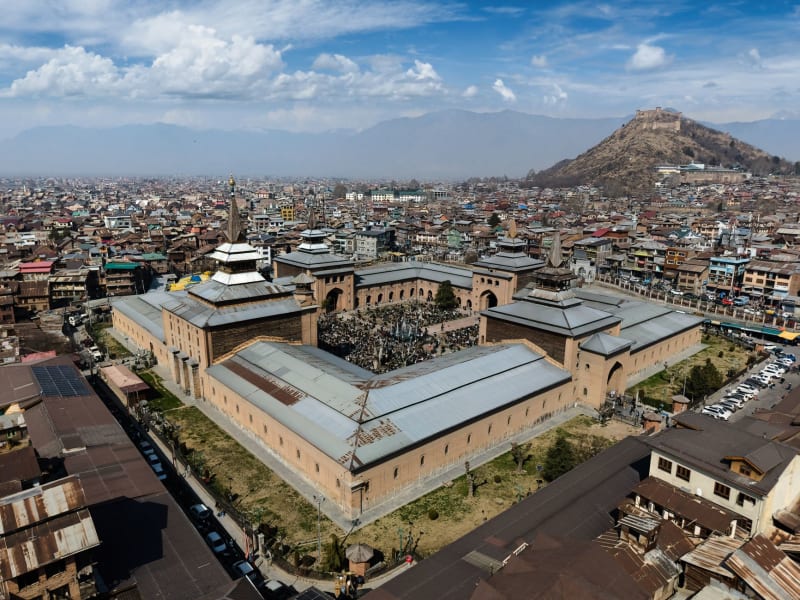 kashmir
 Old Srinagar
The city's wooden heart — Mughal mosques, craft workshops, and bazaars where saffron is sold by the grain and the lanes remember six centuries.
Explore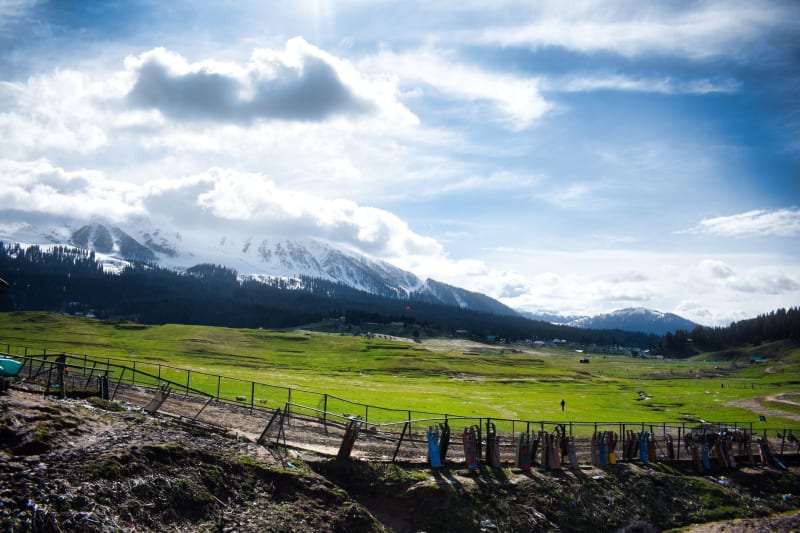 kashmir
 Pahalgam
A valley town on the Lidder River where shepherds descend from the high pastures every autumn and the pines smell of something ancient.
Explore kashmir
 Pampore
The saffron capital of Kashmir — in October, its fields turn purple at dawn and the air carries a spice so specific it rewires your sense of smell.
Explore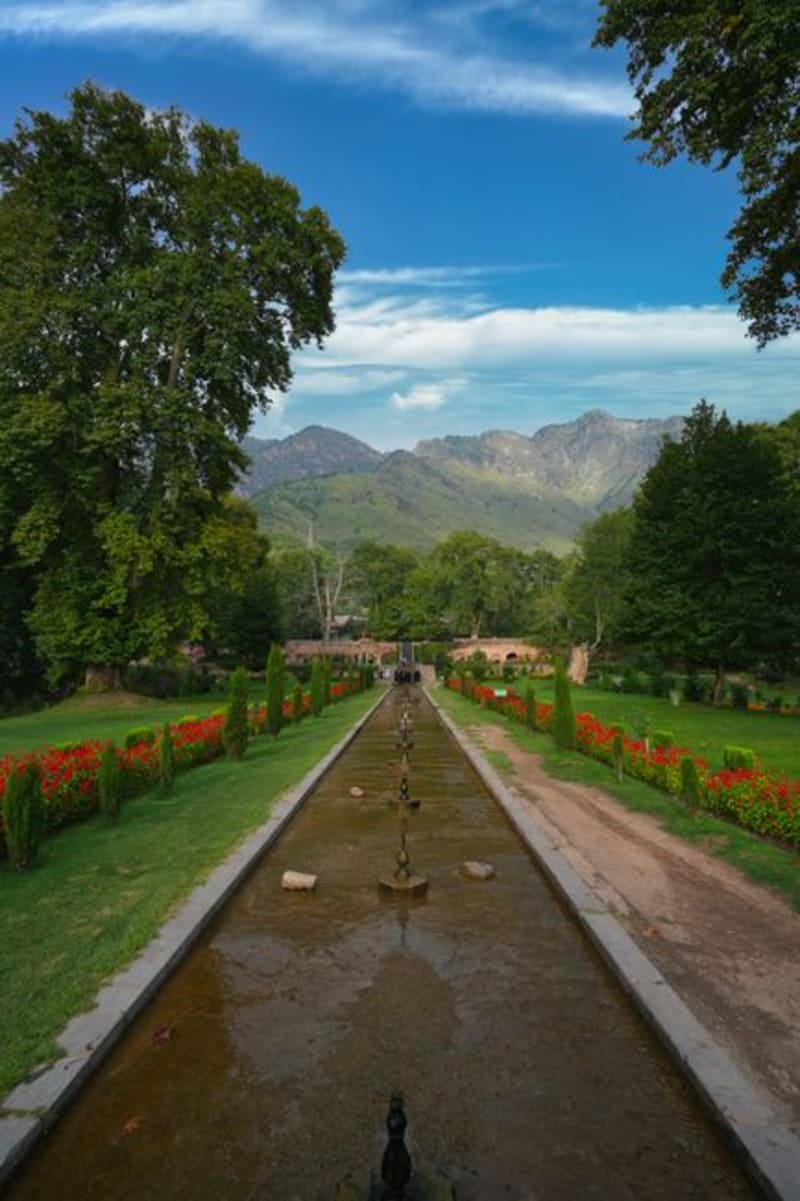 kashmir
 Pari Mahal
A terraced Mughal-era palace built for a prince who preferred astronomy and Sufi philosophy to the business of ruling an empire.
Explore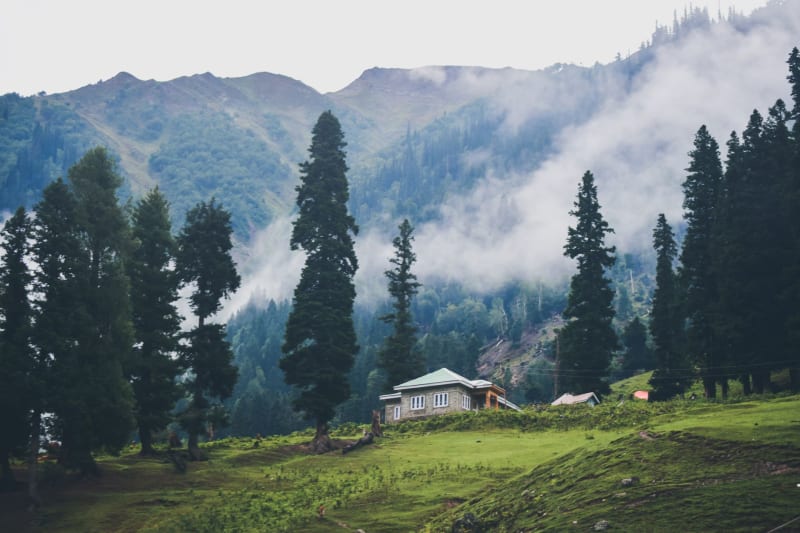 kashmir
 Sonamarg
The Sindh Valley's crown — a glacier-fed alpine corridor where the mountains crowd so close you feel the scale of things viscerally.
Explore