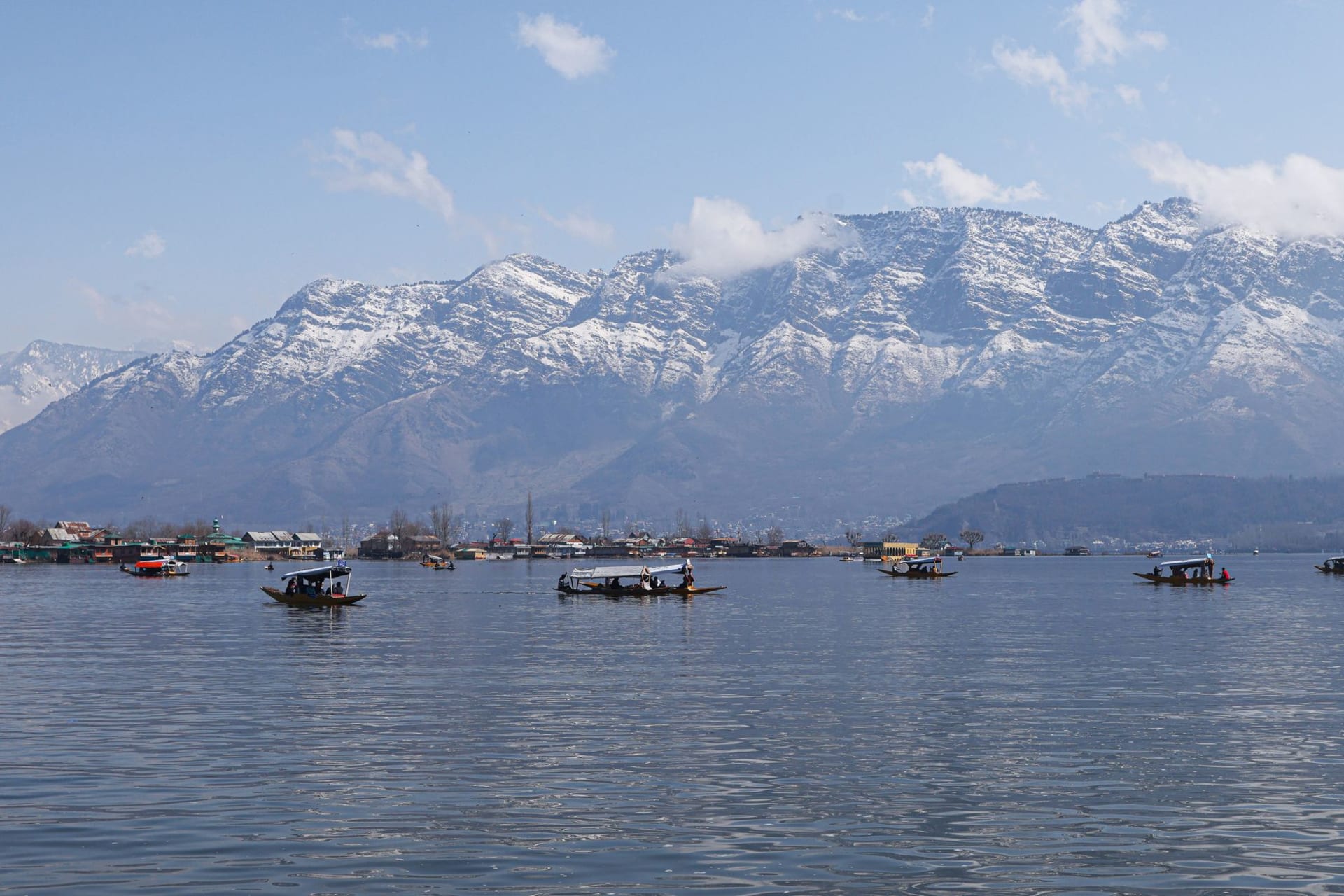
I stepped into the shikara before first light, half-asleep and cold, and the boatman pushed off from the houseboat dock without saying anything. The lake was wrapped in mist so thick I couldn’t see twenty metres in any direction. Then, slowly, as we moved toward the floating market at Hazratbal, the fog began to lift in patches — and through those gaps I watched other boats materialise: men balancing towers of lotus stems, women with flat baskets of radishes and turnips stacked high, vendors paddling with a single oar in a motion so practised it looked effortless. Dal Lake at five in the morning is one of the genuinely functioning floating economies left anywhere in the world, and it smells of cold water, wood smoke, and something green I never managed to identify.

The lake covers roughly eighteen square kilometres and is divided by causeways and channels into distinct neighbourhoods. Some twenty thousand people live on the lake year-round — in houseboats, on floating gardens called rads, and in islands of matted vegetation that have been cultivated so long they’ve forgotten they were once water. The houseboat I stayed on was built from deodar cedar, with carved wooden panels along the ceiling and curtains that let in a thin orange light at sunset. The owner’s family had been making it for three generations and they knew exactly when to bring tea. Every morning a flower seller paddled up to the houseboat and arranged a small display of dahlias and marigolds on the bow — not for me, just because that was what he did.
The light on Dal changes every hour. By eight in the morning the mist burns off and you get the full Himalayan panorama to the north, the snow-covered peaks of the Pir Panjal range sitting above the city like something from a geography textbook that forgot to be believable. By late afternoon, around four, the entire surface of the lake turns the colour of hammered copper. I took a shikara out then, drifting without particular destination, and watched a kingfisher drop into the water three times in quick succession. The boatman sat in the stern and watched too. Nobody needed to comment.

On the eastern shore, the neighbourhood of Hazratbal leads to the white marble mosque of the same name — one of Kashmir’s most significant shrines, said to house a hair of the Prophet. The lane approaching it is lined with small tea shops selling kahwa, the green Kashmiri tea scented with saffron and cardamom that I drank four times a day because it was the correct response to the cold and also because it was exceptional. Beyond the mosque, the back lanes of Dal hold weed-cutting operations, boat-repair yards, and small plots where vegetables grow on the lake surface — a system of cultivation that has been running here for centuries and still somehow produces some of the best tomatoes I ate in India.
When to go: September through October is the finest time — clear skies, harvest light, and the chinar trees turning red on the surrounding hillsides. April through June brings green warmth and blooming lotus. Winter is not impossible but the cold off the water is serious; the lake occasionally freezes in January, which is extraordinary to see but not comfortable to be near at five in the morning.