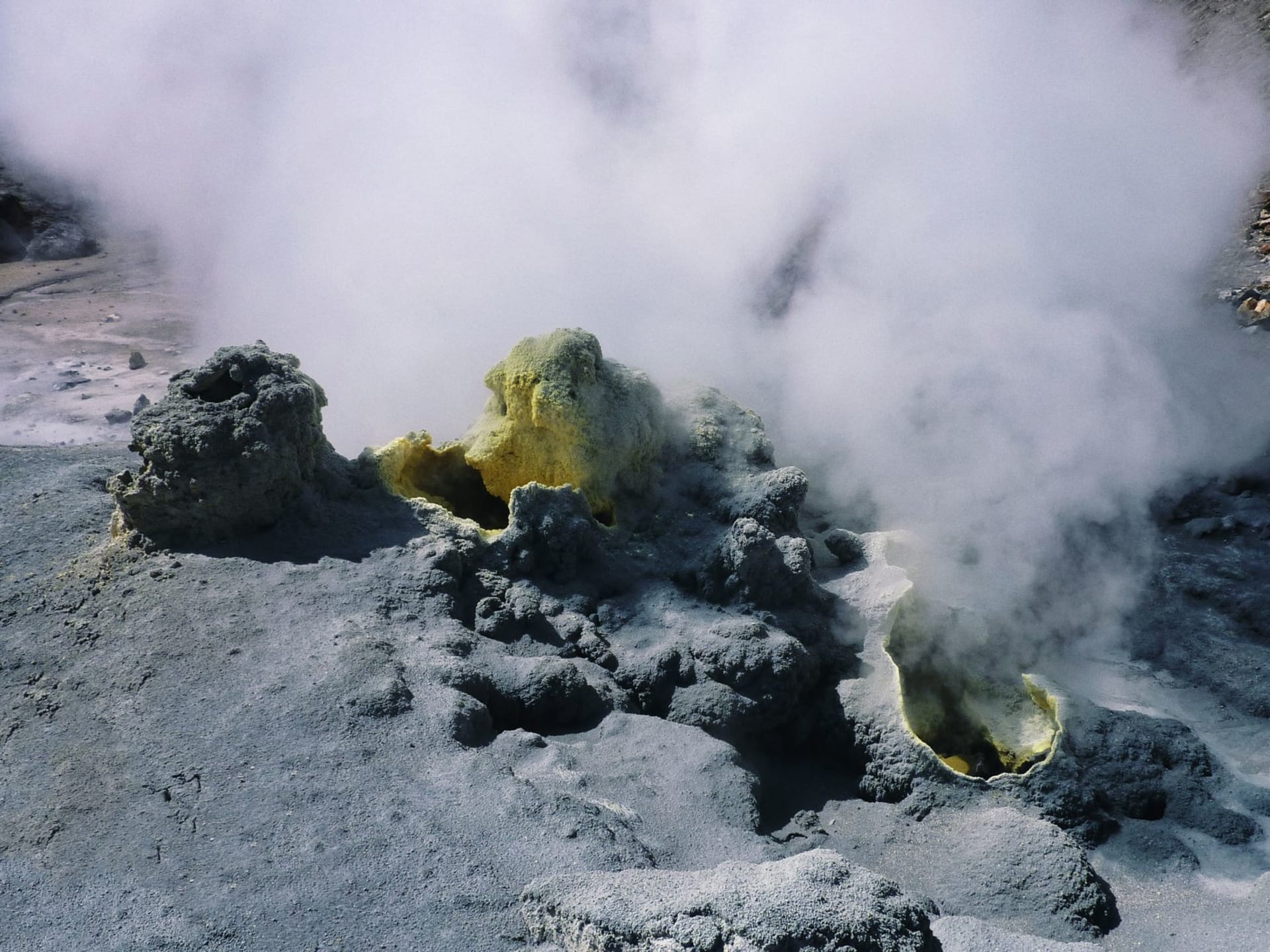
Khodutka Hot Springs
"The spring wasn't on any map I had, which made it feel like something I found rather than visited."
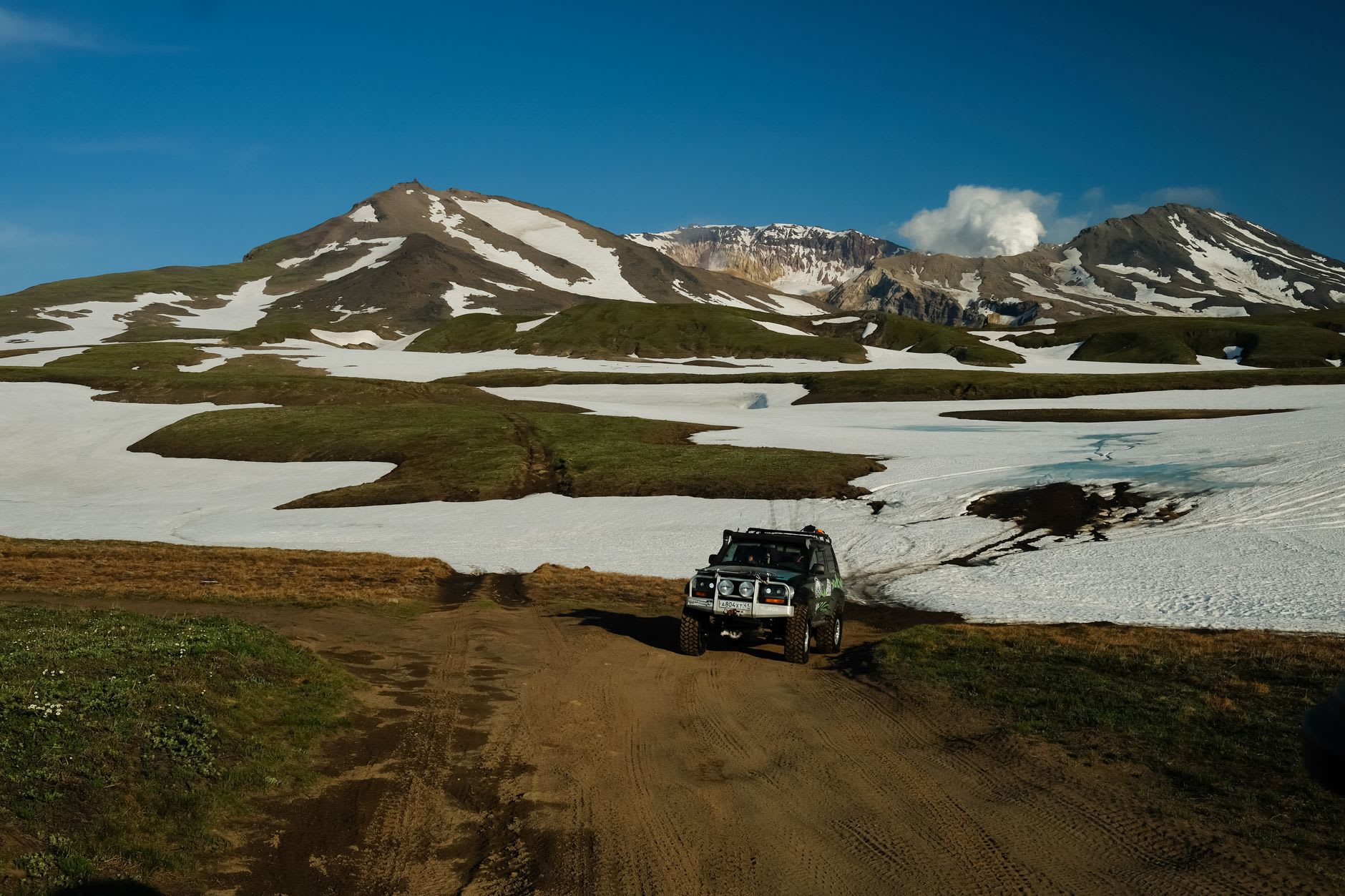
You reach the Khodutka area by helicopter, which deposits you on a gravel bar beside the river and then lifts off and disappears northward and suddenly there is no sound except the river and the wind and, very faintly, a change in the air that might be warmth. The springs are a kilometer walk along the river bank — no path, exactly, just the line of least resistance through the tundra grasses, which are knee-height and wet and fragrant in late summer with a combination of bog myrtle and something I couldn’t name. The volcanic peaks of the southern Kamchatka range are visible to the west. Bears have definitely walked this route before me. The guide walks ahead and I think about the difference between a landscape that tolerates you and a landscape that is indifferent to you, and decide that the second is more honest.
The spring when you find it is not dramatic. There is no geyser, no sulfur theatre, no infrastructure. A series of pools in the riverbank where the ground is warm, where the grass at the water’s edge is an unusually vivid green, and where the steam is subtle enough that on a warm day you might miss it. The largest pool is perhaps five meters across and waist-deep, the temperature sitting at around thirty-eight degrees — warm rather than hot, the kind of temperature that a body slips into without adjustment. The pool bottom is fine volcanic sand. The water is clear. There is no fence, no changing room, no sign. This is just what Kamchatka is.
I soaked for an hour while my guide ate lunch on a nearby boulder and watched the tree line for bears with the relaxed alertness of someone who has been doing this for years. The river ran cold and clear nearby — snowmelt water coming down from the southern ranges — and at intervals I got out of the warm pool and stood in the river until the cold became intolerable and then got back in the spring. This alternation, which seemed like a game at first, became intensely pleasurable in the way that only experiences involving extreme thermal contrast can be: the body made hyperaware of itself, every nerve ending reporting clearly, the sense of physical existence unusually vivid.
The surrounding landscape in late August has a quality that I’ve been trying to find words for since. The tundra in this part of the southern peninsula is low and open — grasses, dwarf willow, berries reddening for the approaching winter — with the volcanic mountains rising from it in formations that seem both geologically recent and impossibly ancient at the same time. The light in the late afternoon comes from low on the horizon and is golden in the way that subarctic summer light is always golden, and it catches the steam from the springs and turns it briefly luminous before the cold air carries it away. There are no buildings visible anywhere. No power lines. No sounds that are not water, wind, or the occasional bird.
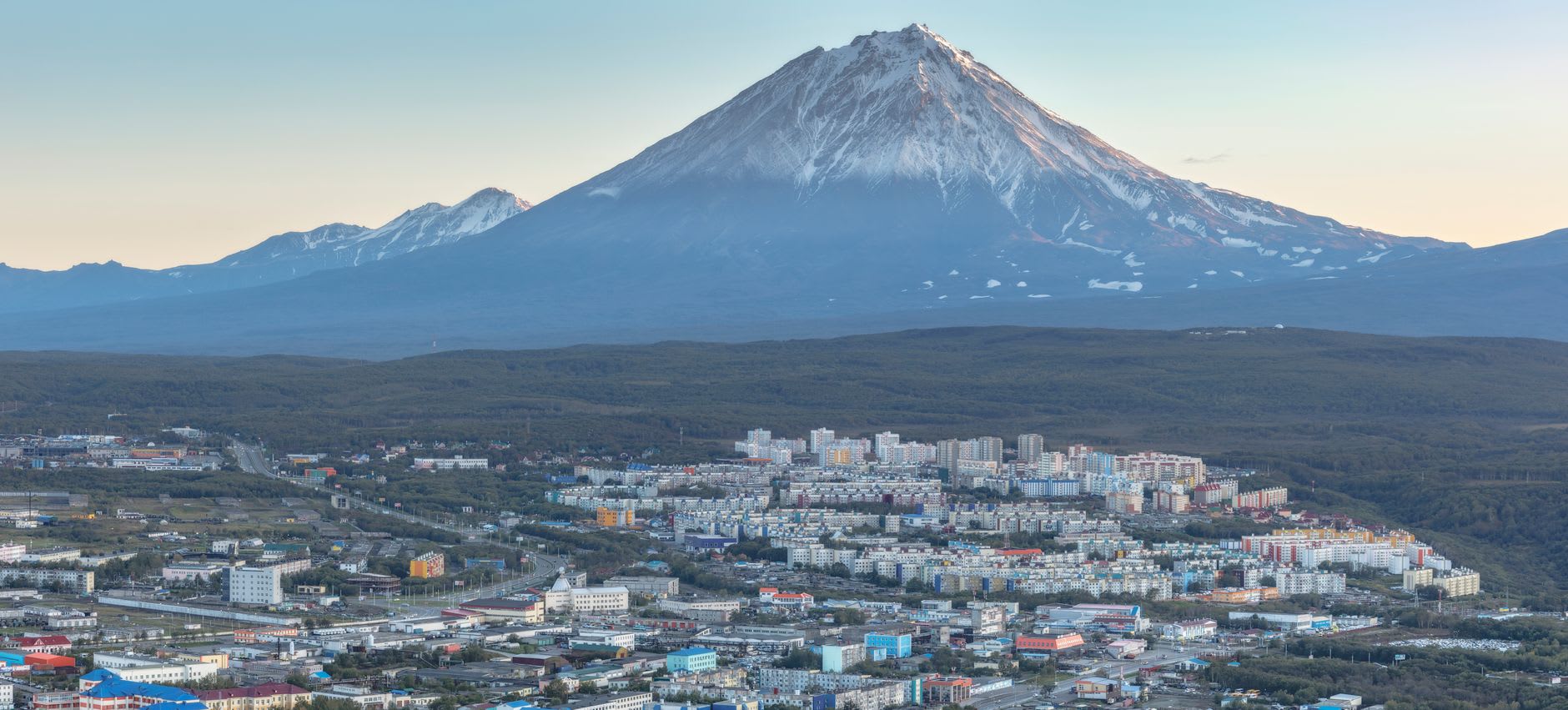
A small ranger station exists somewhere in the Khodutka area, staffed seasonally, but it is not a developed site in any conventional sense. The springs are visited primarily by adventurous travelers willing to organize helicopter transport and spend several days in the southern wilderness. Some people camp overnight; the nearby river holds excellent trout fishing; the volcano approaches begin from similar trailheads. The whole area rewards time rather than efficiency, and the people who spend three days here instead of one leave talking about it differently than they’d planned to.
When to go: Late July through September, when the tundra is at its most vivid and the weather window for helicopter access is at its widest. August evenings are the finest: warm enough in the water, cool enough in the air, and the light persists until ten or eleven, giving the landscape a long golden end to the day. Organise access through Petropavlovsk operators well in advance; most visits are combined with other southern Kamchatka sites like Mutnovsky Volcano or Kurilskoye Lake.