Pangandaran
"Two coastlines, one town, and a silence that told me more than any plaque ever could."
A peninsula town in West Java where you can watch the sun rise over one beach and set over another, still rebuilding its spirit since 2006.
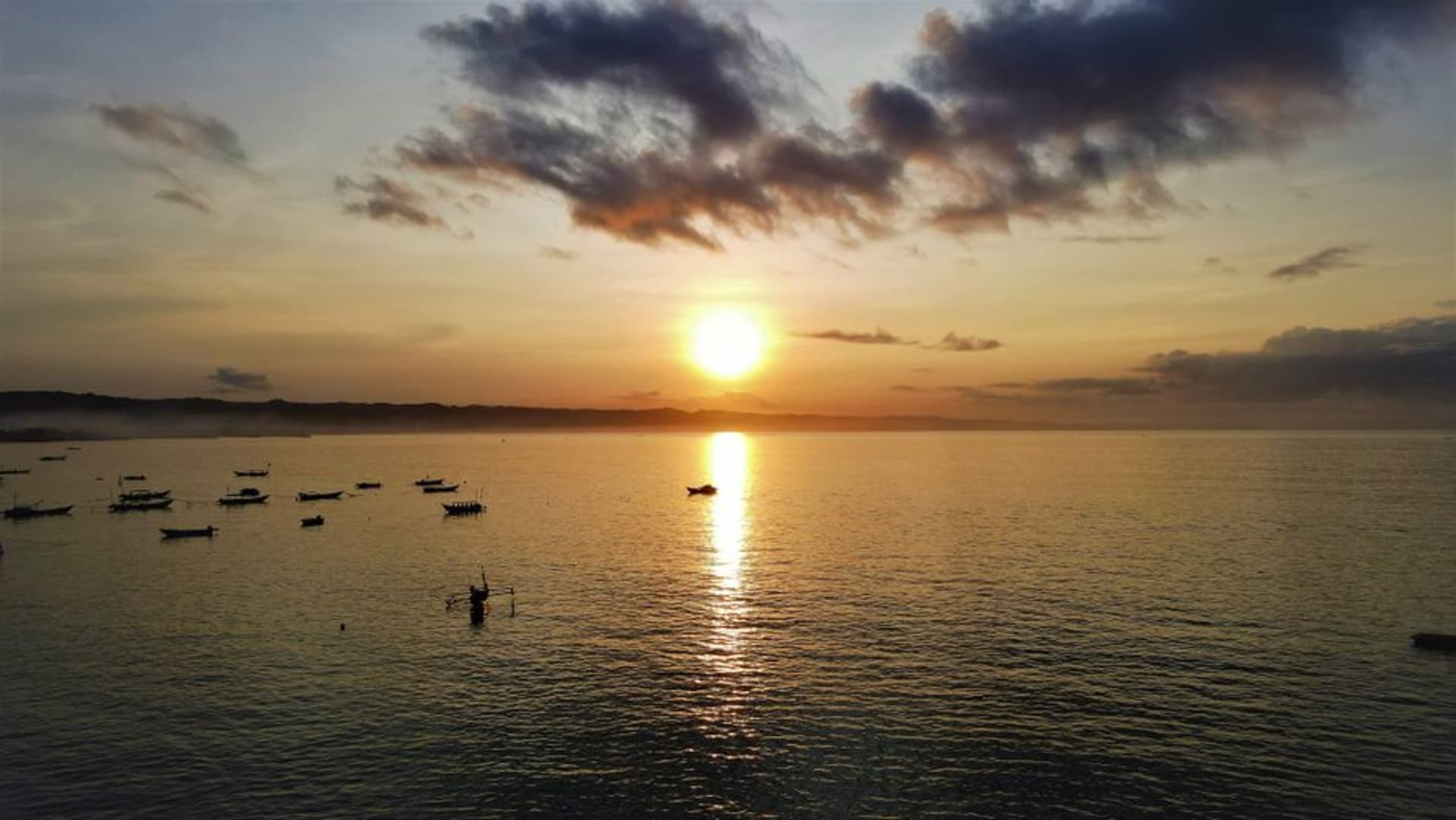
We got to Pangandaran by a cramped minivan from Yogyakarta, the kind of ride where your knees learn the shape of the seat in front of you, and I remember Lia elbowing me awake as we came over the last hill and the sea just opened up on both sides of the road. That’s the thing about this place that took me a day to really understand: the town sits on a narrow peninsula, so you can walk from a west-facing beach to an east-facing one in maybe twenty minutes. We did exactly that on our second morning, coffee in hand, watching the sun come up over the eastern water, then wandering back that evening to catch it drop into the sea on the western side. I’d never done that in one day anywhere else.
The nature reserve at the tip of the peninsula was the other half of why we came. We paid a local guide a few dollars at the gate and he walked us in past limestone outcrops slick with condensation, pointing out bat caves he said locals still visit for guano collection. Within the first hour a troop of long-tailed macaques crossed the trail right in front of us, unbothered, one of them carrying what looked like a stolen banana peel from a picnic table near the entrance. Lia spotted a silvery gibbon much higher up, just a grey shape swinging through the canopy, gone before I could get the camera up.

What stayed with me longer than the wildlife, though, was a conversation with the owner of the small losmen where we stayed, a man probably in his fifties who’d rebuilt his family’s guesthouse from nothing after the tsunami hit on 17 July 2006. He didn’t dwell on it, just mentioned it plainly while pouring us tea, the way you’d mention a storm that damaged a roof, except this storm killed hundreds of people along that stretch of coast. He said the town came back because the sea was still the only thing it had to offer, and I found that oddly moving, this decision to keep living beside the thing that hurt you because it’s also the thing that feeds you.

By our last evening we’d settled into a rhythm: grilled fish from the beachfront stalls, feet in the sand, watching local families set up for the sunset the same way we imagined they’d done the night before and would do again the next. Pangandaran isn’t flashy, and I mean that as a compliment. It felt like a town that earned its quiet.
When to go: We went in August, squarely in the dry season that runs June through September, and the sea was calm enough for the sunrise-to-sunset walk to actually make sense — go outside those months and the clouds will steal at least one of your two horizons.