Asia
Java
"The island where history, fire, and chaos somehow produce something extraordinary."
I arrived in Yogyakarta at five in the morning on a slow train from Jakarta, groggy and grateful, and by seven I was standing in front of Borobudur in the first pale light before the tour groups arrived. Nine levels of carved stone rising out of the mist, two thousand five hundred relief panels telling the story of the Buddha’s path to enlightenment, and not another tourist in sight. I had been warned the crowds could ruin it. At that hour, there were no crowds. Just the stone, the silence, and a monk in an orange robe walking slowly around the upper terrace.
Java is not a subtle island. It has a hundred and fifty million people packed onto a landmass the size of Alabama — the most densely populated island on earth — and yet it somehow still has mountains you can hike in absolute silence, temples buried in jungle that took archaeologists decades to uncover, and batik workshops in back alleys where the wax-and-dye process has not changed in four centuries. Yogyakarta is the cultural center: the sultan’s kraton palace where the gamelan plays every morning, the silver workshops of Kotagede, the chaos of Malioboro Street where you can eat soto ayam for fifty cents at a warung so small the kitchen and the dining room are the same room. Then there is Prambanan, seventeen kilometers east, a Hindu temple complex so enormous and so precisely engineered that I kept having to remind myself it was built in the ninth century.
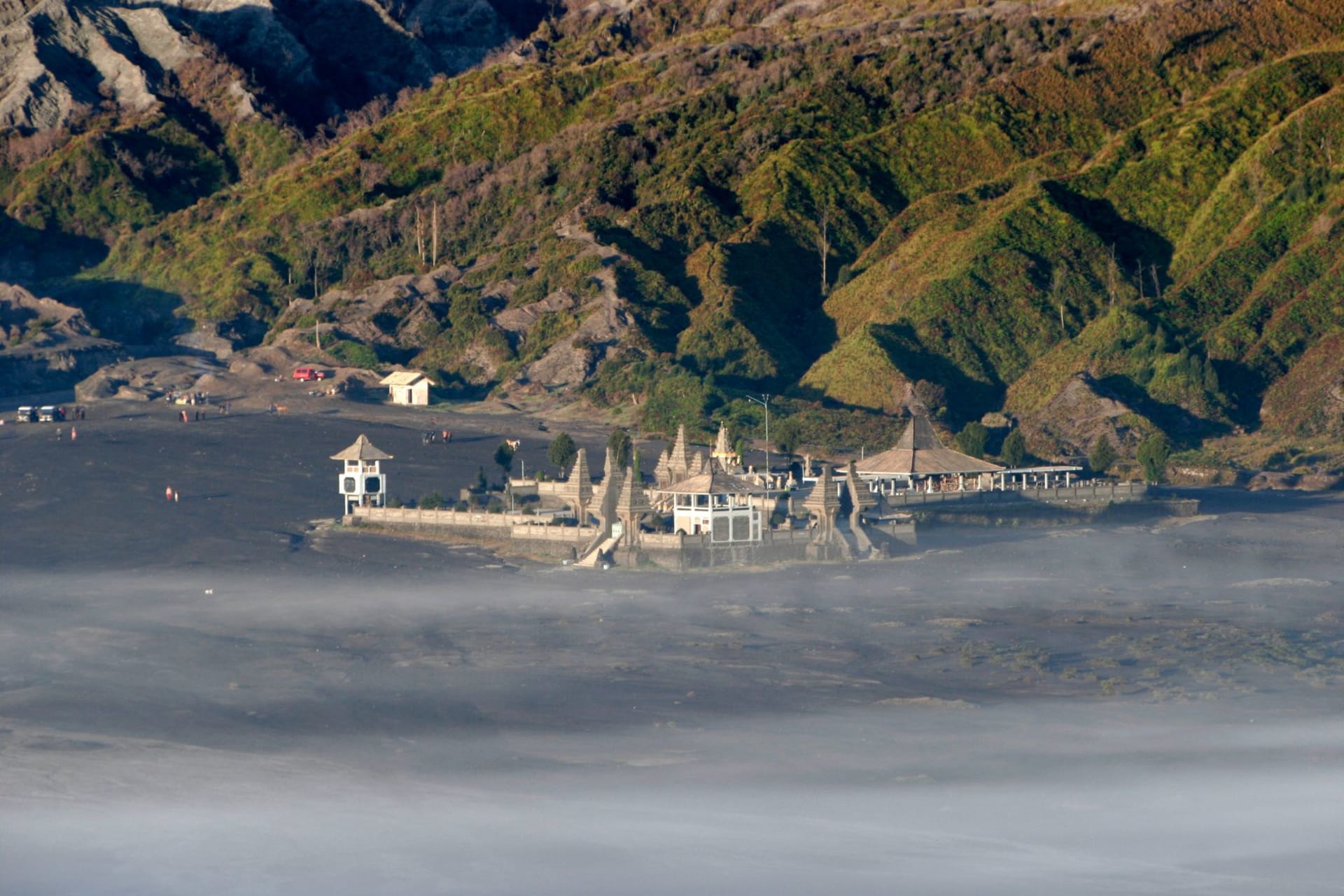
The other Java is the volcanic one. From Yogyakarta you can reach Mount Merapi, the most active volcano in Indonesia, which last erupted in 2010 and destroyed entire villages on its flanks — and where people moved back almost immediately after because the soil is so fertile. Further east, Mount Bromo sits inside a caldera of black sand so otherworldly that it has appeared as the setting for science fiction films. The hike to the crater rim in the dark, headlamp cutting through the sulfur-thick air, the ground vibrating slightly underfoot — that is a different kind of travel. Not comfortable. Not safe, exactly. But the kind of experience that recalibrates your sense of what the earth actually is.
When to go: May through September is dry season, and the only window when you can reliably see the sunrise from Bromo without clouds. July and August are peak, but Java handles crowds better than Bali because the island is big enough to absorb them. Avoid the wet season (November to March) for volcano hikes — the paths become treacherous and the views disappear.
What most guides get wrong: They send you to Bromo and Borobudur and call it done. The best of Java is the city of Yogyakarta itself — three or four days spent eating, wandering, watching, and talking to people. The warung culture, the art scene centered around the Taman Budaya cultural park, the contemporary batik designers reworking a traditional craft into something genuinely new. Java rewards slow travel in a way the highlights tour never will.