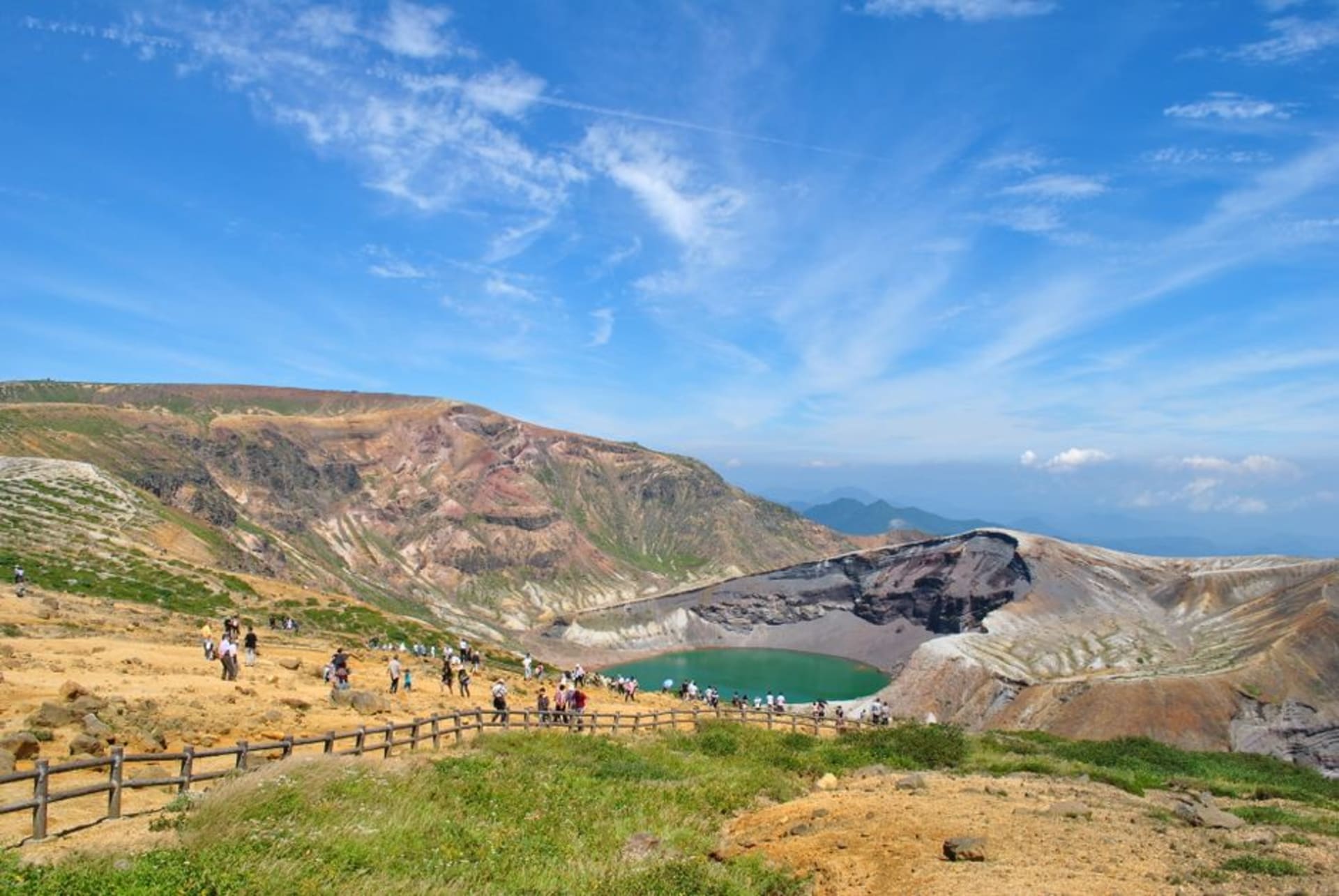
Yamagata
"The mountains stood all the way around the city like a wall we were happy to be inside of."
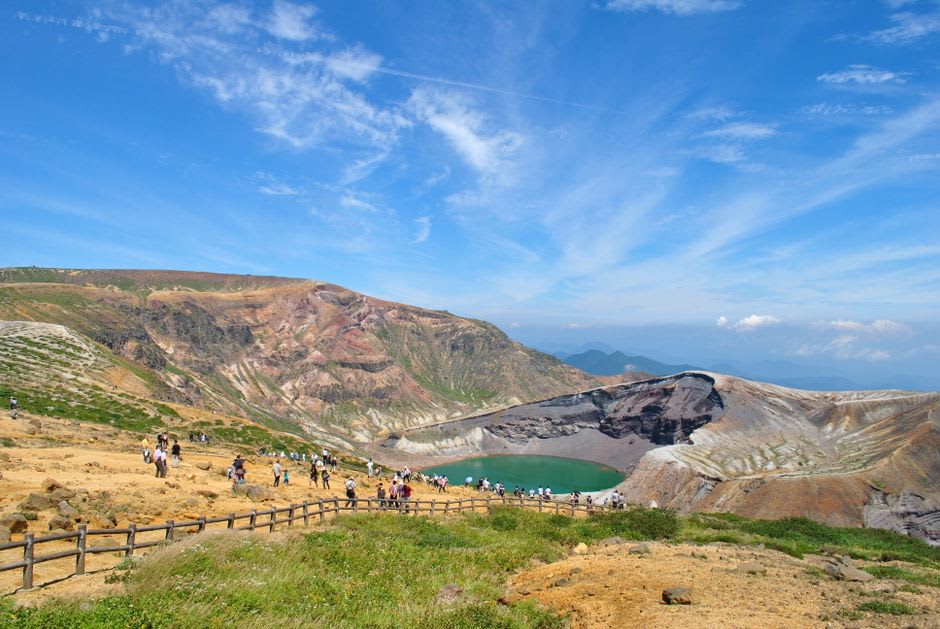
A mountain-ringed Tōhoku city beneath the Zaō range, the low-key springboard for the cliffside temple of Yamadera. Famous cherries and autumn imoni stew, hot springs a short ride away, and a friendly, unshowy pace that grows on you.
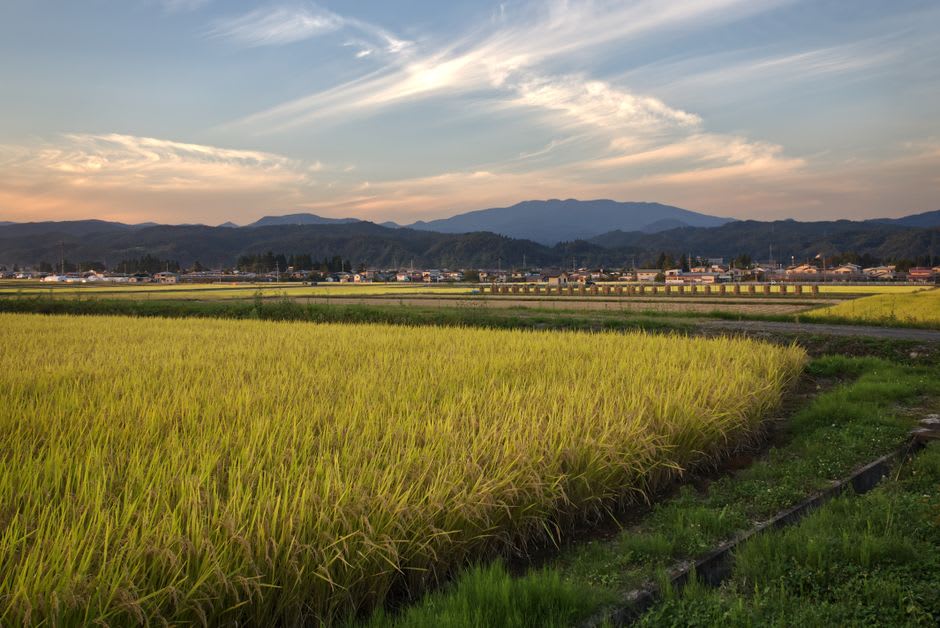
Yamagata caught us off guard by being lovely in an entirely undramatic way. We’d planned it as a base — somewhere to sleep between Yamadera and the Zaō hot springs — and expected nothing much of the city itself. Instead we found a warm, walkable place ringed on every side by mountains, with a slower heartbeat than anywhere we’d been in a while and people who seemed genuinely pleased to see two foreigners fumbling with a ramen menu. Lia and I ended up giving it more days than we’d meant to. It sits in a broad basin in the middle of Tōhoku, and the encircling peaks give the whole city a sheltered, held-in feeling that we both took to immediately.
Yamadera Clinging to the Cliff
The reason most people come is Yamadera, and it earns every bit of its fame. The temple’s proper name is Risshaku-ji, and its buildings are scattered up a steep forested mountainside just outside the city, reached by a stone staircase of over a thousand steps. We climbed it on a bright morning, slowly, stopping often — past mossed stone lanterns, weathered statues, and cedar trunks going straight up into the light. The poet Bashō came here and wrote his famous line about the cicadas’ cry soaking into the rocks, and on the way up, with the shrill of cicadas everywhere and the stone cool under our hands, I understood exactly what he meant. At the top the little Godaidō hall juts out on stilts over the valley, and the view back across the gorge to the mountains is the kind that makes the climb instantly worth it. Lia sat on the wooden edge with her legs dangling and didn’t want to leave.
Cherries, Imoni, and the Table
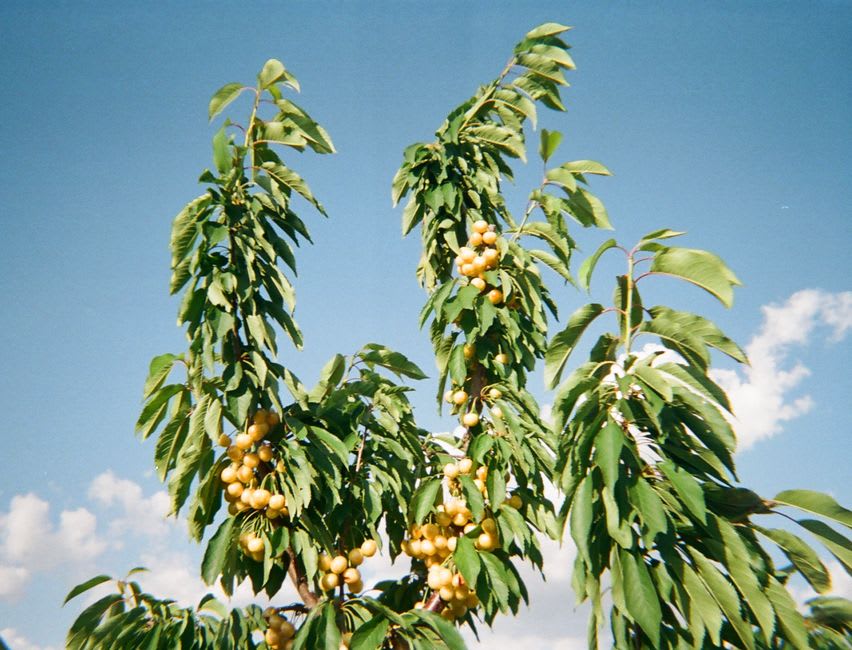
Yamagata Prefecture is Japan’s cherry orchard — it grows the great majority of the country’s sweet cherries — and though we were a touch late for the June picking season, the markets were still piled with the last of the deep-red satonishiki, and we ate far too many sitting on a park bench, spitting stones and laughing. The other food memory is imoni, the autumn stew of taro, konnyaku, beef, and negi simmered in a soy-sweet broth that whole neighborhoods gather to cook outdoors in huge pots along the riverbank each fall. We only caught the tail of that season, but a small restaurant made us a pot of it, hot and earthy and deeply comforting, and Lia declared it exactly the food a mountain town in cool weather should have. Between the cherries and the stew, Yamagata quietly turned out to be one of our better-eating stops in the north.
Senshū Park and the Slow City
Back in the city itself we spent our downtime at Kajō Park, the green grounds of the old Yamagata Castle, where the moats and stone walls remain and a reconstructed gate stands guard over a wide, quiet expanse of grass and trees. It’s a favorite of local families, and in spring the whole park goes pink with cherry blossom; even out of season it was a pleasant place to sit. We wandered the low-slung downtown afterward — a handsome old Western-style former prefectural office, a covered shopping arcade, small standing bars — and were struck again by how unhurried and unpolished Yamagata is, in the best sense. No crowds, no rush, no sense of a place performing itself. Lia said it reminded her of the ordinary provincial towns she’d loved as a student, and we walked back to our hotel through the warm evening feeling like we’d stumbled onto somewhere real.
Getting There
Yamagata is easy to reach: the Yamagata Shinkansen runs directly from Tokyo to Yamagata Station in around two and three-quarter to three hours, branching off the main Tōhoku line at Fukushima. There’s also a small airport with limited flights, but the train is the natural choice. From the station, Yamadera is a short local train ride of around twenty minutes up the valley, and the Zaō Onsen hot springs are a bus ride into the mountains — an easy day trip for spring greenery, autumn color, or winter’s famous snow-frosted “ice monster” trees. The city center is walkable, with Kajō Park a few minutes from the station. Give Yamagata a night or two rather than rushing through; it’s a gentle, friendly base, and the mountains around it reward a bit of lingering.
Keep exploring
More of Tōhoku