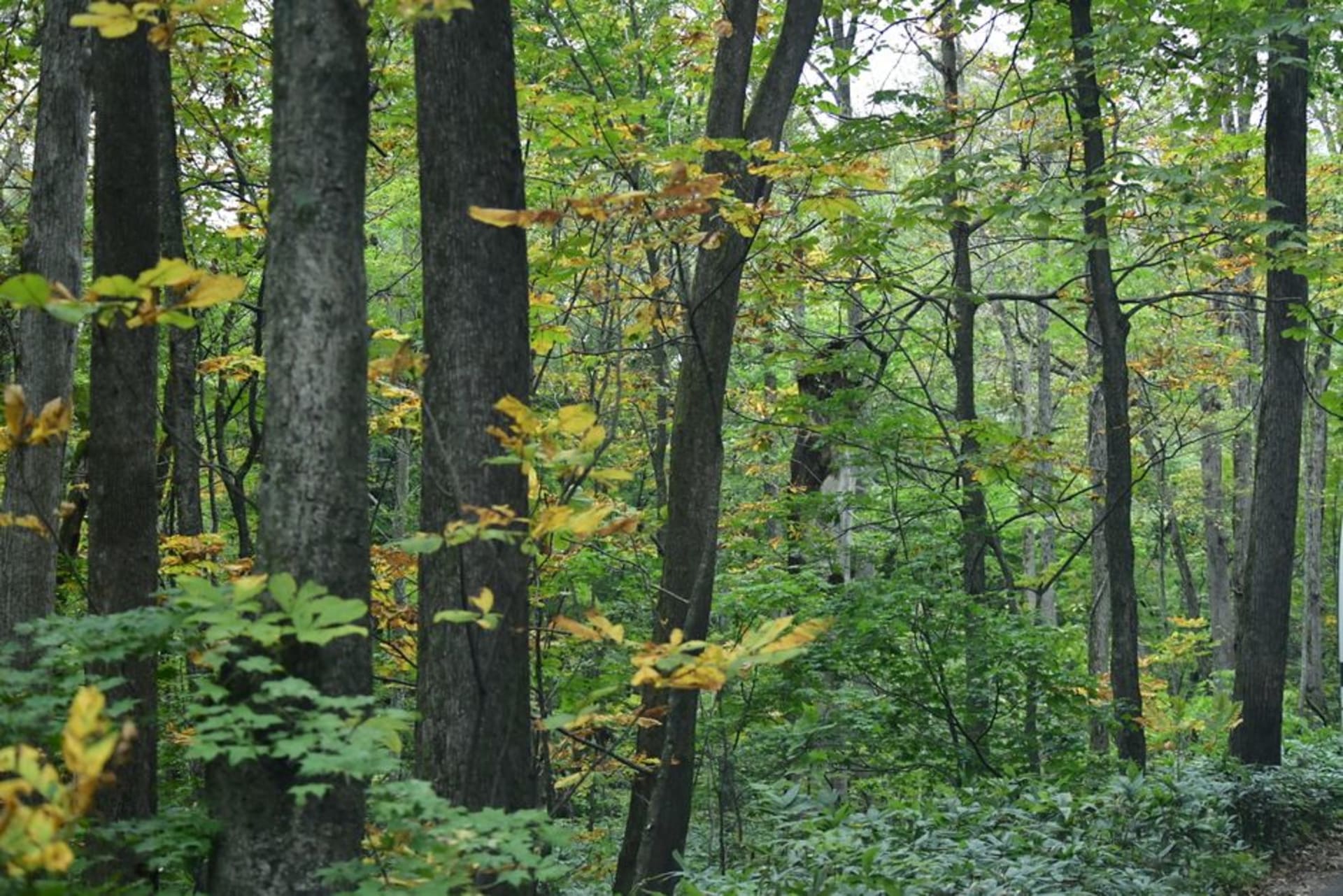
A deep, still caldera lake straddling Aomori and Akita, feeding the mossy rush of the Oirase Stream through a gorge that turns to fire each autumn. Lakeside forest, quiet water, and the famous bronze maidens standing at the shore. A place to slow your breathing.
The Oirase Stream is where we started, and it undid every idea I had about walking beside water. Lia and I had done our share of forest trails, but this was something gentler and stranger, a flat path shadowing a stream through a mossy gorge where the water broke over rocks in a hundred small falls and the maples leaned in overhead. It was October, and the whole gorge had turned. Red and orange and a burning yellow, all of it doubled in the moving water, all of it lit from behind by a low northern sun. We walked for hours and said almost nothing. There was nothing to add. The stream was doing all the talking.
Along the Oirase Stream
The Oirase runs some fourteen kilometres from the lake down toward the town, and the path follows it the whole way, flat and easy and endlessly rewarding. Named falls come one after another, Ashura with its churning rush, Kumoi in its quiet pool, and between them the stream simply braids and murmurs through the moss. We did not walk all of it; we walked until our legs asked us to stop and then walked a little further because each bend promised something. Lia collected fallen leaves for a while, then let them go one by one into the current, watching each spin away. It is that kind of place. It makes you want to give small things back to it.
The Lake and the Maidens
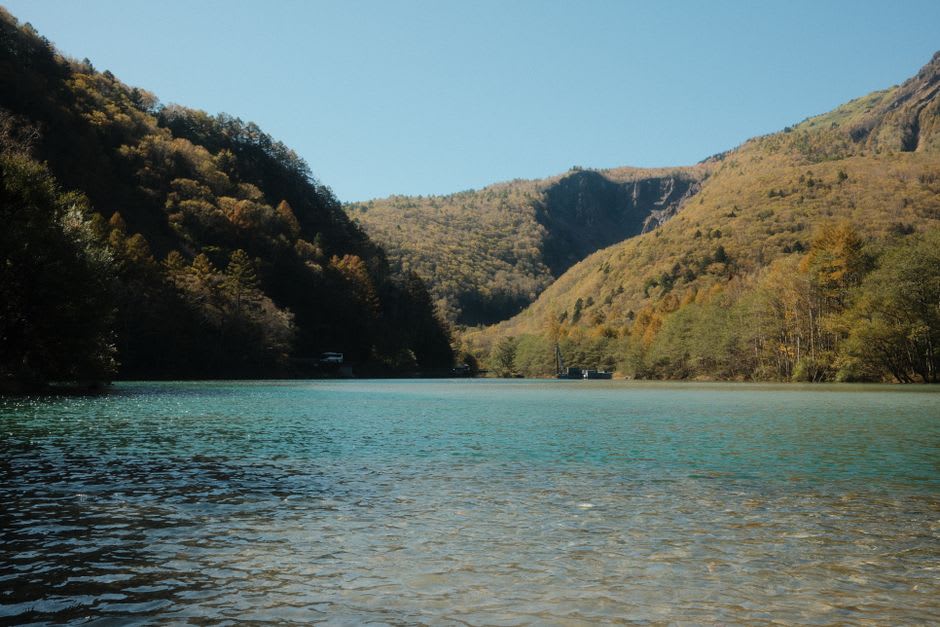
The stream is born from Lake Towada itself, a vast caldera lake cupped in ancient volcanic hills, so blue and so still that arriving at its shore after the busy stream felt like stepping into a held breath. We took a boat out onto it, the water dropping away dark beneath us, the forested rim turning slowly around. Near the shore at Yasumiya stand the “Maidens by the Lake,” two bronze women facing each other, the last work of the poet-sculptor Takamura Kōtarō. They are weathered green now and unbearably calm, and Lia stood between them for a long time. Whatever the sculptor meant by them, beside that enormous silent water they feel exactly right.
Forest, Foliage, and the Long Quiet
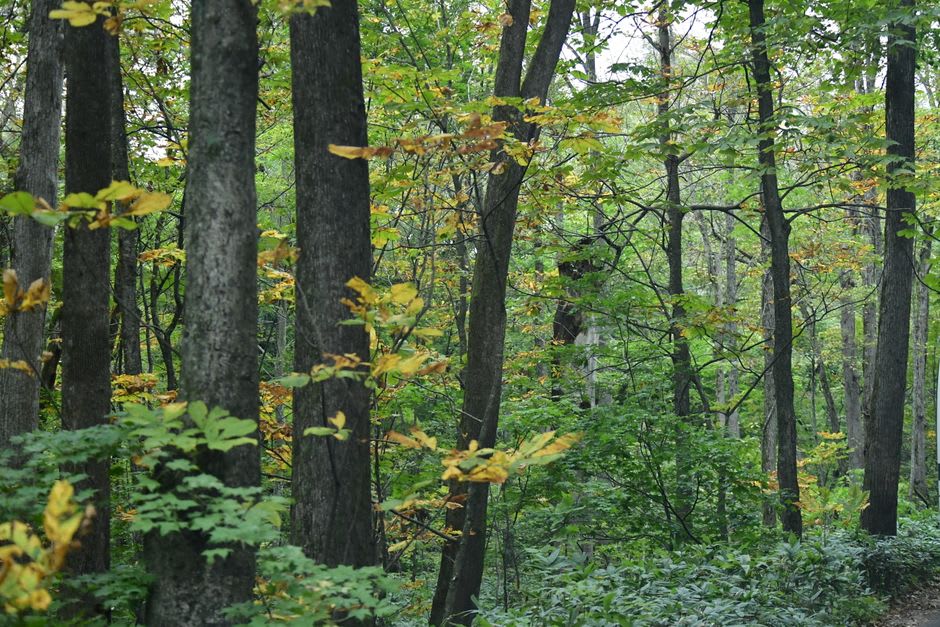
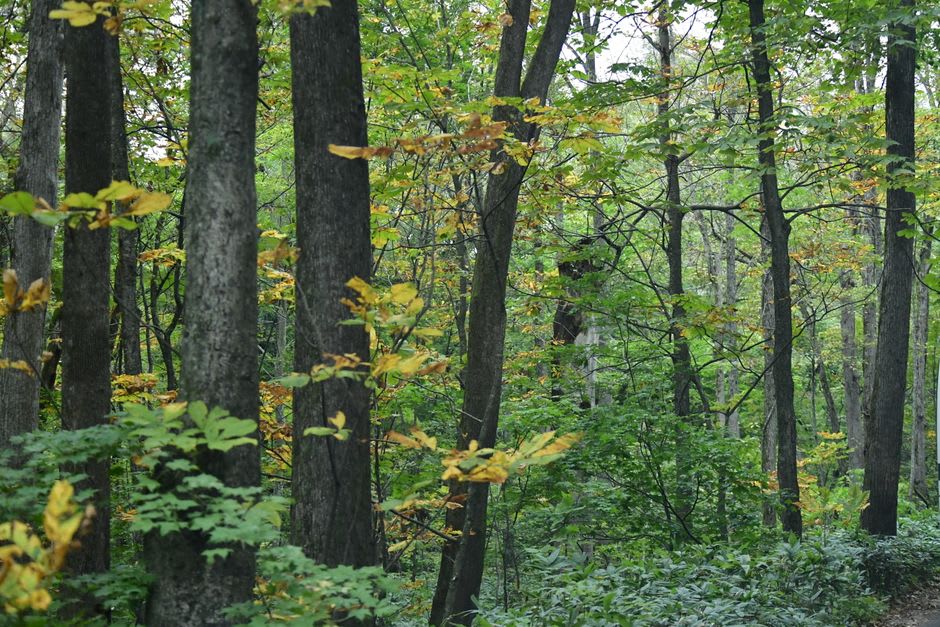
Beyond the stream and the boat, Towada is a place for doing very little, well. We drove a stretch of the lakeside road at dusk with the windows down, the forest crowding close, and stopped at a viewpoint where the whole caldera lay beneath us going from gold to grey. This is prime autumn-foliage country, some of the best in all Tōhoku, and in the peak weeks the roads fill with people chasing exactly what we were chasing. But early or late in the day the crowds thin and the quiet comes back, and you remember that this is first of all a wild place, a lake in the mountains that was here long before the poets and the boats. We stayed until the cold and the dark sent us looking for dinner.
Getting There
Lake Towada sits high in the mountains where Aomori and Akita meet, and reaching it takes intention. In the green and gold seasons buses run to the lakeside town of Yasumiya from Aomori and Hachinohe stations, and crucially along the Oirase Stream itself, so you can ride to the top of the gorge and walk down. We came by car, which let us pause anywhere the light was good and linger at the stream long after the last bus had gone. Note that the mountain roads close in deep winter, so the lake and its foliage belong to the warmer half of the year. Whichever way you come, give it two days if you can, one for the stream and one for the water.
Keep exploring
More of Tōhoku