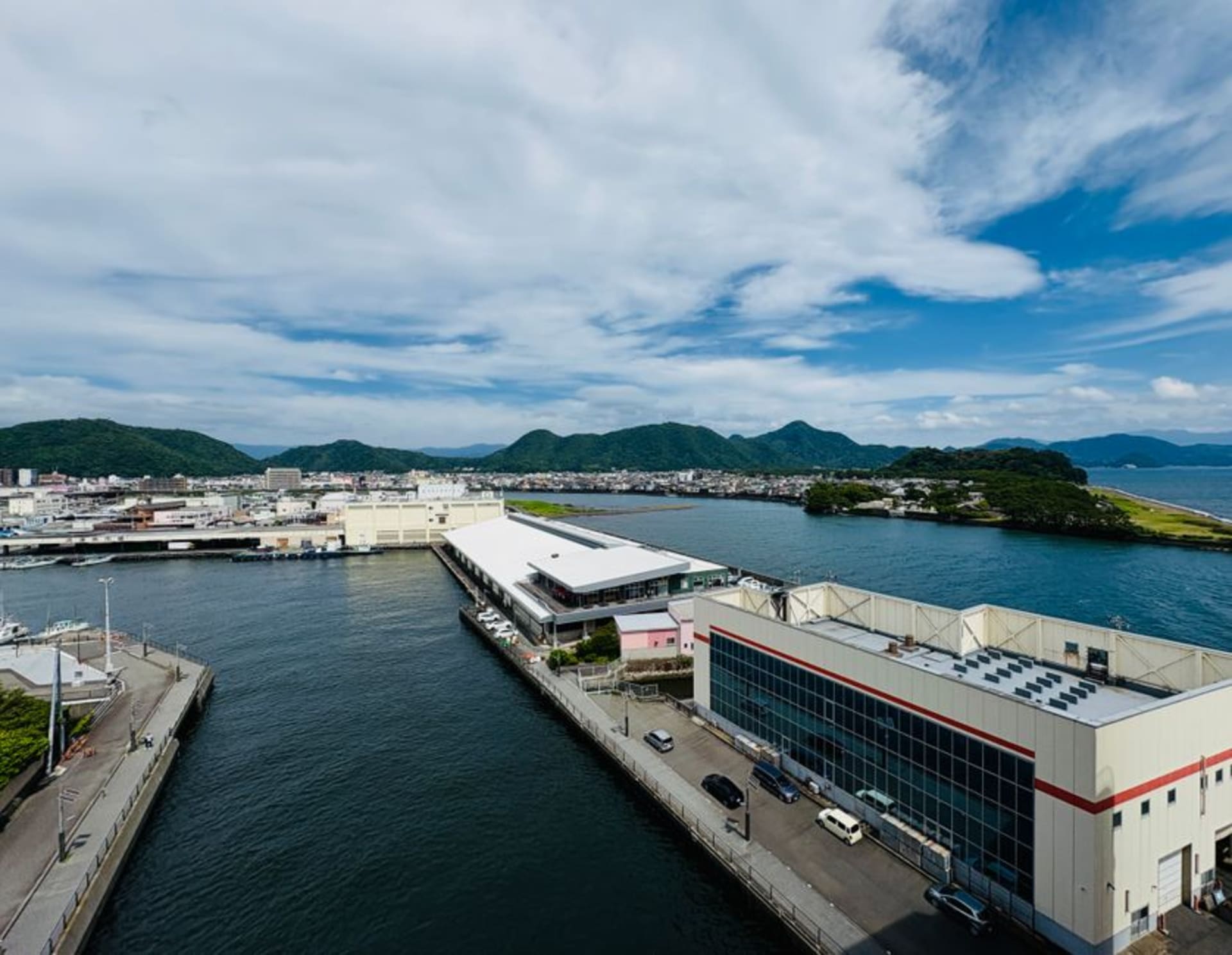
Sakata
"This town used to be richer than it looks, Lia said, and it does look proud of it."
A Sea-of-Japan port that grew fat on Edo-era shipping and never quite forgot it. The rice warehouses stand in a row beneath old zelkova trees, and the town keeps a merchant's quiet swagger. Come for the light off the water and the sense of a place that was once the center of everything.

Sakata doesn’t announce itself, which is exactly why I liked it. There’s no dramatic castle on a hill, no famous shrine drawing coaches of visitors — just a flat port town on the Mogami River delta where the wind comes straight off the Sea of Japan and everything feels scoured clean. We arrived on a grey morning with the gulls loud overhead, and Lia said it reminded her of northern French fishing ports, that same unglamorous confidence. Two hundred years ago this was one of the wealthiest towns in Japan, terminus of the kitamaebune trade ships. You can still feel the ghost of that money in the width of the streets.
The Sankyo warehouses
The Sankyo Soko warehouses are the picture everyone takes, and for once the picture undersells the place. A dozen black-roofed rice storehouses stand in a long row, and behind them runs a screen of enormous zelkova trees planted to shade the rice from the summer sun and shelter it from the winter wind. We walked the lane between wall and trees while leaves came down in slow spirals. The buildings are still used, or were — sacks of rice, the smell of old wood and grain. Lia ran her hand along the plaster and said the town used to be richer than it looks, and it does look proud of it. There’s a small museum inside one warehouse, but the real thing is just the row itself, endless and rhythmic.

Somaro and the merchant’s world
In the old Sannomaru quarter we found Somaro, a former high-class teahouse now open to visitors, its rooms hung with Kyoto silk and a collection of Kitamae-ship treasures the merchants brought home. At midday a young maiko performed a short dance on the tatami stage, and we sat on cushions with a handful of others in near silence, the shamisen thin and precise. I’m not usually one for arranged culture, but there was something honest about it here — this port had bought this refinement fair and square, hauled it up from Kyoto by sea. Afterward we ate at a counter nearby, grilled local fish and rice so good it needed nothing, the cook barely looking up from his work.

Hiyoriyama and the old lighthouse
We ended on Hiyoriyama, the little hill park where merchants once climbed to read the weather before sending ships out. There’s a small wooden lighthouse up there, one of the oldest in Japan, hexagonal and weathered grey. From the top of the slope we watched the sun go down into the Sea of Japan, the whole sky burning orange over the water, and on a clear stretch the great cone of Mount Chokai stood dark to the north. A couple of locals walked their dogs past us without a glance, at home in a view I’d have crossed the world for. Lia leaned on the rail and said this was the kind of place people mean when they say a town has good bones.
Getting There
Sakata sits on the Sea-of-Japan coast in northern Yamagata, reached most easily via the Uetsu Main Line — limited-express trains run down from Akita or up from Niigata along a beautiful coastal stretch. From Tokyo the usual route is Shinkansen to Niigata, then the Inaho limited express, roughly four hours all in; there’s also a small airport with Tokyo flights. The town is flat and compact — rent a bicycle at the station and you can link the warehouses, Somaro, and Hiyoriyama in a single unhurried afternoon, with the wind at your back.
Keep exploring
More of Tōhoku
Keep exploring
More from Tōhoku
 japan
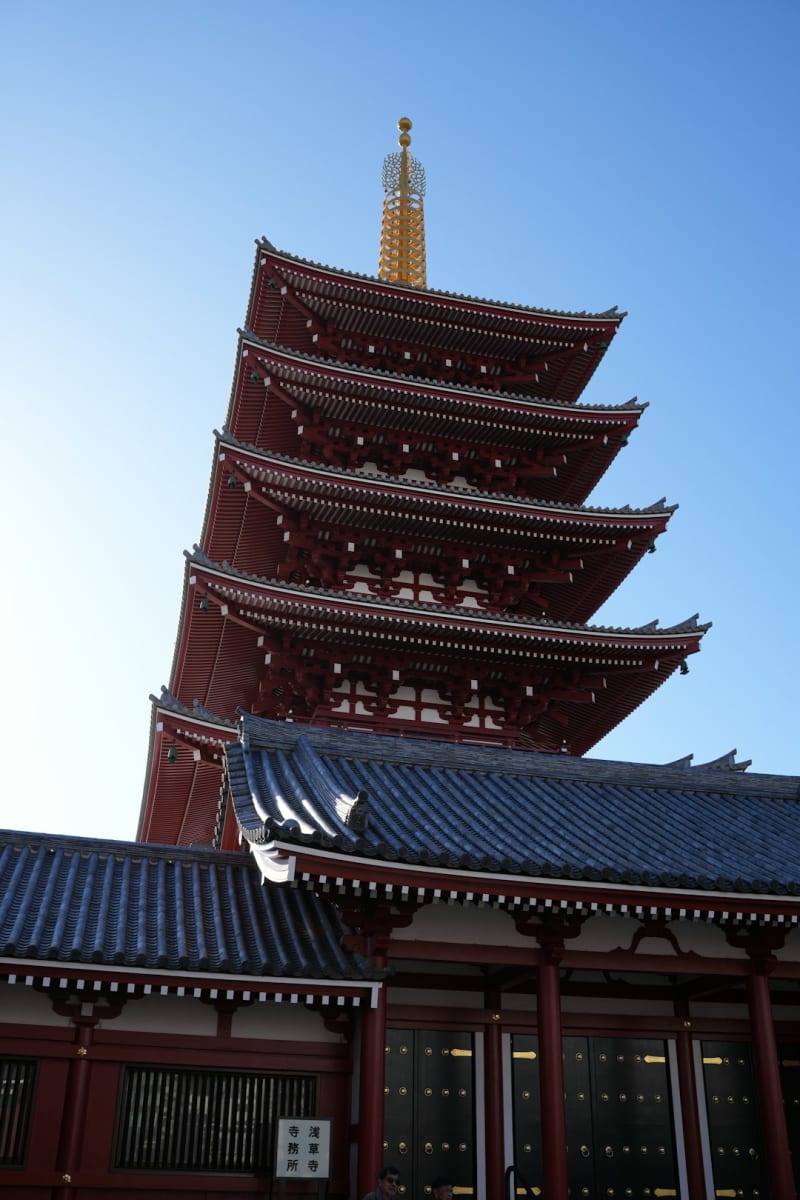
japan Tsuruoka
A food-proud castle town at the foot of the sacred Dewa Sanzan peaks, where mountain vegetables and dadacha-mame edamame carry a UNESCO badge and a jellyfish aquarium drifts by the sea. Rural Yamagata at its most unhurried and quietly deep.
Explore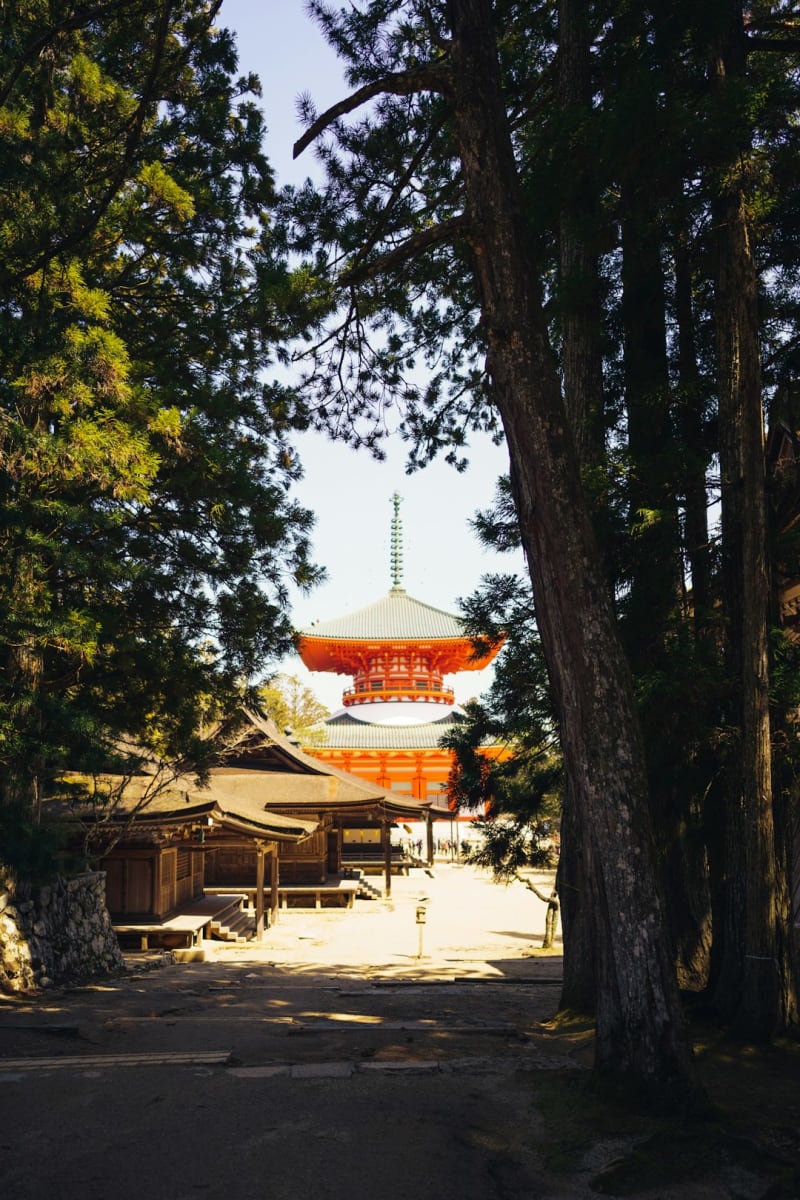 japan
japan Dewa Sanzan
Yamagata's three sacred mountains — Haguro, Gassan, and Yudono — where white-clad yamabushi ascetics still walk the old pilgrim ways, a five-story pagoda stands hidden in the cedars, and a long stone stairway of more than two thousand steps climbs through ancient forest. The most quietly spiritual place we found in Japan.
Explore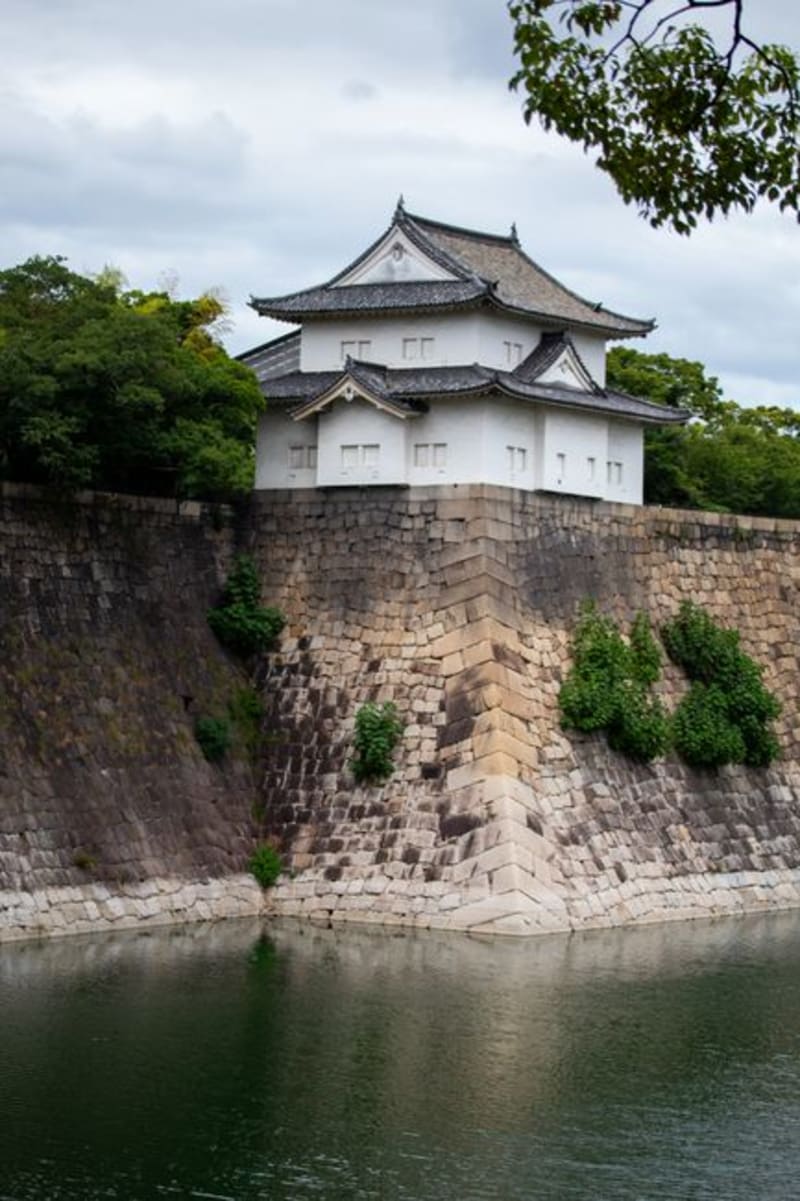 japan
japan Yamagata
A mountain-ringed Tōhoku city beneath the Zaō range, the low-key springboard for the cliffside temple of Yamadera. Famous cherries and autumn imoni stew, hot springs a short ride away, and a friendly, unshowy pace that grows on you.
Explore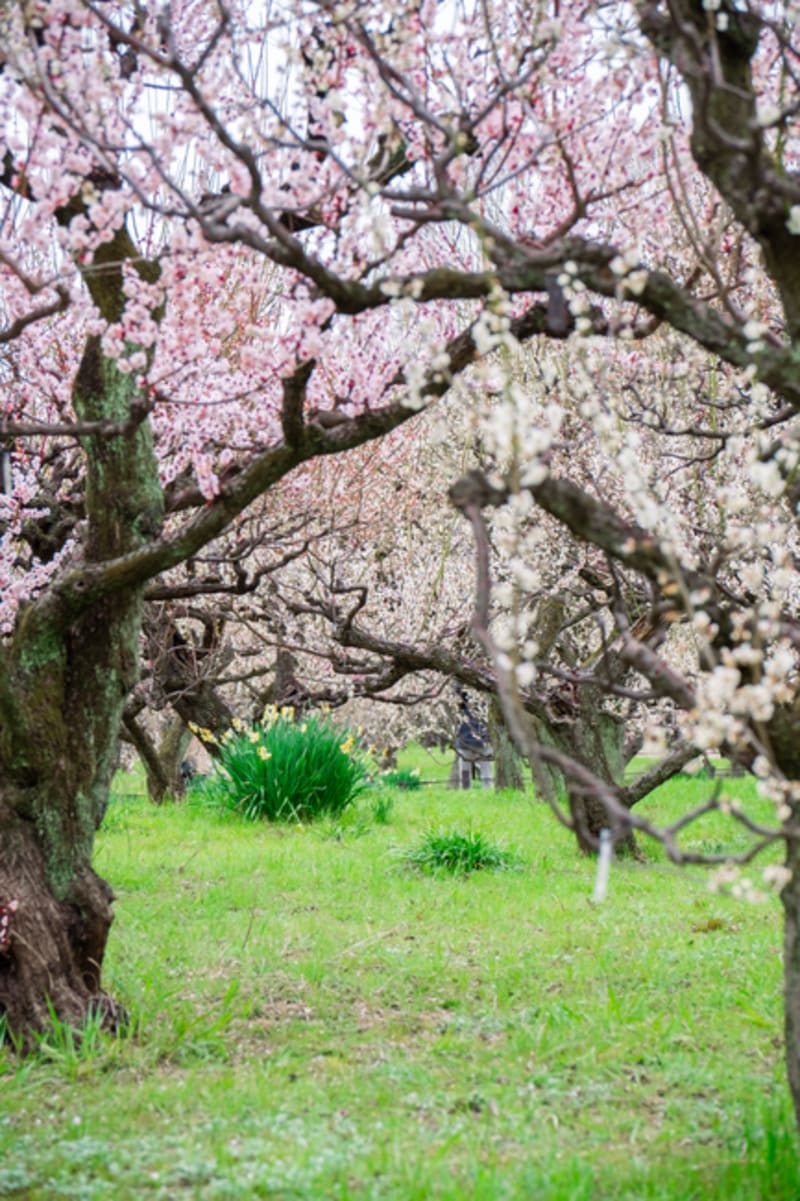 japan
japan Tendo
A small Yamagata town that carves nearly all of Japan's shogi pieces, where the game is played on human-sized boards in the cherry blossoms and soaked away afterward in quiet hot springs. Tendo is craft, orchard, and steam in equal measure.
Explore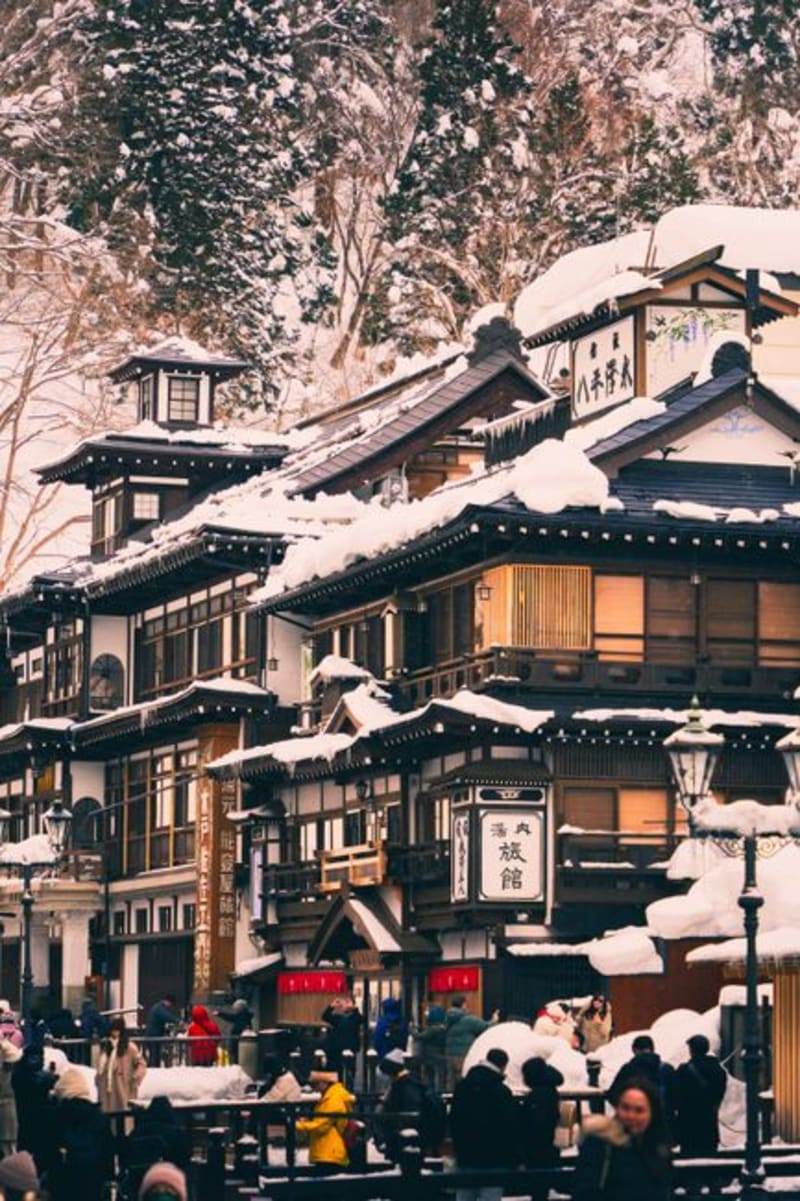 japan
japan Ginzan Onsen
A jewel of a hot-spring town buried deep in the Yamagata mountains, where tall wooden Taishō-era inns line a narrow river and gas lamps glow over the snow at night. Remote, storybook, and almost impossibly atmospheric. The Japan of an old dream.
Explore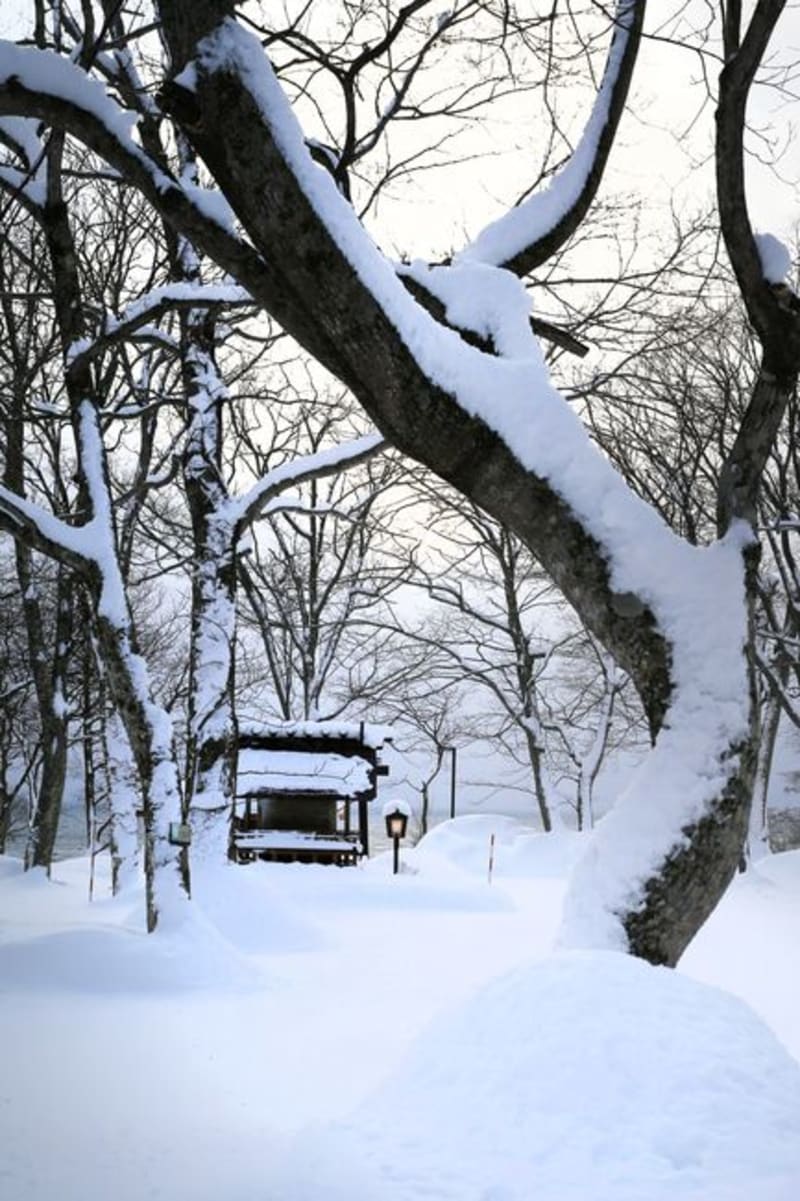 japan
japan Yokote
Deep in Akita's snow country, Yokote spends its winters buried — and then, one February night, lights it all up. Hundreds of kamakura, hollow domes of packed snow, glow from within like paper lanterns while children inside offer you sweet rice wine. It is one of the gentlest, strangest festivals we found in all of Japan.
Explore