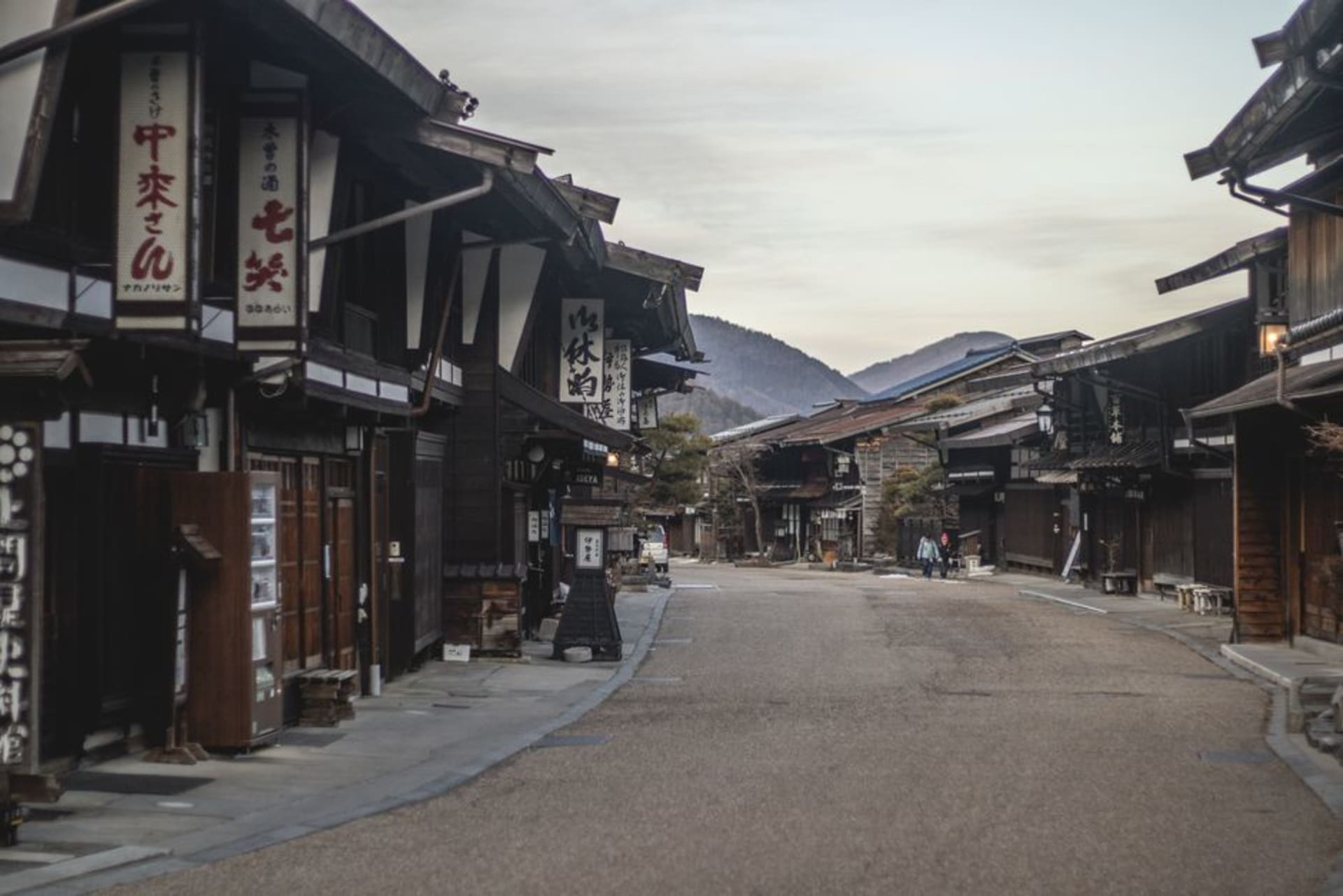
Ouchi-juku
"I ate my soba with a whole green onion for a spoon, and Lia laughed so hard she nearly fell off the bench."
A preserved Edo-period post town in the Fukushima mountains: a single broad street of thick-thatched farmhouses, famous for soba eaten with a whole green onion for a spoon, and a hilltop that looks down over the snowy roofs. Timeless, rural, and quietly astonishing.
I have eaten many strange meals travelling, but eating soba with a raw green onion as my only utensil, in a thatched farmhouse in the Fukushima mountains, is the one Lia still brings up. Ouchi-juku is that kind of place — a single wide street of enormous thatched-roof houses, one of the old post towns of the Edo period, so complete and so remote that stepping into it feels like stepping three centuries back. We had come up on a cold clear day with snow banked along the street, smoke rising from the thatch, and by the time the soup was in front of me with its absurd onion I had given up entirely on feeling like a modern person.
A Street of Thatch
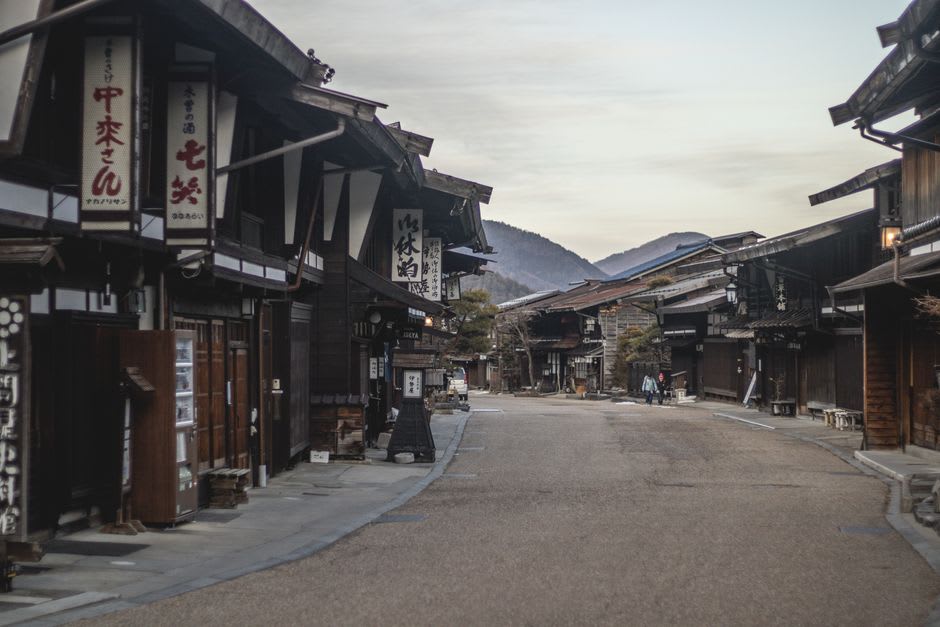
Ouchi-juku was a shukuba, a post-station town on the old road between Aizu and Nikkō, where travellers and porters rested and changed horses. What makes it extraordinary now is that the road was later moved and the town fossilised, keeping its long parallel rows of kayabuki houses — huge, steep, thickly thatched roofs, the timber dark with age — lined up along an unpaved central street with a clear channel of mountain water running down each side. In the deep snow of winter it is almost unbearably picturesque, the white roofs, the smoke, the mountains closing it in.
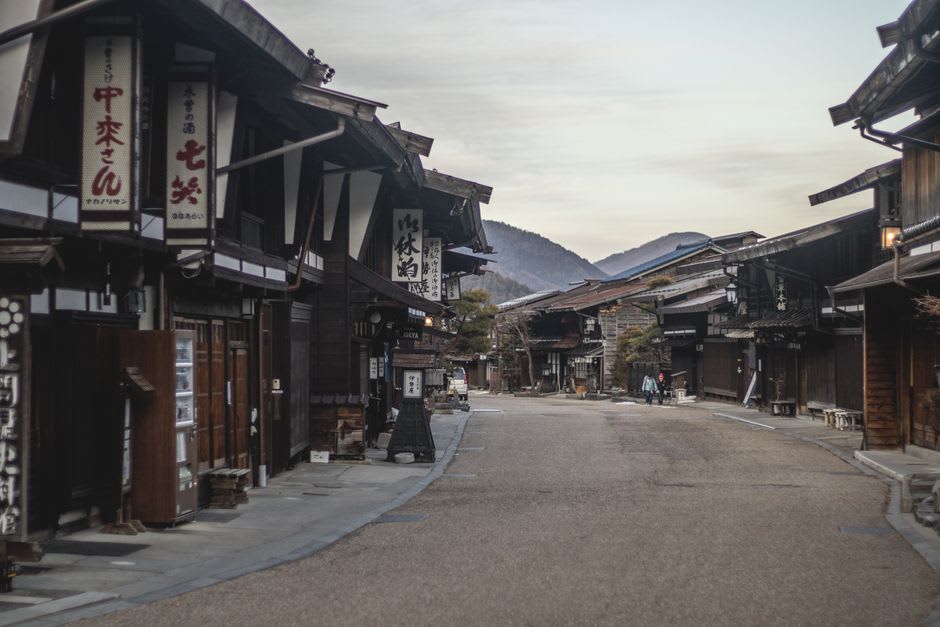
The houses are lived in and worked in still — shops, soba restaurants, minshuku inns, little museums — so the town is not a diorama but a functioning village that happens to look like the seventeenth century. We ducked in and out of the low doorways, warming our hands at the sunken hearths, breathing woodsmoke.
Negi-Soba
The dish you come for is negi-soba — buckwheat noodles in broth, served, by long local tradition, with a single whole raw negi (Japanese leek) laid across the bowl to be used both as your spoon and, bite by bite, as a sharp fresh condiment. It is genuinely difficult. You scoop noodles with the onion, it flops, you try again, you eventually just bite the onion, your eyes water, and everyone around you is grinning because they went through the same thing. It is a wonderful, ridiculous, delicious ritual, and the soba underneath — this is serious buckwheat country — is superb.
We ate it sitting on a floor cushion by a window looking out at the snow, failing at the onion, laughing, warming up. It remains one of my favourite meals of the whole trip, and not only because of the food.
The View From the Top
At the far end of the street a stone stair climbs the hillside to a small shrine, and this is the town’s other secret: from the top you look straight back down the length of Ouchi-juku, the two rows of thatched roofs running away beneath you toward the mountains, smoke rising, the whole village laid out like a model. It is the photograph everyone takes and it deserves the climb. We went up as the afternoon light turned soft and gold on the snow, and stood there a long time in the cold, not talking, just looking.
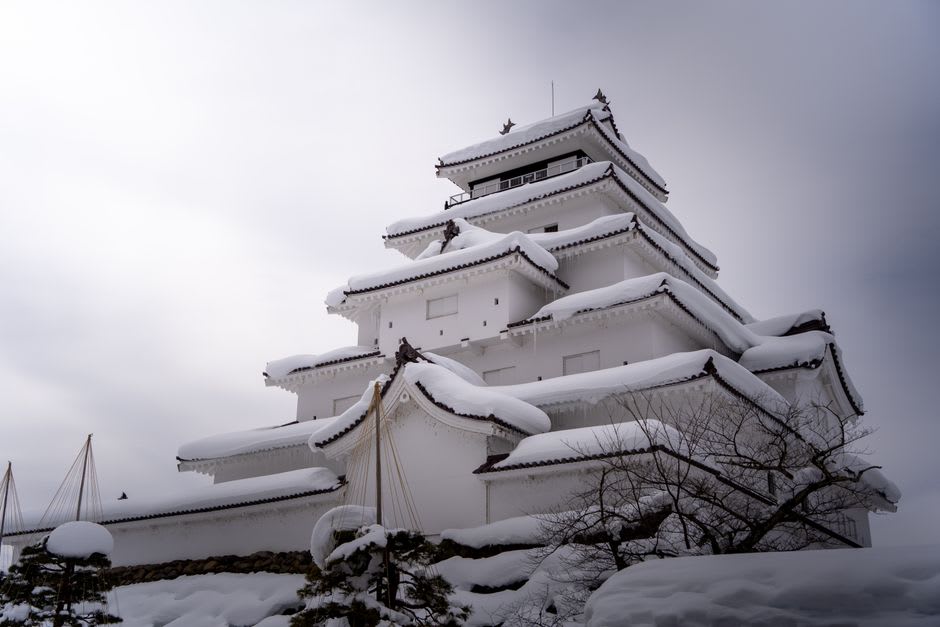
Coming down, we bought grilled mochi and a skewer of char-grilled river fish from a stall, and ate them walking, reluctant to leave a place so far from everything and so quietly perfect.
Getting There
Ouchi-juku sits in the mountains of western Fukushima, near Aizu-Wakamatsu, and reaching it takes a little effort — which keeps it unspoiled. The usual way is by train to Yunokami Onsen station on the Aizu Railway, itself a charming thatched-roofed station, then a short taxi or seasonal shuttle bus up to the village; a rental car is easiest if you have one. The town is small and entirely walkable. Winter, with the roofs under snow and a February snow festival lighting the street, is the classic season, but autumn colour in the surrounding mountains is glorious too. It pairs well with the samurai town of Aizu-Wakamatsu nearby.
Keep exploring
More of Tōhoku