Kuji
"Lia asked the diver how cold the water was. She laughed and said: cold enough to remember your mother."
On the rugged Sanriku coast of northern Iwate, Kuji is a town of amber pulled from the ground, of women who dive for shellfish with nothing but their breath, and of a sea that is both livelihood and old adversary. It is the setting of a beloved Japanese TV drama — but the real thing, we found, needed no script.
Kuji came to most of Japan through a television screen — it was the model for the town in Amachan, the morning drama about a girl who becomes a sea-diver, that half the country watched a decade ago. We arrived knowing that and little else, off a slow train down a coast so folded and fjord-like that the track spent as much time in tunnels as out. What we found was less a set than a working town at the edge of a hard, beautiful sea, still shaking off a disaster it doesn’t talk about lightly.
The women who dive
The ama of Kuji are among the northernmost free-divers in Japan — women, many of them older than my mother, who slip into the cold Pacific with a mask and a float and no air but what’s in their lungs, and come up with sea urchin and abalone. We watched a demonstration dive at the small fishing cove north of town, and it undid every assumption I’d brought. There was nothing quaint about it. A woman surfaced with a sharp exhaled whistle, tipped her catch into her tub, and went straight back down, again and again, in water that made my ankles ache just to stand in. Lia, who swims like a fish, went quiet with something close to reverence.
Amber from the dark
Kuji sits on one of the world’s few significant deposits of amber, some of it eighty-odd million years old, and the town has been digging it out for centuries. At the amber museum in the wooded hills we were handed lumps of raw resin — cloudy, honeyed, warm somehow to the touch — and shown fragments with insects caught mid-flight in the ancient sap. Lia found a small polished piece in the shop shaped like a droplet and has worn it since; it catches the light and turns the colour of weak tea. There’s something fitting about a coast that pulls treasure both from the sea and from deep under the ground, as if the land here simply insists on giving something back for how hard it makes people work.
The Sanriku shore and what the sea took
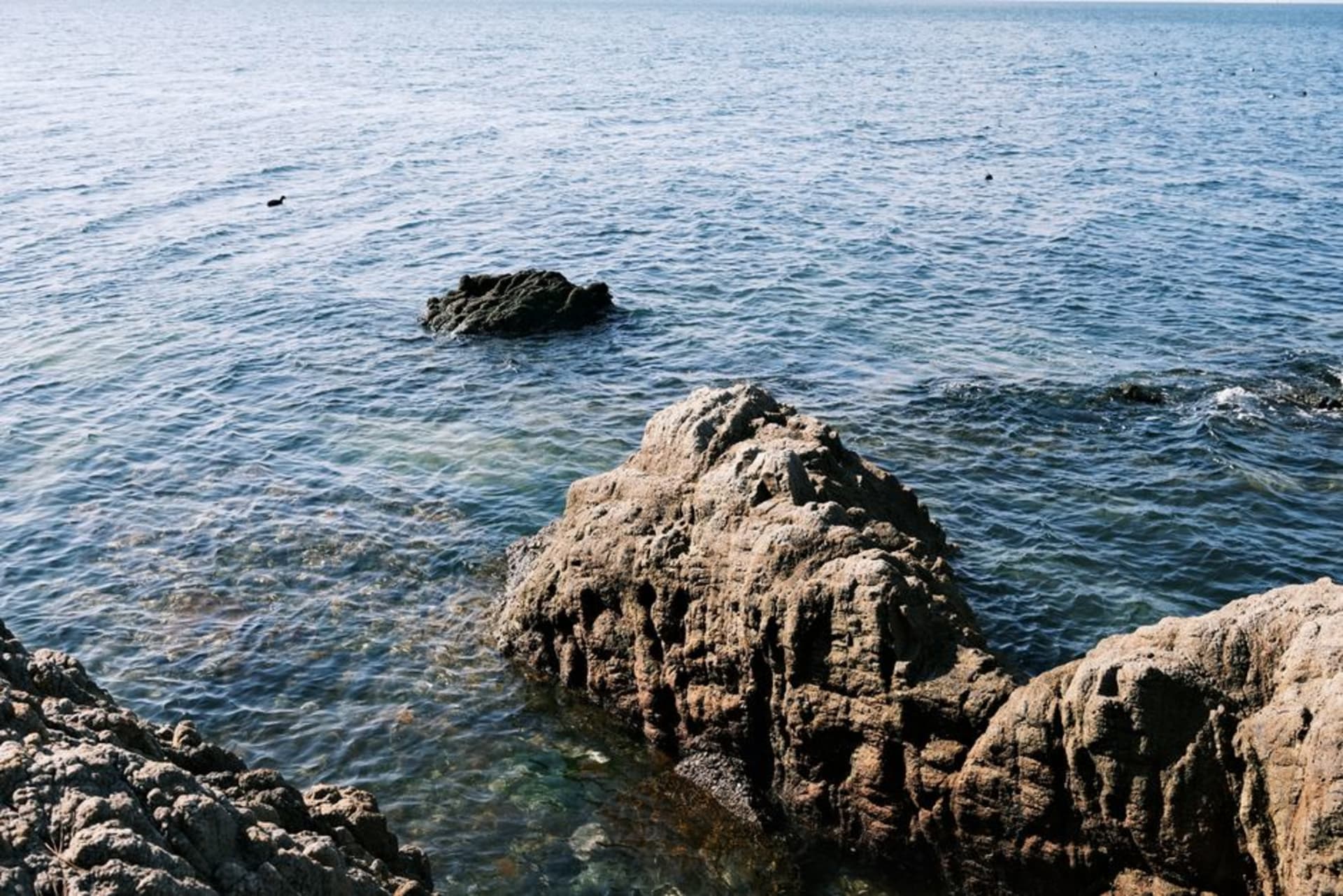
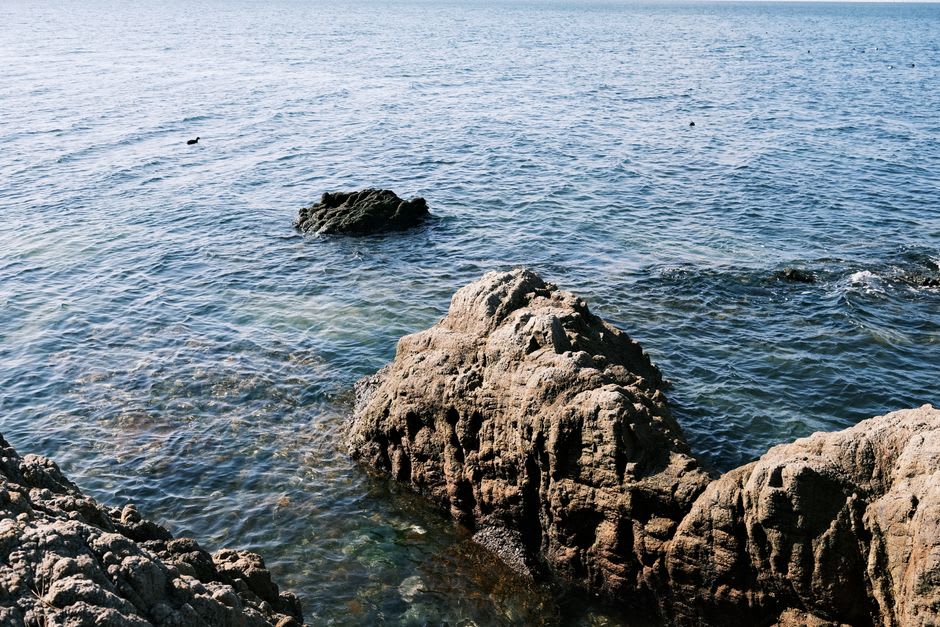
We spent an afternoon out on the coast proper — the Sanriku shoreline of towering cliffs, sea stacks and coves that runs north toward the Kosode area. It is genuinely dramatic, waves detonating against black rock, gulls hung motionless in the updraught. But you can’t stand on this coast for long without the other memory: the 2011 tsunami came ashore here too, and the seawalls and the tide-marker signs are quiet, constant reminders. A man mending nets at the harbour told us, without drama, how high the water had come, pointing at a hillside, and then went back to his nets. The sea gives and the sea takes, and Kuji lives with both in a way that left me a little humbled.
Getting There
Kuji lies on the northern Sanriku coast of Iwate, reached by the scenic Sanriku Railway that hugs the shore, or by JR to Kuji Station where the lines meet. From Morioka, the fastest route is the JR Yamada Line and bus combination, or come down the coast from Hachinohe in Aomori in about ninety minutes. The coastal railway ride is worth taking slowly for its own sake. The ama diving demonstrations run mainly in the warmer months, so summer is the time to see them; check the season’s schedule before you commit the trip to catch a live dive.
Keep exploring
More of Tōhoku