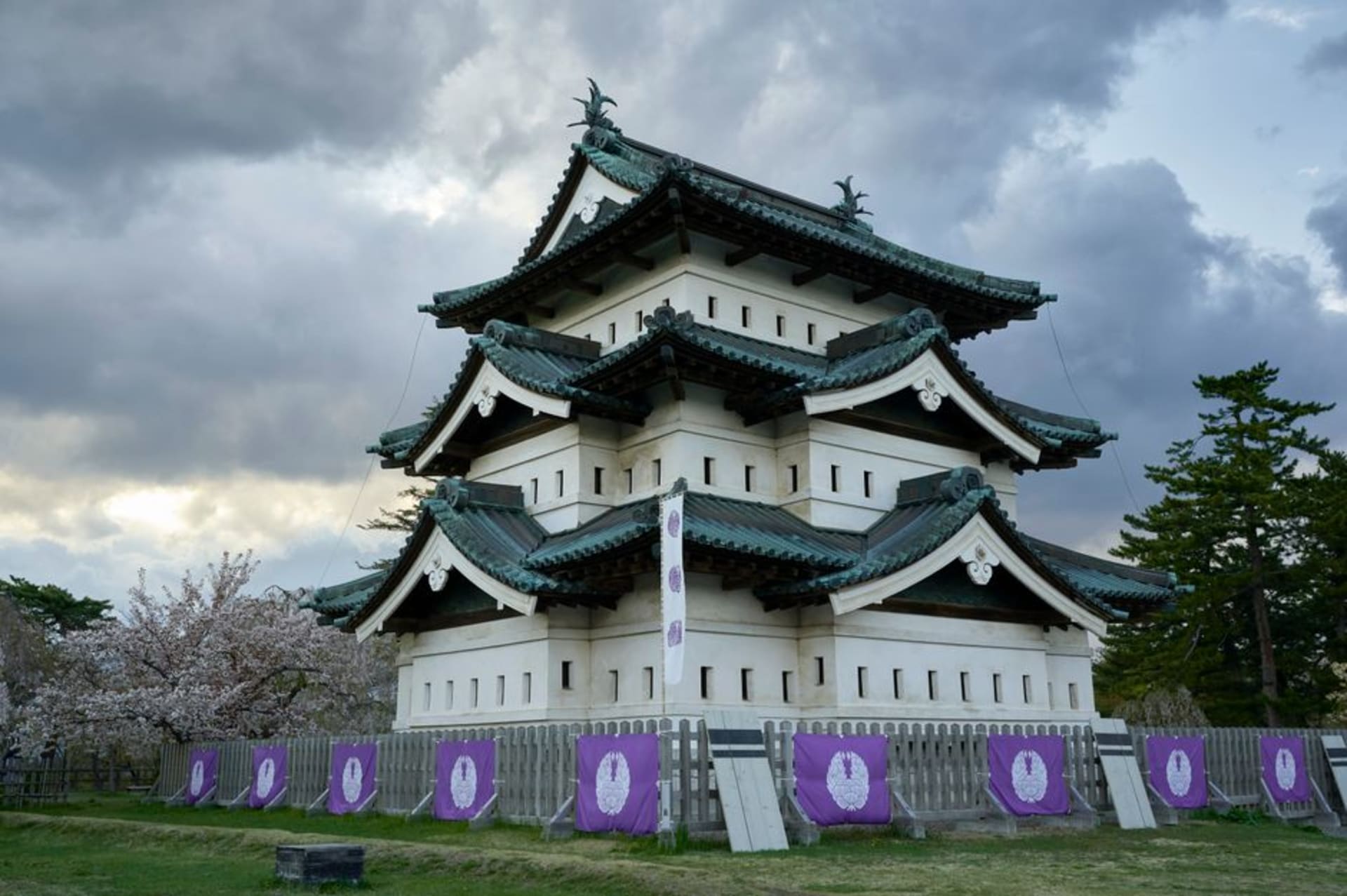
Hirosaki
"Lia leaned over the moat and said the water had turned to petals, and she wasn't exaggerating."
An Aomori castle town where cherry petals settle on the moats until the water turns solid pink, apple orchards ring the plain, and the fierce painted floats of the Neputa festival still glow in memory. Quietly one of the loveliest places we found in the north.
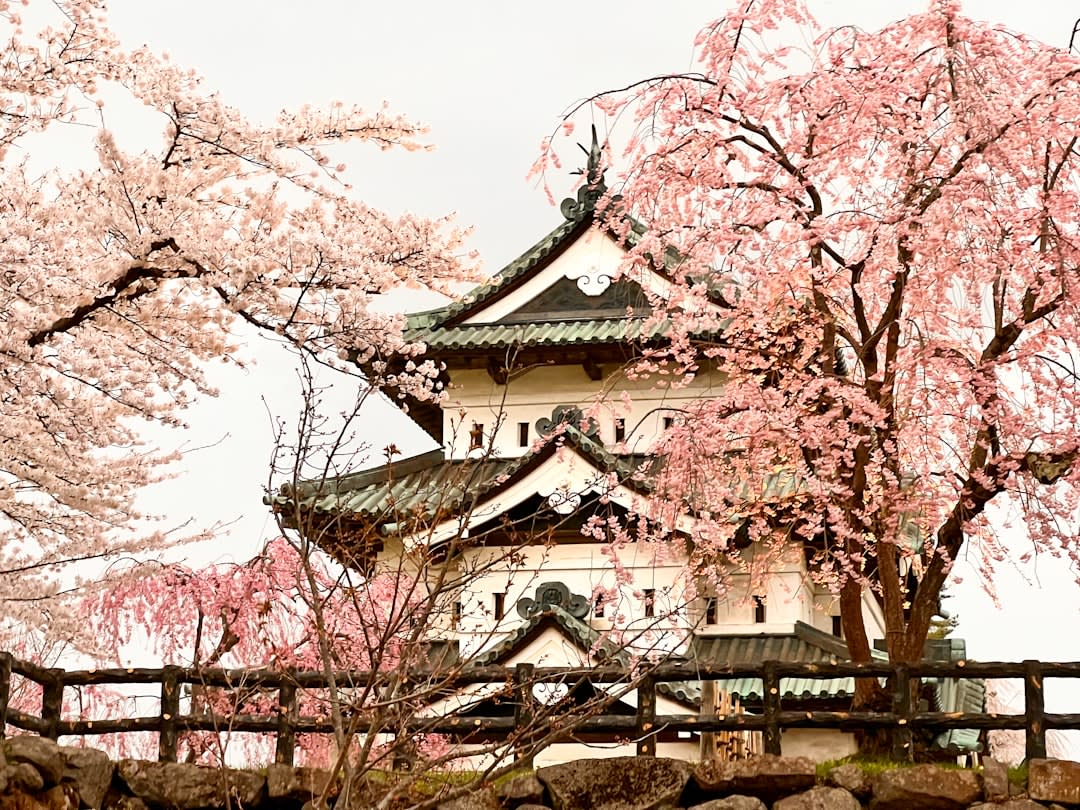
We nearly skipped Hirosaki. It sits far up in Aomori, at the top of Honshū where the trains thin out and the plain runs flat toward the mountains, and on the map it looked like a detour we couldn’t quite justify. Then a woman on the platform in Morioka, hearing us debate it, said only “the moats” and mimed something falling with her fingers, and that settled it. We arrived a few days past the peak bloom, which I’d feared meant we’d missed it. Instead we walked up to the castle park and found the cherries had done the one thing photographs never prepare you for: they had shed, and the fallen petals lay so thick on the water that the moat had become a pink road you felt you could walk across. Lia leaned over the rail a long time and didn’t say much.
The castle and its moats
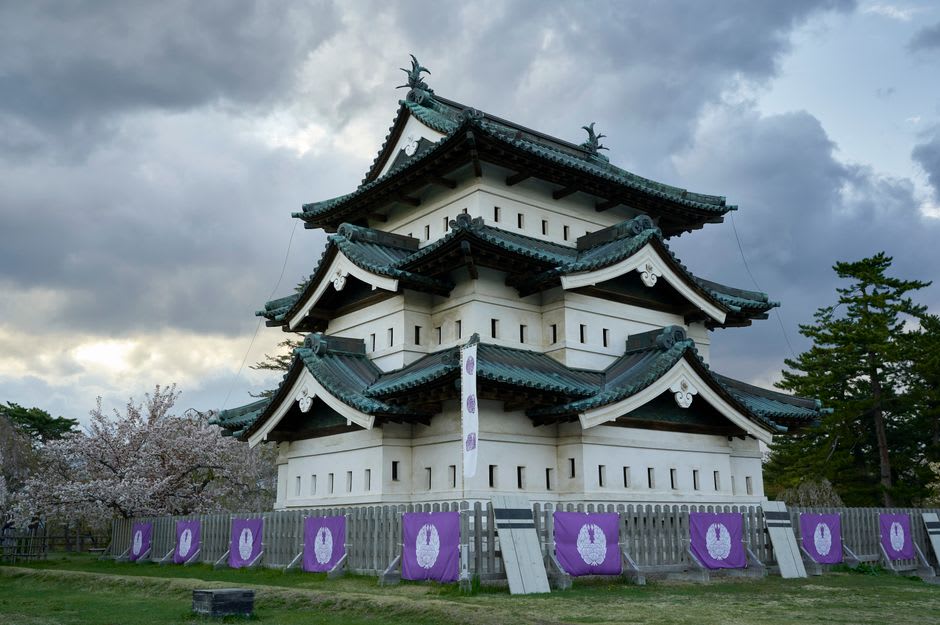
Hirosaki Castle is small as Japanese castles go — a modest three-storey keep, the original five-storey donjon lost to a lightning strike and gunpowder two centuries back — but it sits inside one of the great cherry parks of the country, some two and a half thousand trees planted along the moats and ramparts. What makes it singular is the water. When the blossom falls, the still moats fill with petals until they read as solid colour, a phenomenon the locals call hanaikada, flower rafts, and rowing boats push slow channels through it that close again behind them. We crossed the vermilion Gejo bridge and walked the earthworks, the keep shifted temporarily off its stone base for repairs, sitting oddly on the grass like a chesspiece set aside mid-game.
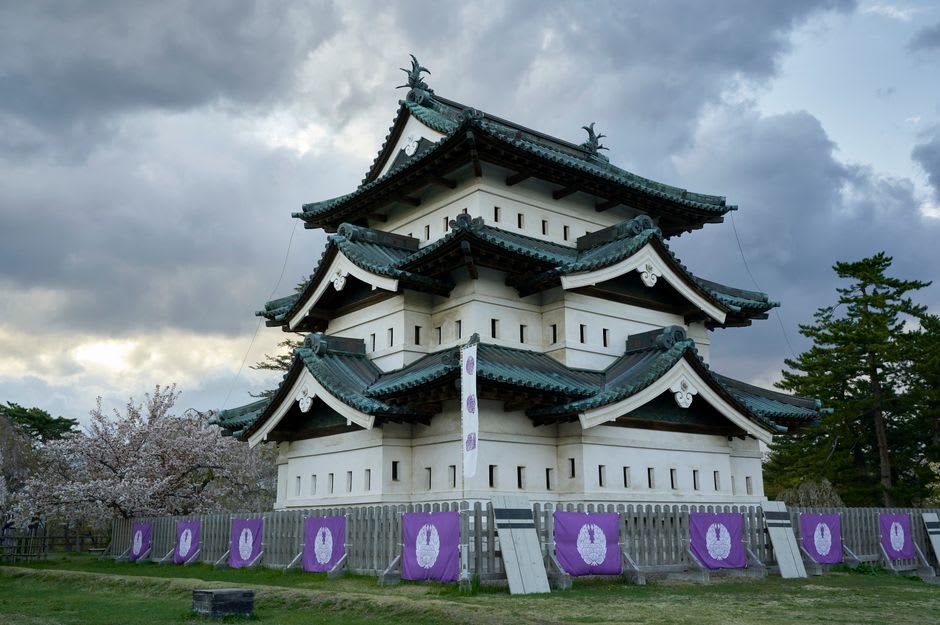
An old man feeding carp told us he’d photographed these moats every spring for forty years and never twice the same.
Apples and the plain
Aomori grows the apples of Japan — more than half the country’s crop comes off this plain — and Hirosaki is its unofficial capital. You feel it everywhere: apple pie in the cafés, apple cider pressed cloudy and sharp, apple-shaped everything, even a postbox by the station painted like a fat red fuji. We rented bicycles one clear morning and rode out past the orchards on the edge of town, the trees pruned low and wide, the mountain Iwaki floating snow-capped over the far end of the plain like something painted onto the sky. We stopped at a roadside stand and a farmer cut us slices of a variety we’d never find at home, crisp and honeyed, and waved off our money.
Iwaki is the local holy mountain, and pilgrims still climb it in autumn. We only looked, but even looking felt like enough that day.
Neputa nights
We came in spring, so we missed the festival, but Hirosaki lives for its Neputa — the August nights when huge fan-shaped floats painted with fierce warriors and demons are hauled through the streets, lit from within, to the drum and flute that everyone here learns as children. In the off-season you can visit the Neputa-mura hall, where the great floats are kept, and we did, standing under a painted samurai three storeys tall while a volunteer showed Lia how to strike the big taiko. She was hopeless and delighted. The paintings are astonishing up close, the warriors on the front all fury and the reverse side always a gentler figure, a woman looking back, the two faces of the same festival.
We ate that night at a counter serving miso-curry-milk ramen, an Aomori invention that sounds wrong and tastes wonderful, and walked back through streets that in August would be a wall of noise and light.
Getting There
Hirosaki is easier to reach than its remoteness suggests. Take the Tōhoku Shinkansen to Shin-Aomori, then a local train down to Hirosaki in about forty minutes — roughly three and a half hours all told from Tokyo. The castle park is a twenty-minute walk or a short bus from the station. Late April into early May is the cherry season, but as we learned, the days just after peak have their own magic on the moats. For the Neputa floats through the streets, come in the first week of August; for the orchards heavy with fruit, come in autumn, when the apples and the maples turn the whole plain gold and red.
Keep exploring
More of Tōhoku