Hachimantai
"Up on the plateau the sky felt closer and the whole of Tōhoku fell away below us."
A high volcanic plateau straddling Iwate and Akita, all alpine marsh and crater ponds and open sky. A dramatic spring snow-corridor drive, remote hot springs, and blazing autumn colour on the roof of Tōhoku.
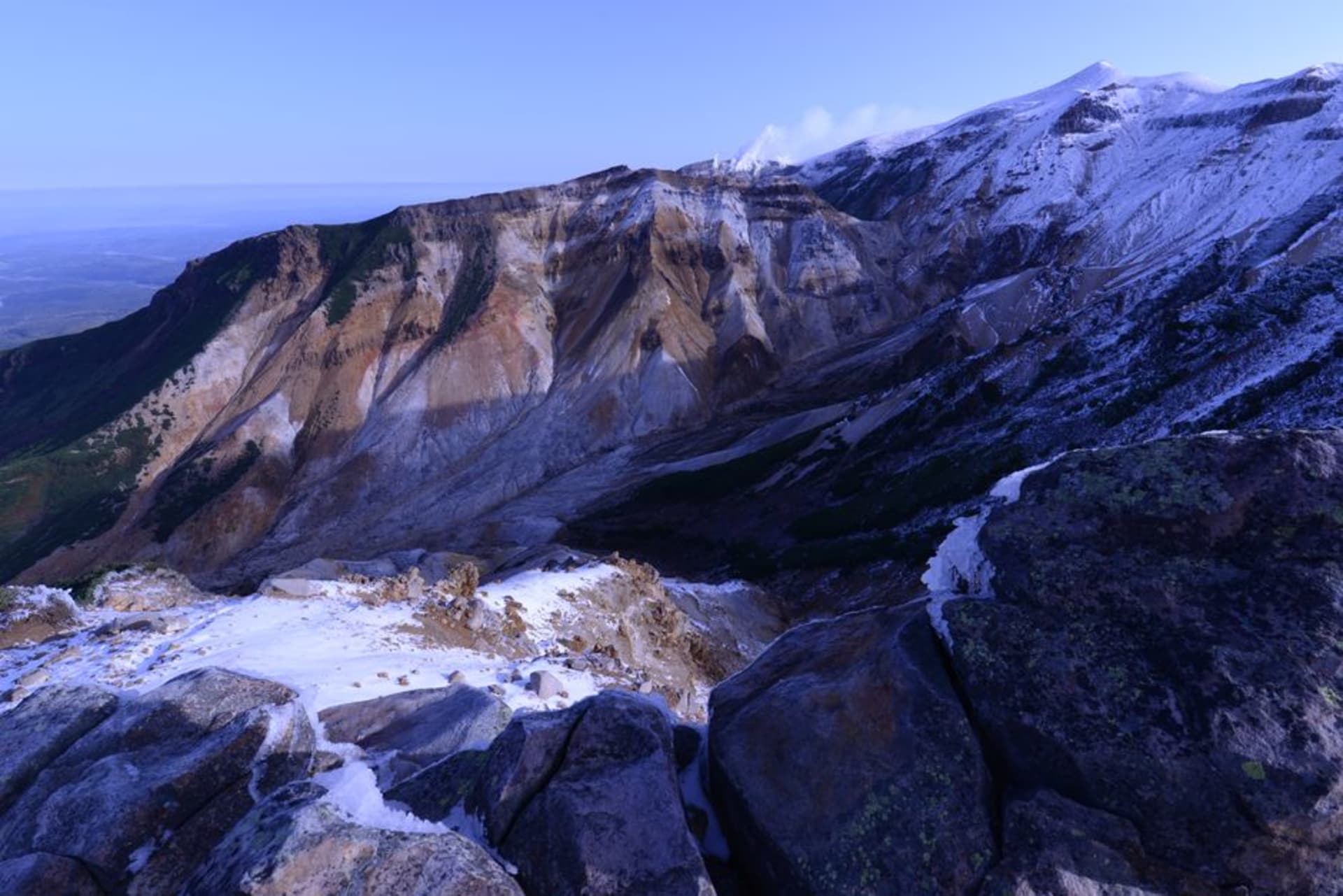
We drove up onto Hachimantai on a June morning and came out above the tree line into a different world — a broad volcanic plateau of marsh and dwarf pine and pale ponds, open to a huge sky, cool even in early summer. After the deep valleys of Tōhoku the sheer openness of it was startling; you could see for miles across Iwate and Akita, ridge behind ridge, and the air had that thin bright plateau quality. This is high country straddling the border of two prefectures, a place of old volcanoes and steaming ground and water that pools everywhere. We parked near the top of the Aspite Line road, walked out onto the boardwalks, and found the plateau still holding patches of snow in the hollows while the first alpine flowers came up beside them.
The Marshes and Crater Ponds
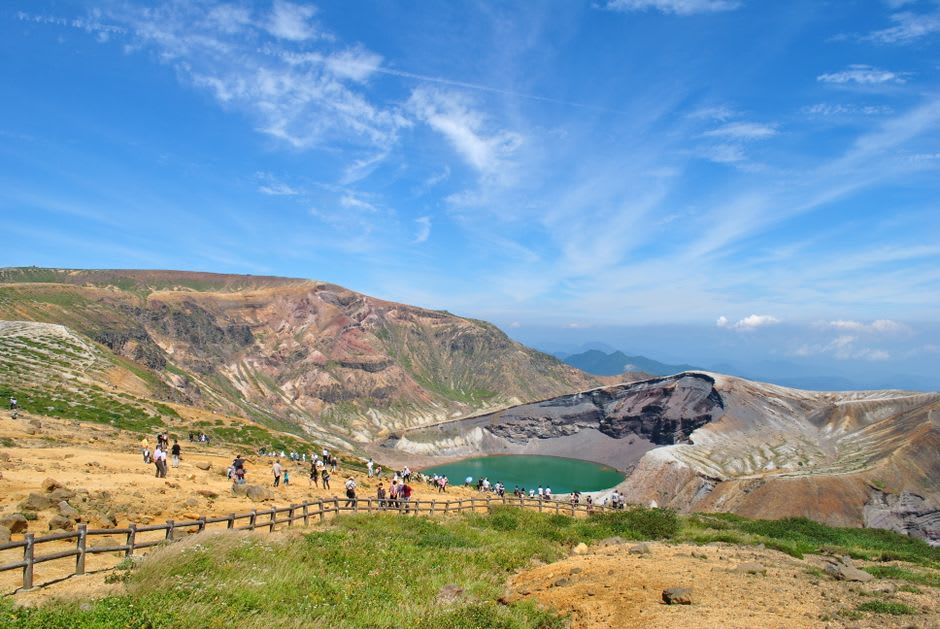
The top of Hachimantai is laced with alpine marshland and small crater ponds, and an easy network of boardwalks lets you walk right out into it. We did the loop near the summit, an hour or so on raised planks through wet meadow and dwarf pine, past still ponds that mirrored the sky — the Megane-numa “spectacle ponds,” two round pools side by side, and the larger Gama-numa. In the marshes the cottongrass and alpine flowers came up thick, and the whole plateau had the hushed, spongy quiet of high wet ground. It’s a gentle walk for such a wild-feeling place; the altitude does the drama, so you don’t have to climb hard to stand in the middle of it. We ate our lunch on a boardwalk bench with the ponds below and nothing built in any direction.
The Snow Corridor and the Seasons
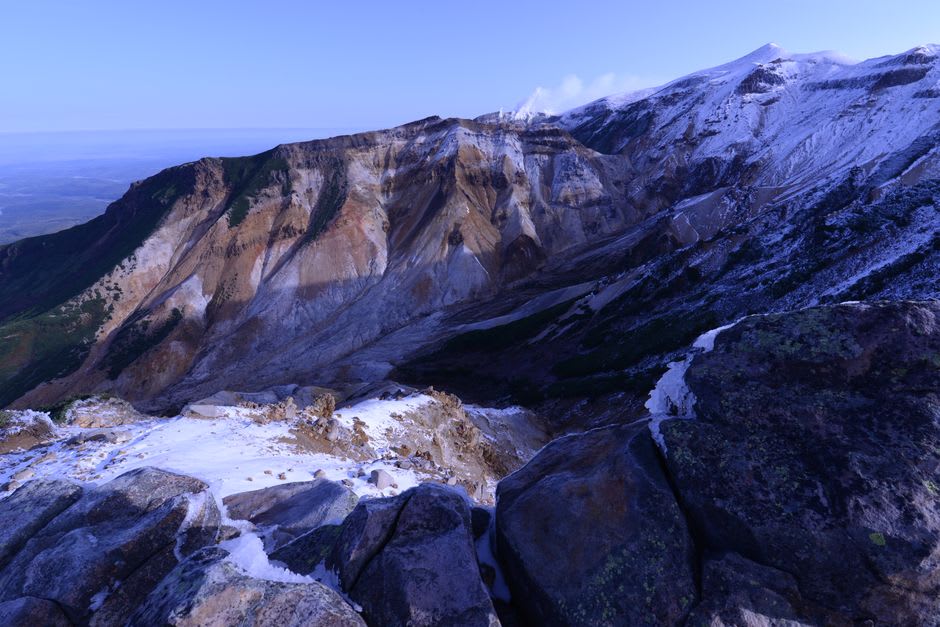
Come spring, Hachimantai does something spectacular: when the Aspite Line road is ploughed open in April, it runs between walls of snow several metres high, a white corridor you drive or walk through with the packed snow towering on either side. We missed the snow corridor ourselves — by June it had melted back — but talking to people who’d driven it in late April, the scale sounded extraordinary, the road a slot cut through winter. That’s the plateau’s other face. By autumn it flips again: the slopes below the marshes turn brilliant with colour, some of the earliest and best foliage in Tōhoku, and the whole mountain glows. Whenever you come, the seasons up here are turned up loud — deep snow, brief green summer, blazing autumn, in fast succession on the high open ground.
Hot Springs on the Volcano
All that volcanism means hot water, and Hachimantai has some of the most characterful onsen in the north — remote, old, and strong. We soaked at Goshogake, on the Akita side, where the ground itself steams and bubbles: mud pots, fumaroles, and hissing vents surround the baths, and a short nature trail runs through the geothermal field with the earth visibly alive underfoot. Nearby Tamagawa Onsen pours out some of the most acidic, mineral-heavy spring water in Japan, so potent that people come to lie on heated rock beside it for their health. These aren’t polished resort baths; they’re rough, elemental places built where the volcano lets its heat out, and soaking in one with sulphur in the air and steam drifting past felt like bathing in the mountain’s own breath.
Getting There
Hachimantai spreads across the border of Iwate and Akita in northern Tōhoku, and a car makes it far easier than public transport. The usual gateways are Morioka in Iwate or the Hachimantai area on the Akita side; from Morioka it’s a scenic drive of an hour or two up onto the plateau via the Aspite Line, the road that becomes the spring snow corridor. Buses run seasonally from Morioka toward the plateau and the hot springs, but they’re limited, so most visitors drive. Note the timing: the mountain roads are snowbound and closed through winter, opening in April — when the snow corridor is at its best — and running through to autumn, when the foliage peaks. Late spring through October is the window for the marshes, walks, and onsen.
Keep exploring
More of Tōhoku