Ginzan Onsen
"The gas lamps came on over the snow and Lia simply stopped walking, mid-sentence, to look."
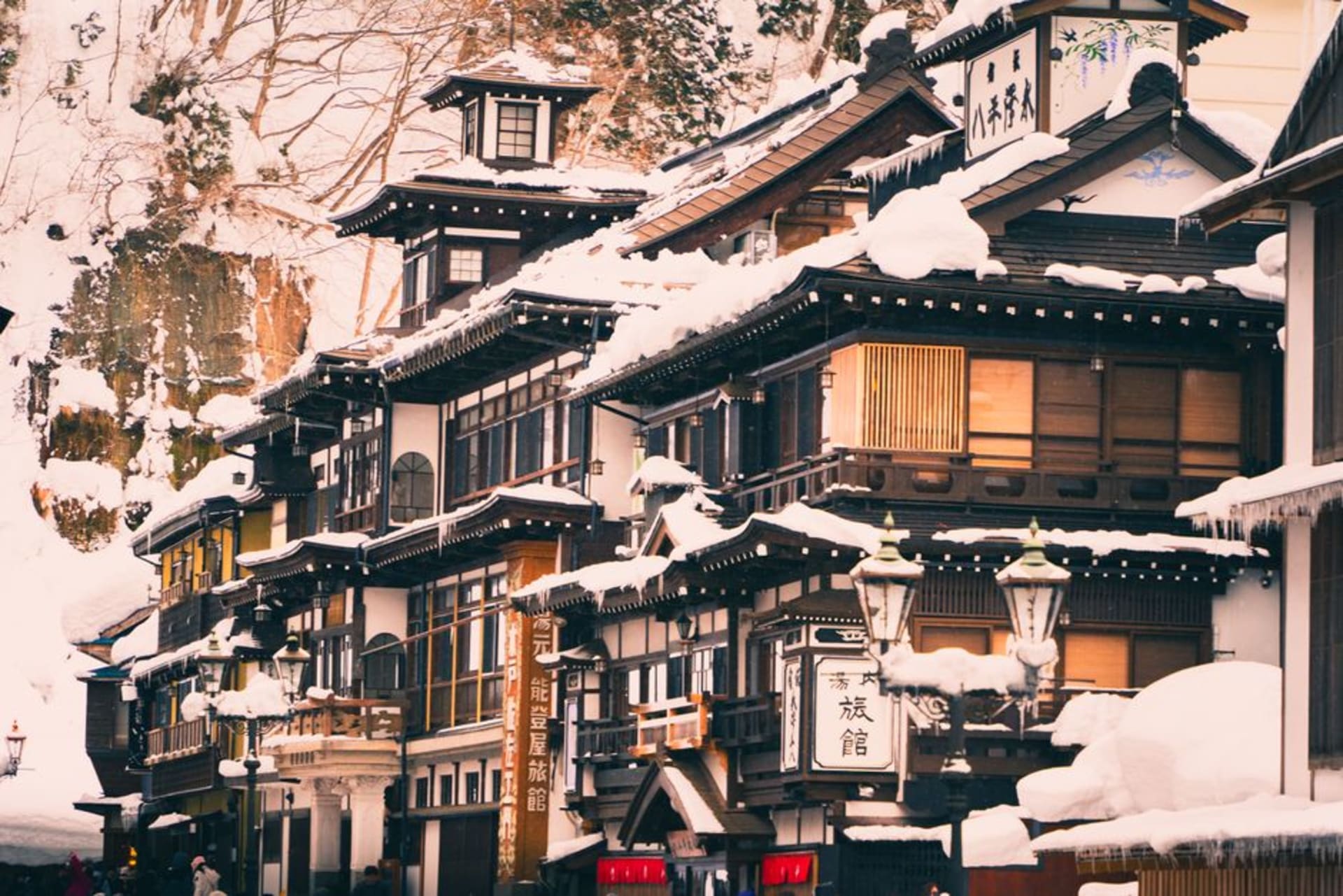
A jewel of a hot-spring town buried deep in the Yamagata mountains, where tall wooden Taishō-era inns line a narrow river and gas lamps glow over the snow at night. Remote, storybook, and almost impossibly atmospheric. The Japan of an old dream.
We reached Ginzan Onsen as the last light was going, having taken train after train after bus deep into the Yamagata mountains, and I remember Lia stopping dead on the little bridge into town. Below us a narrow river ran between two facing rows of tall wooden inns, three and four storeys of dark timber and plaster, and one by one the gas lamps along the bank were flickering on over the fresh snow. Neither of us said anything for a moment. It did not look like a real place. It looked like a set, or a memory, or the town at the bottom of a snow globe. And then a woman in a yukata crossed the bridge with an umbrella, and it was real after all.
The Street That Time Kept
Ginzan grew rich on a silver mine — gin-zan means silver mountain — and when the mine gave out the town reinvented itself around its hot springs, rebuilding after a flood in the Taishō era of the early twentieth century. That is the magic of it: the ryokan lining the river are those tall wooden Taishō buildings, ornamented with delicate plaster reliefs called kote-e, and because the town is so remote and so protected, almost nothing since has been allowed to spoil the picture. Cars are kept out of the centre entirely. You walk the stone riverbank between the inns, and it is genuinely, breathtakingly of another age.
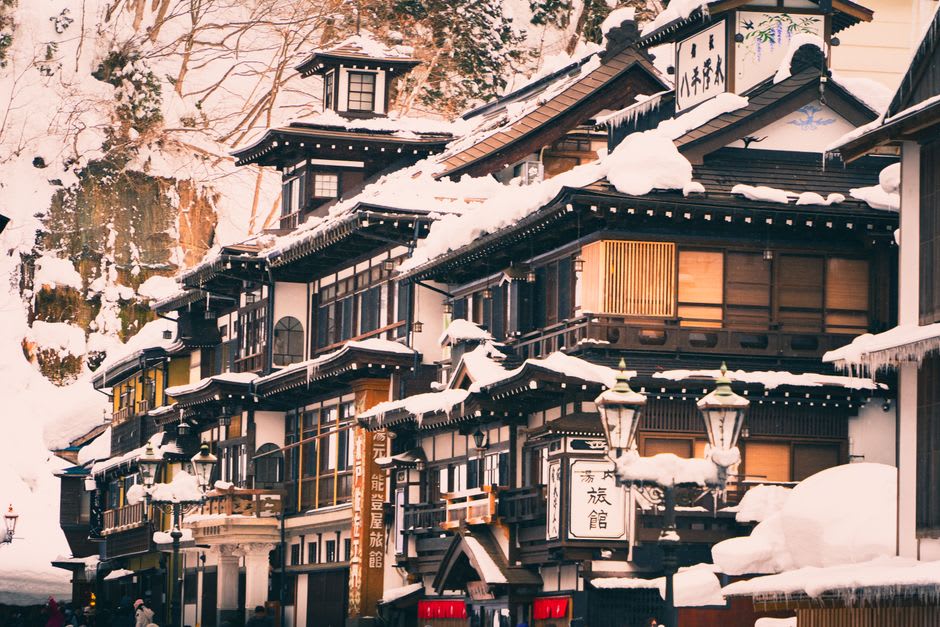
We arrived in the afternoon and simply walked the length of the street and back, twice, looking up at the carved plaster and the wooden balconies, before it was even dark. It rewards looking up.
The Lamps at Night
But it is night that Ginzan is famous for, and rightly. When the light goes and the gas lamps come on along the river, the whole street turns to warm amber, the timber façades glowing, the snow catching the light, steam drifting from the bathhouses. We stayed in one of the old inns precisely so we could be out in it after the day-trippers had gone, and the town after dark, nearly empty, snow falling softly through the lamplight, was one of the most beautiful things I have seen anywhere.
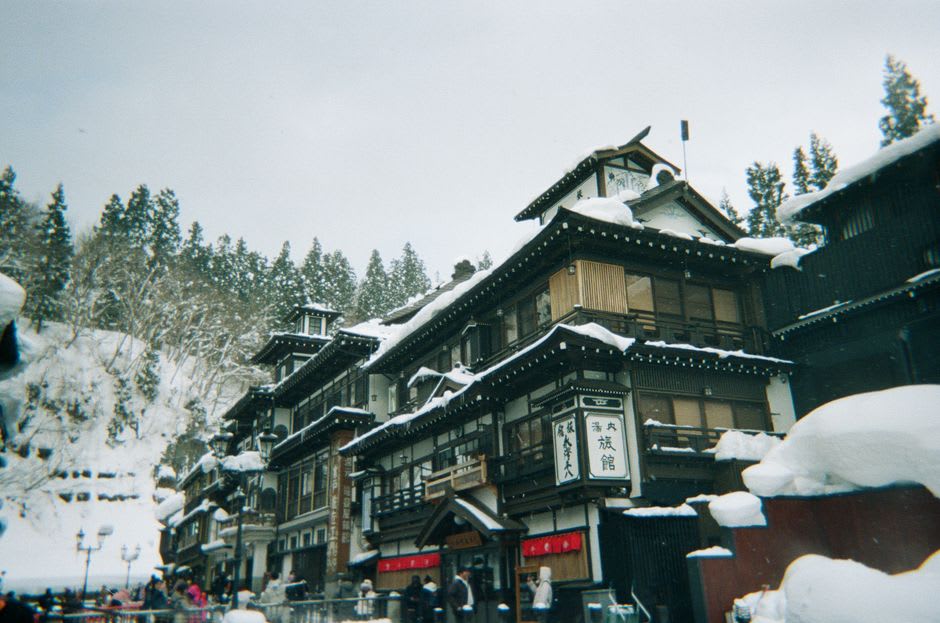
We walked it slowly in borrowed geta, the snow squeaking underfoot, then climbed to a small footbridge above the town to look back down at the whole glowing street. Lia said it was the most romantic place we had ever been. I did not argue.
Soaking In, Staying Warm
For all its beauty on the outside, Ginzan is a hot-spring town at heart, and the point is to soak. Our ryokan had its own baths, but the town also keeps small public sotoyu and a couple of warm footbaths right on the riverbank where you can sit with your feet in hot water and watch the snow come down. There is little to do here in the busy sense — no sights to tick off, no shopping to speak of — and that is the entire appeal. You bathe, you eat a long mountain dinner in your inn, you walk the lamplit street, you bathe again.
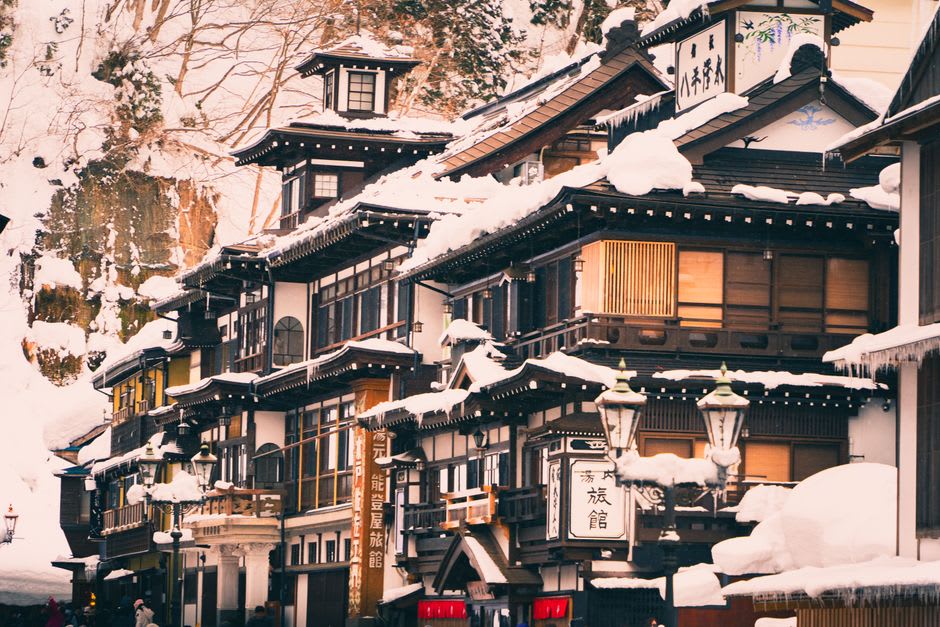
We ate river fish and mountain vegetables in our room, then went back out into the cold for one last look before bed, unwilling to waste a single hour of a place this hard to reach and this easy to love.
Getting There
Ginzan Onsen is genuinely remote, which is half of why it survives so intact. The route runs by Shinkansen to Ōishida station in Yamagata Prefecture, then a local bus of roughly forty minutes up into the mountains to the town; cars are left at the edge, and the centre is walked on foot. Because it is so far in, the great mistake is to day-trip it — you must stay the night to see the lamps come on after the crowds leave, and the old ryokan are few and book out far ahead, so reserve early. Come in winter for the snow and the lamplight, the season Ginzan was made for.
Keep exploring
More of Tōhoku