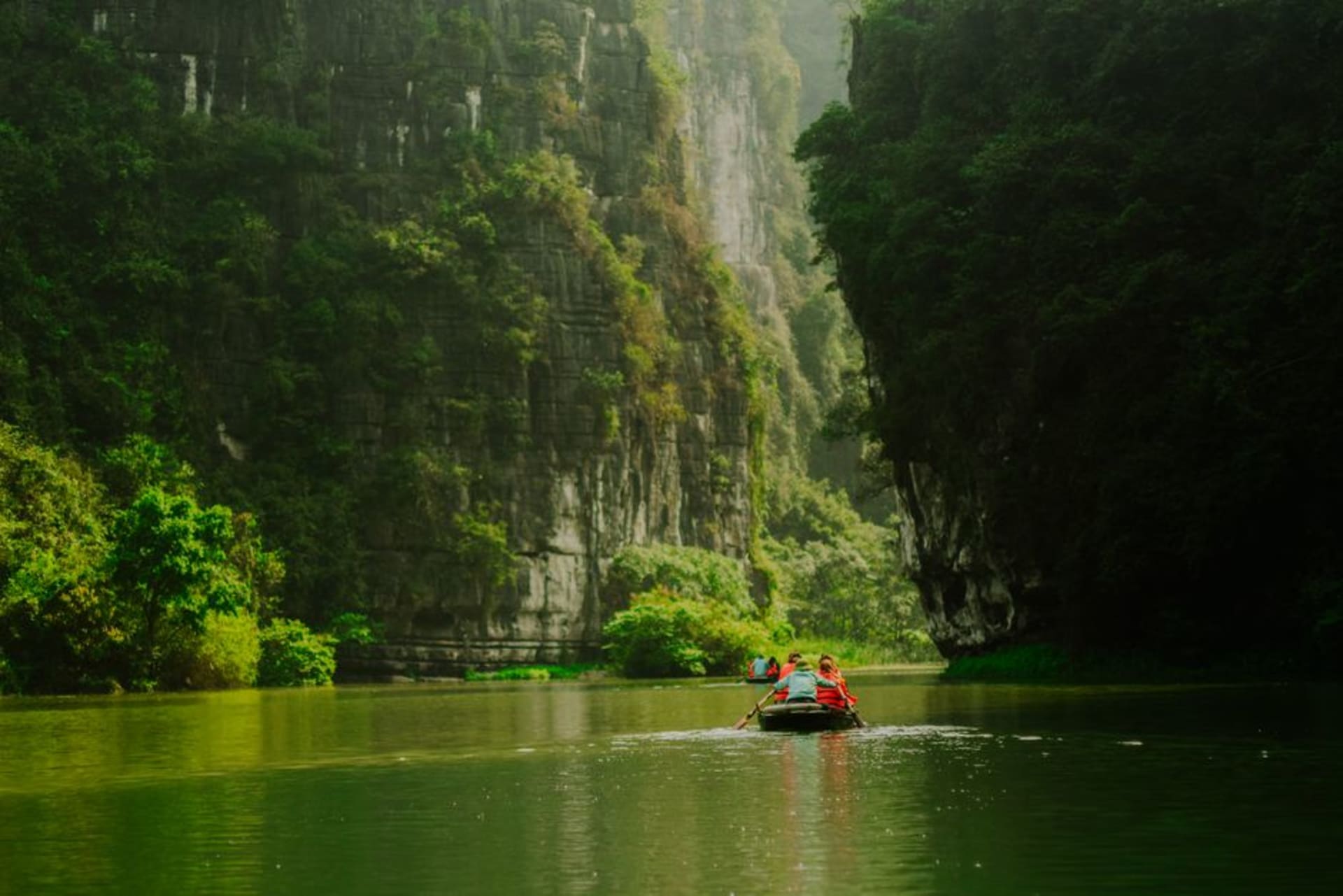
A quiet Iwate gorge you drift through in a flat-bottomed boat, poled upstream between limestone cliffs that lean two hundred metres over your head. No engine, no hurry — just the pole knocking the hull and the boatman's voice bending around the rock. It ends with a song that the walls hand back to you.
We almost skipped Geibikei. It was raining the flat grey rain of Iwate in late morning, and Lia and I had already argued mildly about whether a boat ride counted as “seeing something.” Then we stepped onto the little wooden vessel, sat on a thin cushion with our shoes tucked under us, and the boatman pushed off with a single unhurried shove of his pole — and the argument simply evaporated. The Satetsu River here is so clear and so still that the cliffs fall into it twice, once in stone and once in reflection, and we spent the first ten minutes not talking at all.
Drifting under the cliffs
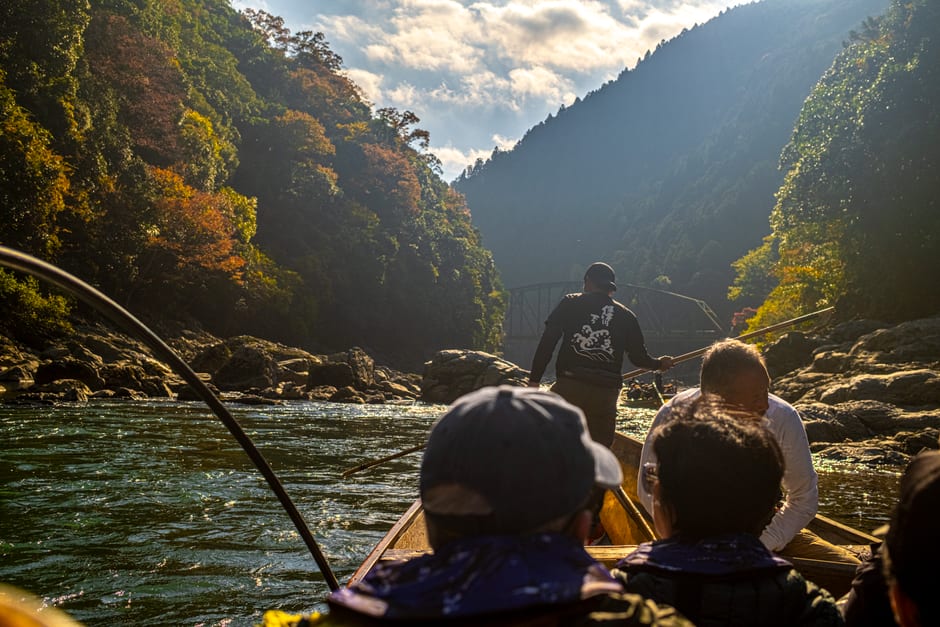
There is no motor. That is the whole point, and it takes a moment to understand what it does to you. The only sounds are the wooden pole tapping the riverbed, water beading off it, and somewhere overhead a bird we never saw. The limestone walls rise so high — the tallest around a hundred metres straight up — that you tip your head back until your neck complains, and still the top is fringed with pines growing out of nothing. Our boatman, a compact man in a straw hat, poled standing at the stern and narrated in a low singsong Iwate accent that Lia followed better than I did. She translated the good bits: this rock is the lion, that hollow is where the ospreys nest.
The song at the turnaround
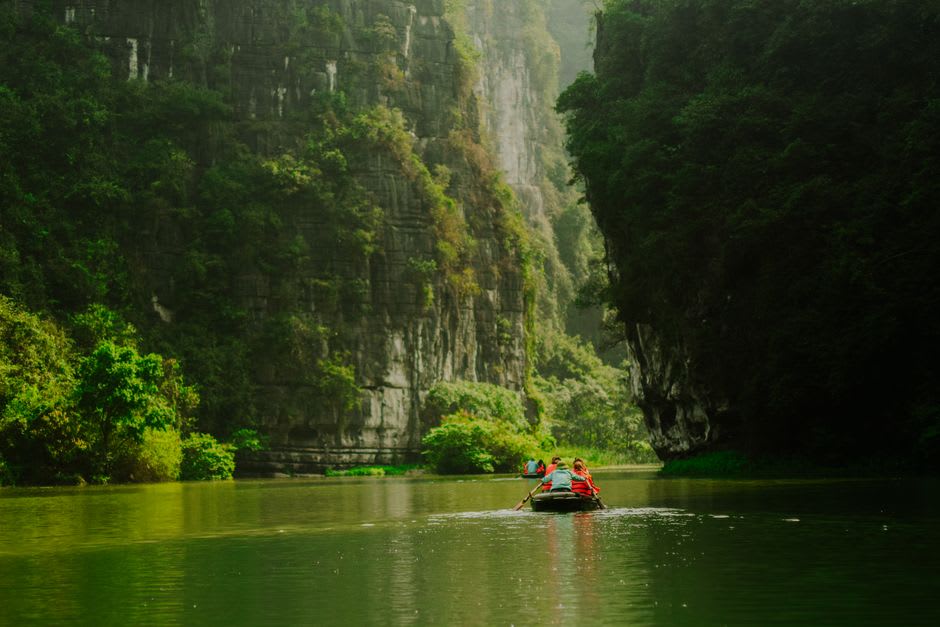
Halfway up, the boat noses onto a gravel bank and you climb out to walk a short path to the Daigebi cliff, the great overhanging face the gorge is named for. There is a small ritual here that I braced myself to find corny and instead found quietly moving. You can buy little clay pebbles called undama, luck stones, and lob them toward a hole in the far cliff — each hole spells out a wish, love, health, money. Lia threw for health and missed by a metre, laughing. I didn’t throw at all; I just watched the water. Then, on the drift back down, the boatman set his pole across his knees and sang the Geibiki Oiwake, an old folk song, letting the last notes hang so the cliff walls threw them back at us. The whole boat went silent. It is the kind of small, unrepeatable thing you can’t plan for.
Carp, and the slow way back
Fat koi and small river fish follow the boats — they know the drill, and passengers feed them from the bags of pellets sold at the dock. It sounds like a gimmick and it half is, but there’s something honest about how the fish braid the green water while the cliffs stand utterly indifferent above them. The round trip runs about ninety minutes and covers only a couple of kilometres; you are not going anywhere, which is exactly the gift. By the time we stepped back onto the dock the rain had thinned to mist, and Lia said the thing I was thinking: that this had been the calmest hour of the whole trip.
Getting There
Geibikei sits in Ichinoseki, southern Iwate. Take the JR Tohoku Shinkansen to Ichinoseki, then the local JR Ofunato Line to Geibikei Station — the boat dock is a five-minute walk. It’s an easy pairing with Genbikei Gorge (a different ravine, confusingly similar name) the same day if you have a car or catch the bus. Boats run year-round; the winter kotatsu-bune, heated with a foot-warmer under a blanket, is worth timing a trip around.
Keep exploring
More of Tōhoku