Dewa Sanzan
"Two thousand steps, the priest said, and each one is a prayer whether you mean it or not."
Yamagata's three sacred mountains — Haguro, Gassan, and Yudono — where white-clad yamabushi ascetics still walk the old pilgrim ways, a five-story pagoda stands hidden in the cedars, and a long stone stairway of more than two thousand steps climbs through ancient forest. The most quietly spiritual place we found in Japan.
We didn’t fully understand what Dewa Sanzan was until we were partway up it. I’d read that these three Yamagata mountains had been a centre of pilgrimage for a thousand years, that they represented, in the local faith, birth and death and rebirth, and that people still came to walk them — but reading it and climbing the stone stairway through the cedars are different kinds of knowing. We started early on Mount Haguro, the low mountain, the one you can do on foot without equipment, and near the base a priest in white with a conch shell at his hip told us, kindly, that the stairway ahead had two thousand four hundred and forty-six steps and that we should climb without counting. Lia counted anyway for the first hundred, then stopped, and somewhere in the green silence of the great trees the climb stopped being exercise and became something closer to what it was built to be.
The stairway and the pagoda
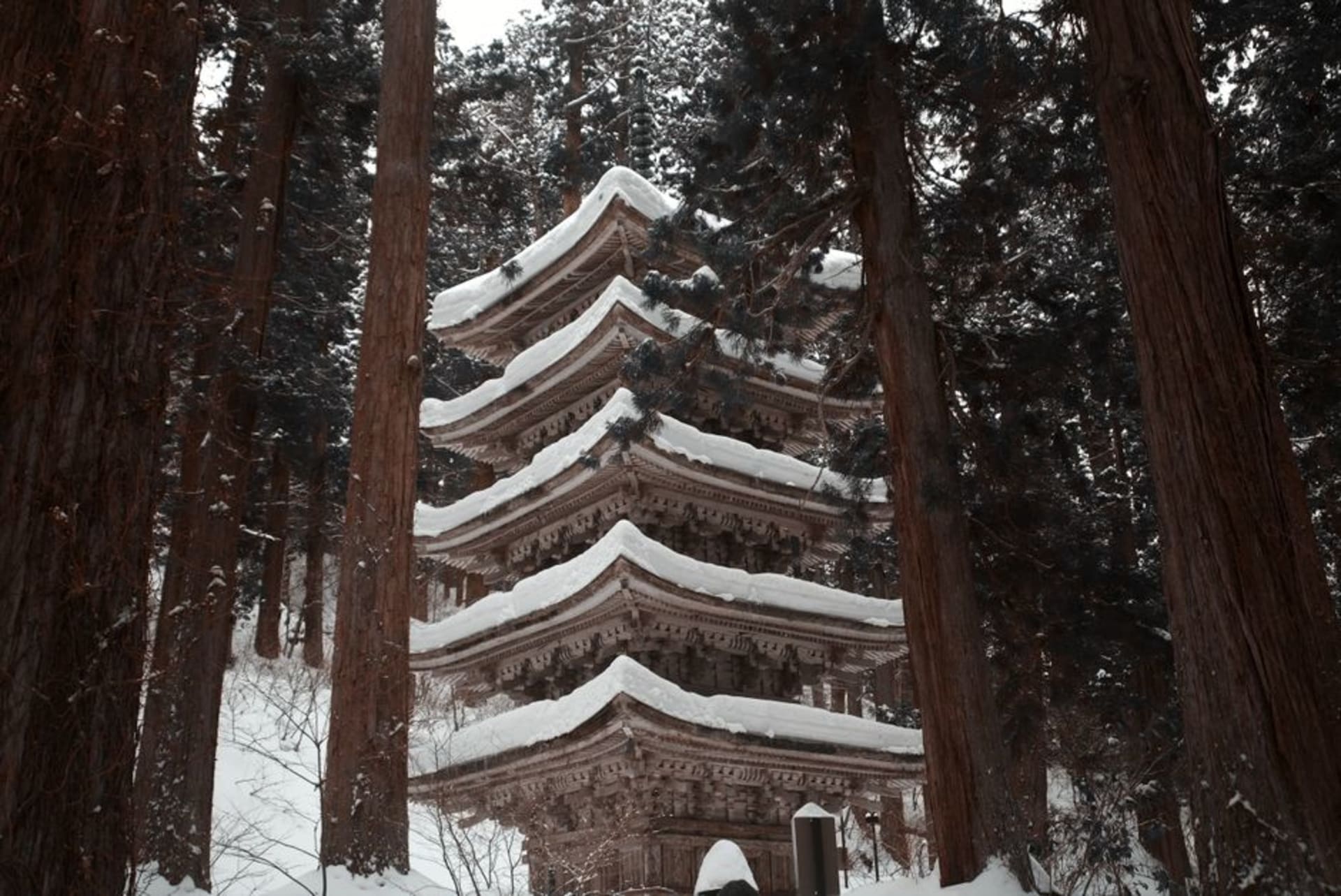
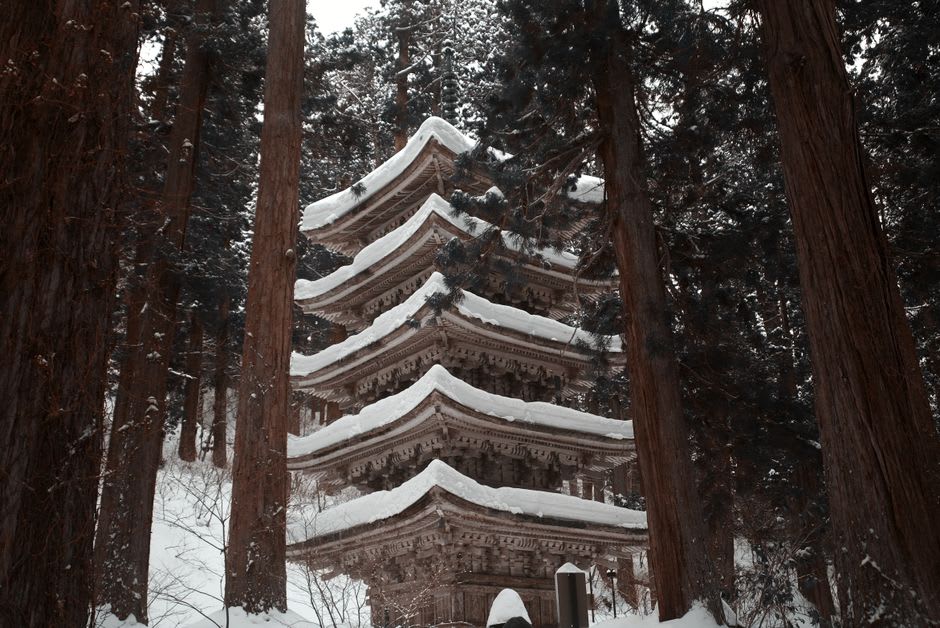
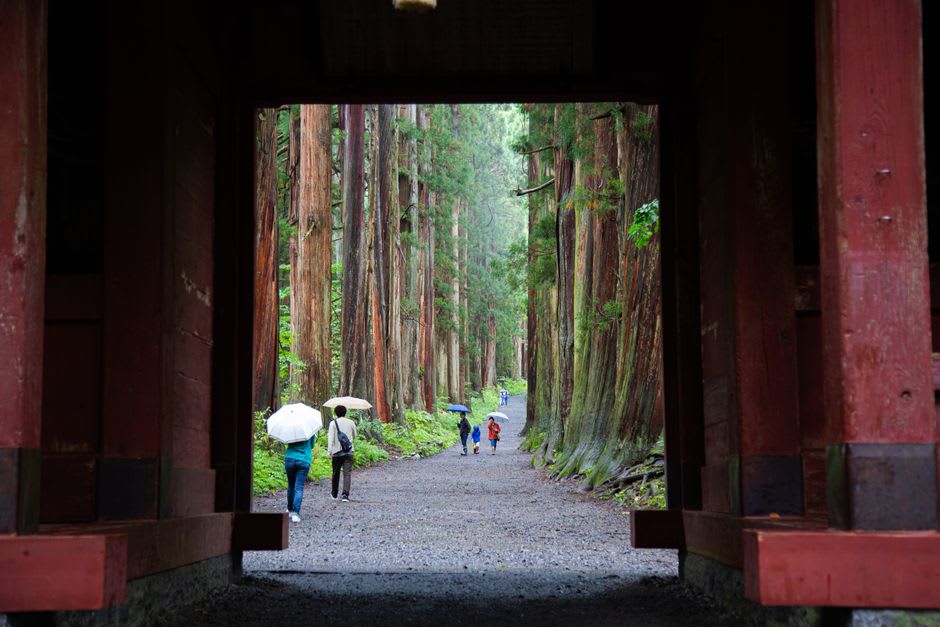
The path up Haguro is one of the most beautiful walks in Japan and almost nobody outside the country knows it. A stone stairway climbs from the red Zuishinmon gate up through a forest of cedars four and five hundred years old, so tall and close that the light comes down green and the sound falls away. A little way up, where the trees open just slightly, stands the Gojū-tō — a five-story wooden pagoda, unpainted and weathered to silver-grey, over six hundred years old, standing alone among the cedars with no temple around it, just the forest. We came around a bend and there it was, and Lia made the small involuntary sound she makes when something is too much at once. We sat on the steps below it a long time. Carved into the stones of the path, if you find them, are little sake cups and lotus flowers left by the masons; find all thirty-three, the tradition says, and a wish is granted.
At the top, breathless, we reached the great thatched shrine of Sanjin-gōsaiden, its roof one of the thickest I’ve ever seen, where all three mountains’ deities are enshrined together for those who can’t walk the higher peaks.
The yamabushi
What sets Dewa Sanzan apart is that its faith is living, not preserved. The yamabushi — mountain ascetics of Shugendō, a syncretic path blending Shinto, Buddhism, and old mountain worship — still train here, dressed in white, blowing the horagai conch through the forest, undergoing austerities on the peaks that outsiders rarely see. We passed several on the stairway, and near the top a group emerged from the trees in single file, white against the green, the conch sounding low and strange, and everyone on the steps fell quiet as they passed. At a small hall we spoke with an older yamabushi who’d guided pilgrims for decades; he explained the three mountains as a journey through death and back, and said it plainly, without mysticism, the way you’d describe a road you knew well.
That night we stayed in a shukubō, a pilgrims’ lodging, and ate shōjin ryōri — the mountain’s vegetarian temple cuisine, wild plants and mushrooms and tofu foraged and prepared with a care that felt like devotion.
The three mountains
Haguro is the mountain of the present, of birth, open all year and walkable by anyone. The other two are harder and more seasonal. Gassan, the high mountain of death, is snow-locked most of the year and climbable only in the brief summer, its long alpine ridge running up to a shrine above the clouds; Yudono, the mountain of rebirth, holds the tradition’s deepest secret, a sacred object at its heart that pilgrims are forbidden to describe or photograph — you remove your shoes and walk it barefoot, and what you see there, by long custom, you do not speak of afterward. We only managed Haguro and the lower slopes of Yudono on that trip, and I’ve wanted ever since to go back in summer and walk all three in the proper pilgrim’s order.
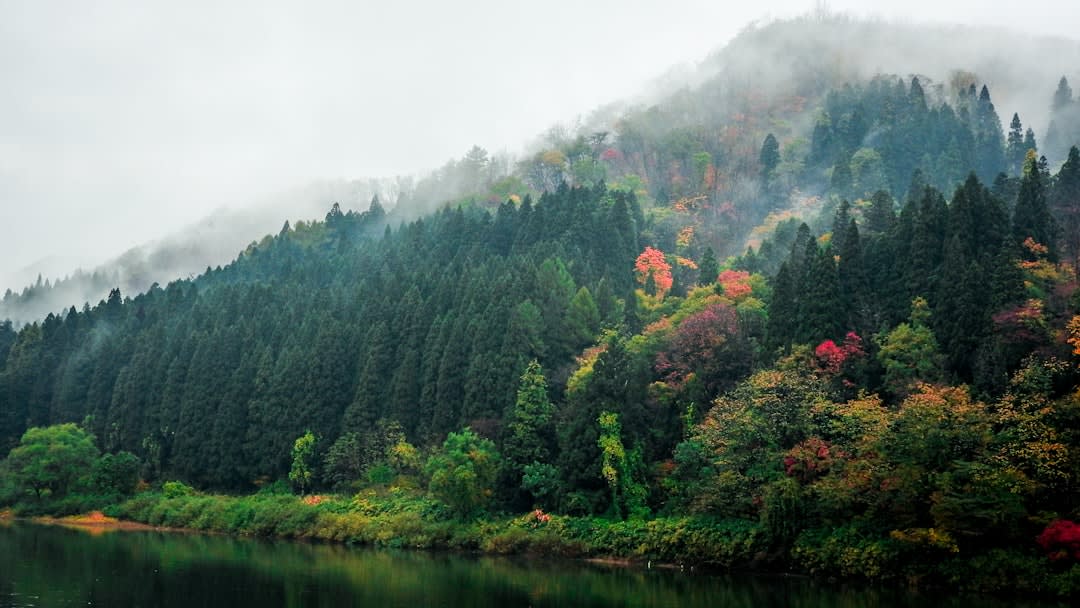
Coming down Haguro in the late afternoon, the cedars going dark, Lia said she understood now why people did this on purpose, over and over, for a thousand years.
Getting There
Dewa Sanzan lies inland from the Yamagata coast, and the usual base is the town of Tsuruoka. Reach it by Shinkansen to Niigata and a limited express up the coast, or via Yamagata; from Tsuruoka, buses run to the foot of Mount Haguro in about forty minutes. Haguro’s stairway is climbable year-round — go early, wear real shoes, and don’t rush the two and a half thousand steps. Gassan and Yudono open only from roughly July to September, when the snow clears; for the full three-mountain pilgrimage, come in high summer. Staying overnight in a shukubō lodging, with its mountain vegetarian meals, is the way to feel what this place actually is.
Keep exploring
More of Tōhoku