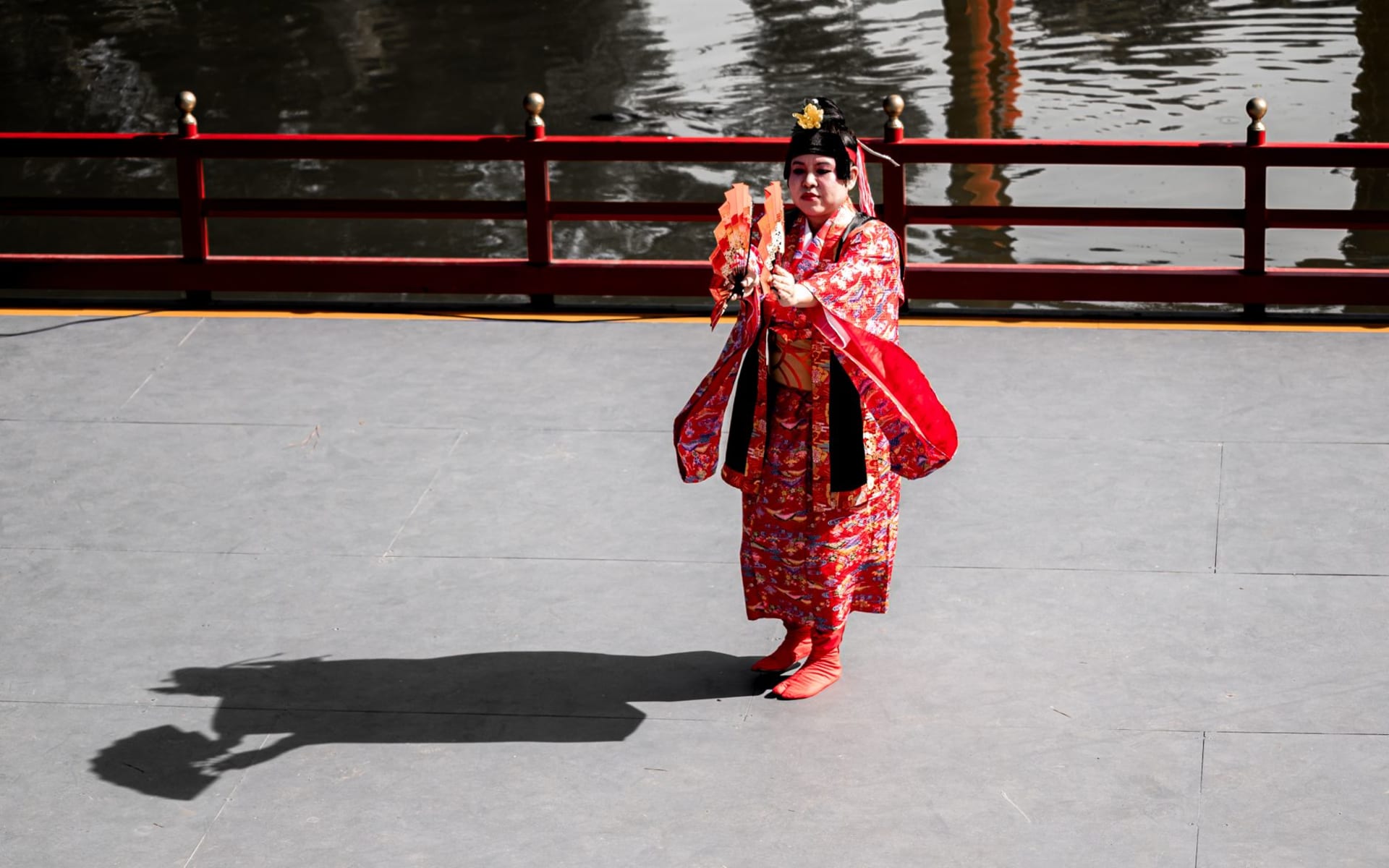
The burnt-and-rebuilt heart of the Ryukyuan kingdom — a castle that belongs to a civilization Japan absorbed but never erased.

I walked up to Shuri Castle from the monorail station on a morning that was already hot, the hill steep enough that I was sweating through my shirt by the time the first gate appeared. But then it appeared — Shureimon, the gate that’s printed on the two-thousand-yen note, with its low curved roof and deep vermilion lacquer — and I stopped walking. This doesn’t look like Japan. The colours are wrong, or rather, they’re right for somewhere else: the red and ochre and Chinese-influenced bracketing belong to a different tradition entirely, one that absorbed influence from Ming China and the Southeast Asian trade routes and turned them into something unique to these islands.
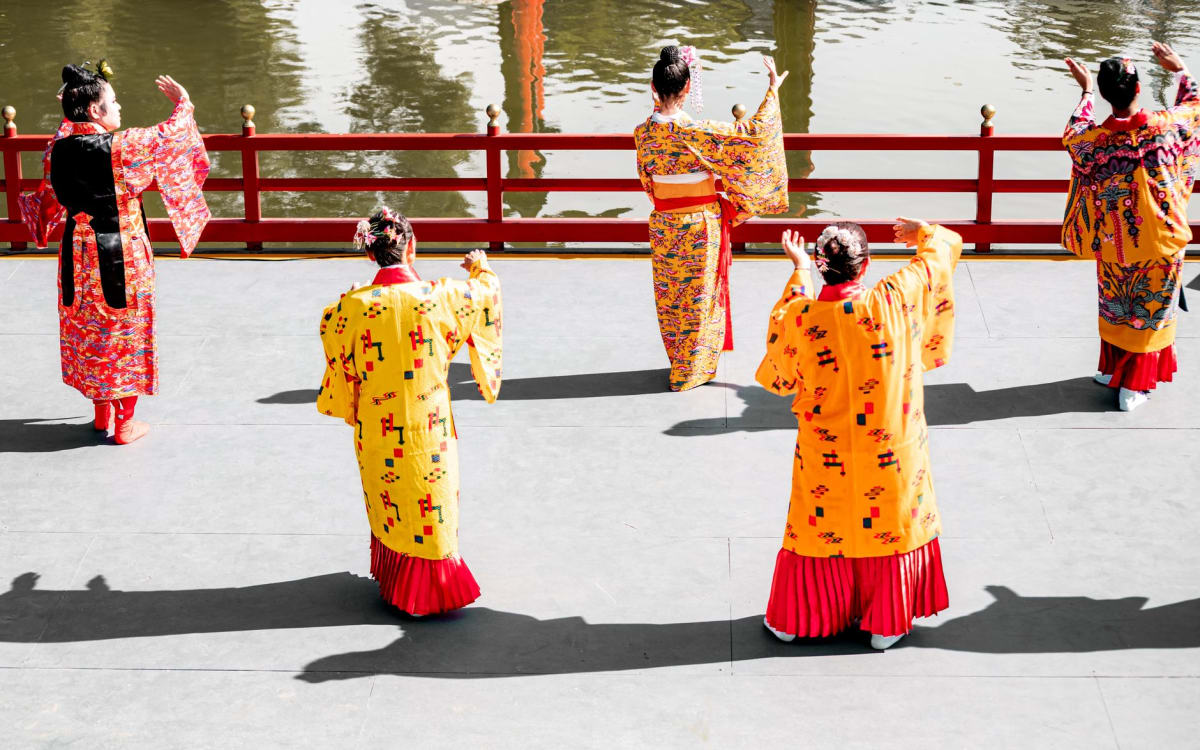
The castle was the seat of the Ryukyuan Kingdom from the 15th century until Okinawa’s annexation by Japan in 1879. It was destroyed in the Battle of Okinawa in 1945, rebuilt, partially reopened, and then burned again in a catastrophic fire in October 2019 — an accident from an event held on the grounds. I visited during reconstruction, which means the main Seiden hall was behind scaffolding, but the surrounding structures were open and the grounds were quietly extraordinary. The stone pathways worn smooth by five centuries of sandalled feet, the patterned stonework of the inner walls, the view over Naha from the ramparts — none of that burned.
What moved me most was the exhibition inside the partially restored buildings: the lacquerware, the textiles, the maps of the Ryukyuan trade network, which stretched from Japan to Thailand, Indonesia, China, Korea. This was not a peripheral backwater — it was a maritime trading civilization with its own diplomacy and culture. The annexation ended something irreplaceable, and the exhibitions make that plain without sentimentality.
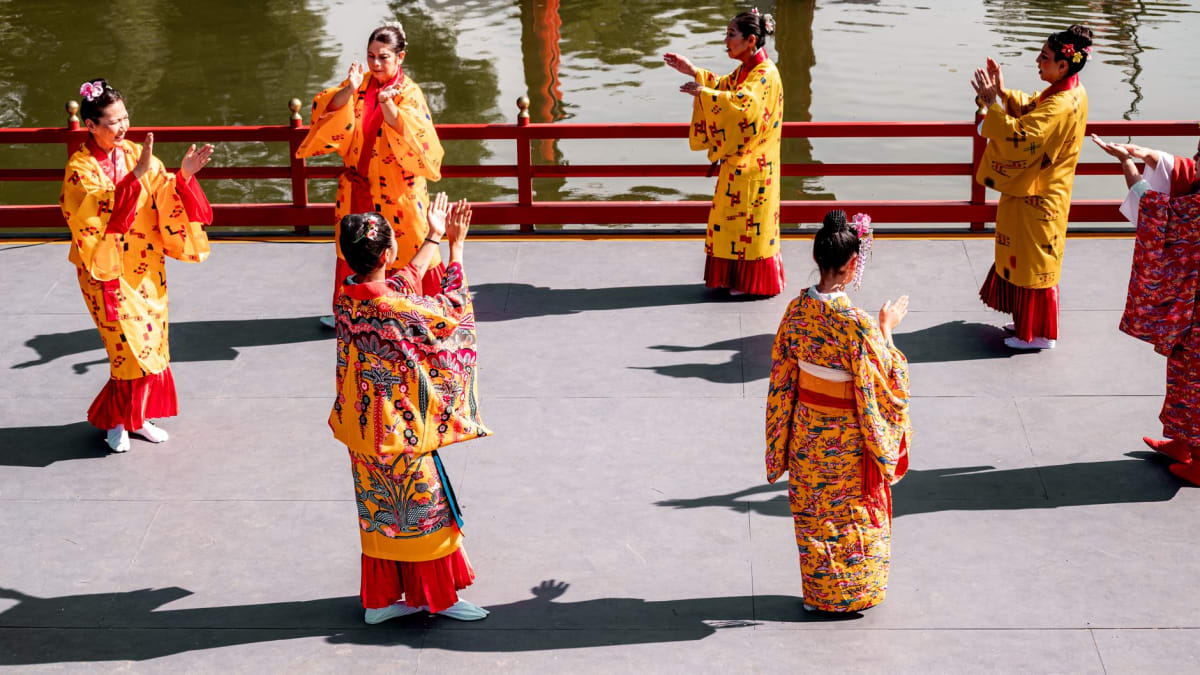
The reconstruction is being completed with extraordinary care, using traditional Okinawan craft techniques — the craftspeople visible through viewing windows, doing the painstaking work of rebuilding what was lost. I was moved to be there before the completion, in the strange interstitial state of a place rebuilding itself from ash. There is something appropriate about watching artisans reconstruct a kingdom by hand in a city that absorbed it.
When to go: Early morning is essential — before ten, when tour buses arrive and the main courtyard gets crowded. November through April offers the best light and cooler temperatures for the uphill walk. Check the reconstruction schedule before visiting, as some sections open and close on a rolling basis through the restoration period.
Keep exploring
More of Kyūshū & Okinawa
Keep exploring
More from Kyūshū & Okinawa
 japan
japan Itoman
The southern tip of Okinawa — a fishing town with the island's most important war memorial and the weight that comes with it.
Explore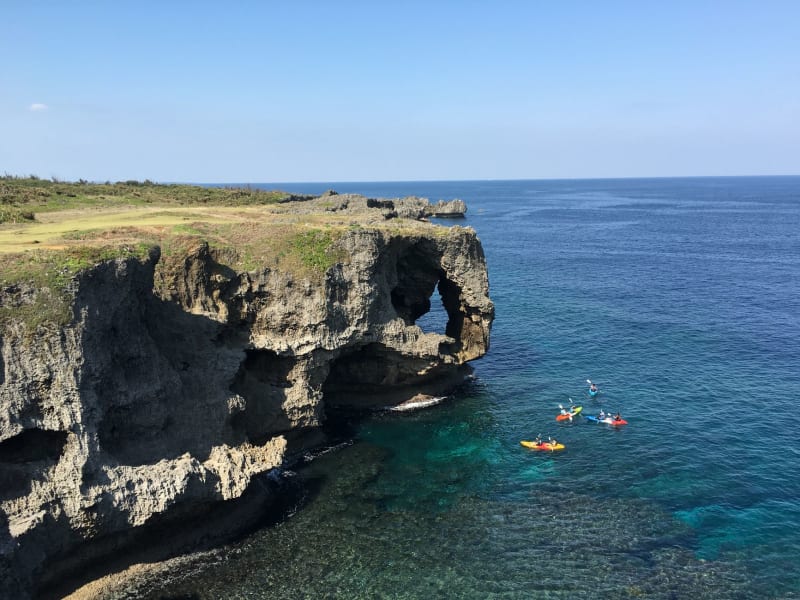 japan
japan Zamami Island
A one-hour ferry from Naha delivers you to water so clear and coral so alive it makes tropical beaches elsewhere feel like imitations.
Explore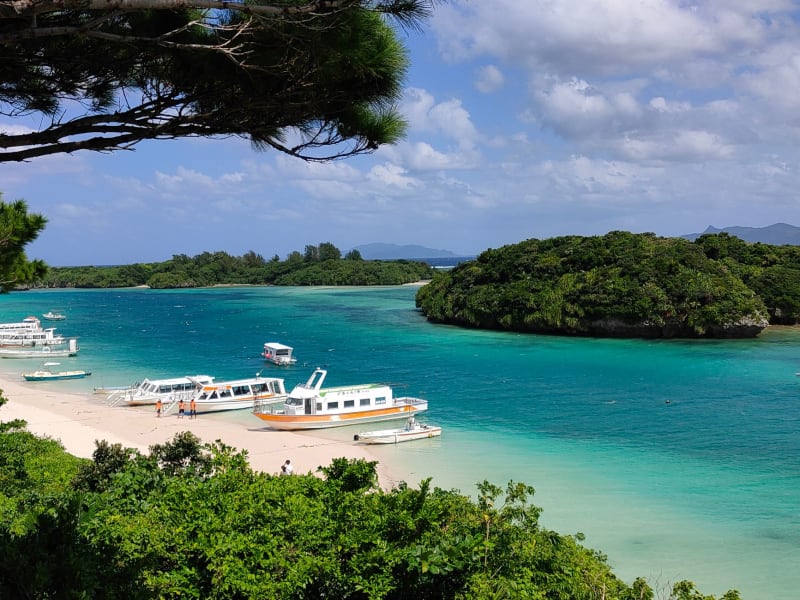 japan
japan Kouri Island
A small bridge island off northern Okinawa with two beaches, a love legend, and water so clear it makes you distrust colour.
Explore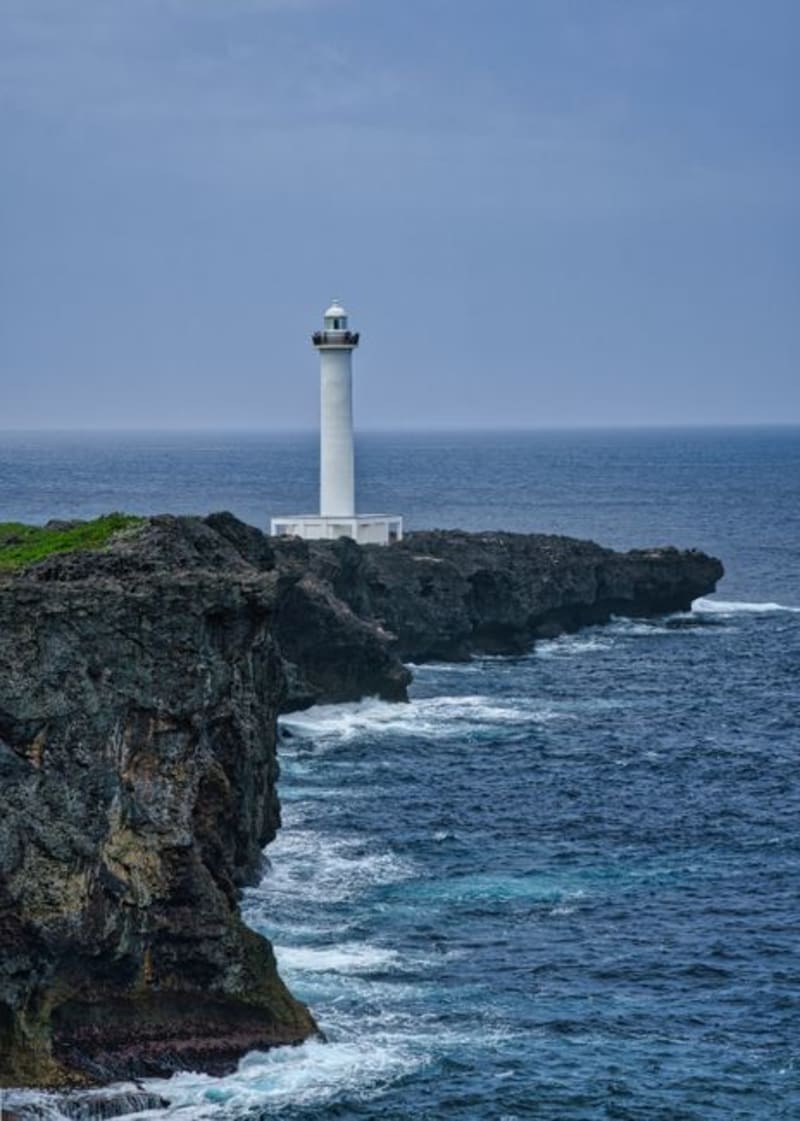 japan
japan Cape Hedo
Where Okinawa runs out of land and the East China Sea crashes into the Pacific along raw limestone cliffs.
Explore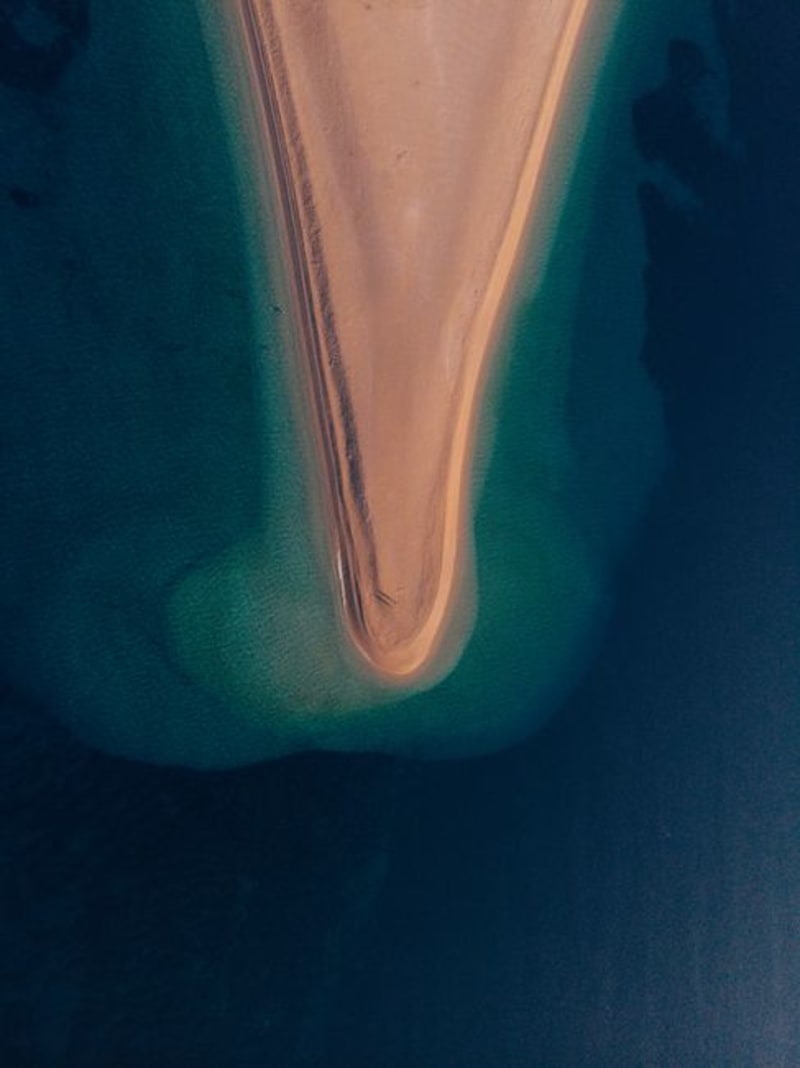 japan
japan Kume Island
A quiet Okinawan island where a seven-kilometer sandbar floats between two shades of blue and silk looms still click in wooden houses.
Explore japan
japan Iriomote Island
Ninety percent jungle, one paved road, and more wild cats than foreign visitors — Japan's last genuinely untamed island.
Explore