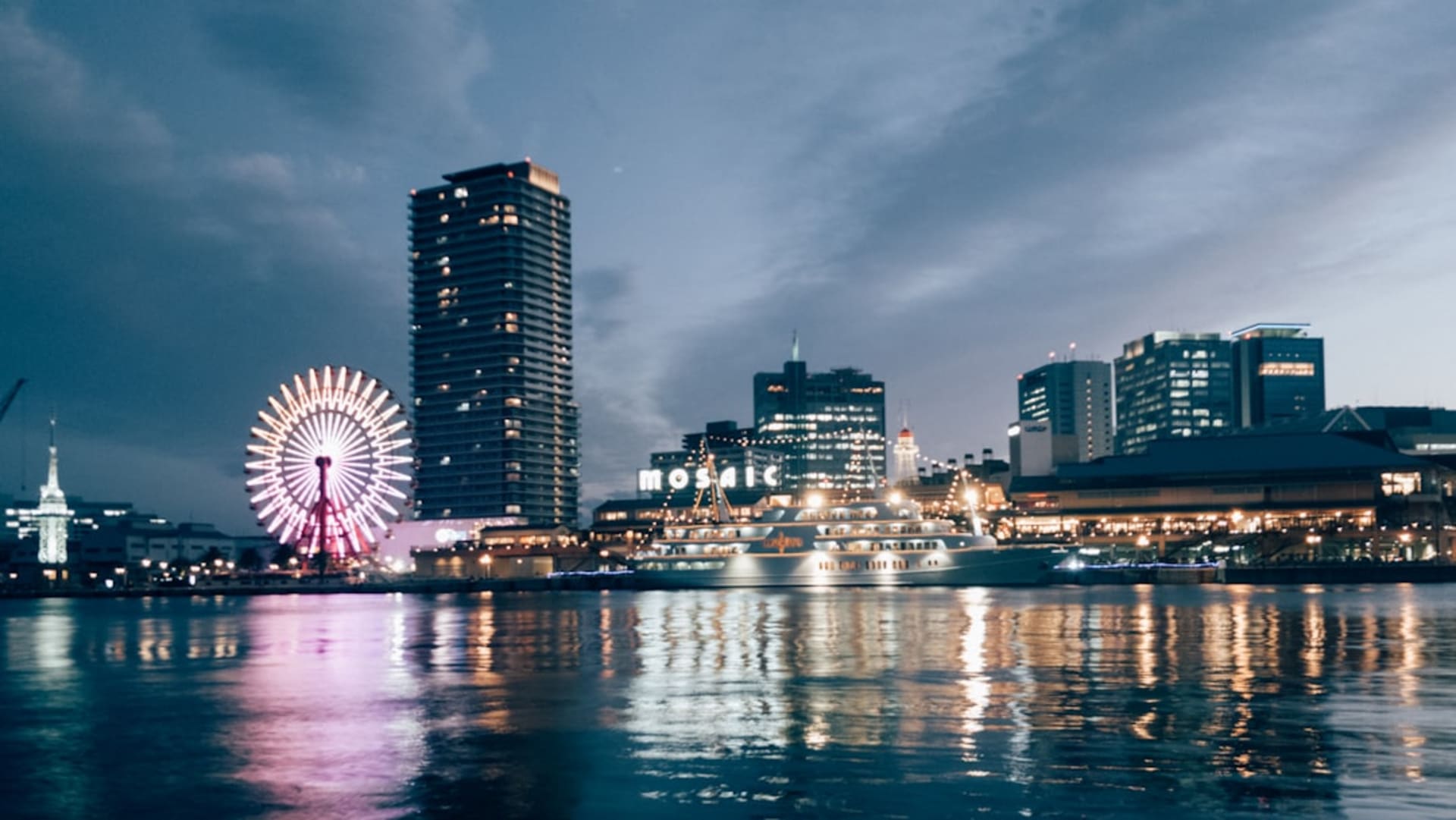
Japan's great cosmopolitan port, a half-hour from Tokyo yet entirely its own. A futuristic waterfront, the country's largest Chinatown, red-brick warehouses, and an easy sea breeze.
We came to Yokohama to escape Tokyo, which sounds absurd given it is barely twenty minutes down the line. But that is exactly the trick of it — you board a crowded commuter train in Shibuya and step off into open sky and salt air. Lia and I had spent a week in the density of Tokyo, and the moment we walked out toward the water in Yokohama, something in both of us unclenched. There was horizon here. Gulls. A breeze off the bay carrying the smell of the sea and, faintly, of frying dumplings. For a city of nearly four million, Yokohama felt astonishingly like it had room to breathe.
Minato Mirai and the Water
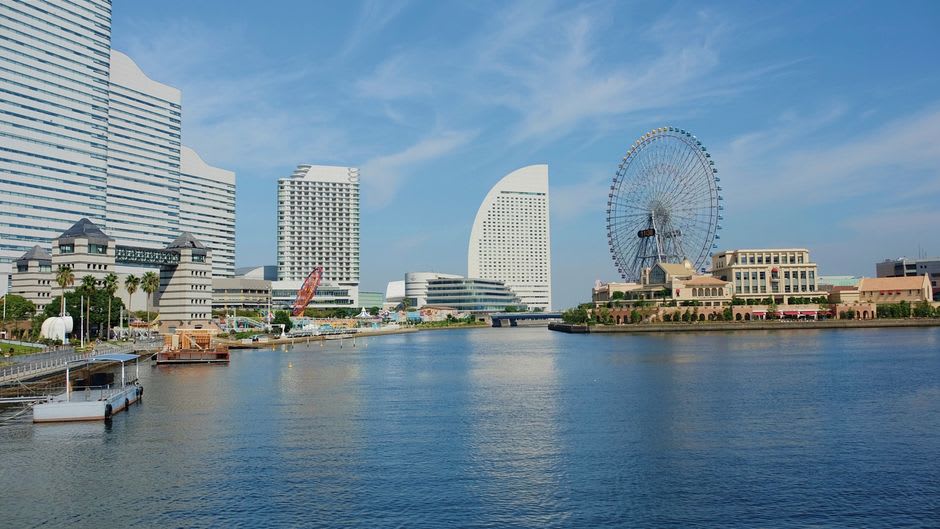
Minato Mirai — the name means “harbor of the future” — is the city’s gleaming waterfront district, built on reclaimed dockland into a skyline of glass towers, a sail-shaped hotel, and the great Cosmo Clock 21, a ferris wheel with a clock face at its hub that changes color through the night. We walked the promenade as the light failed, the water going pink then indigo, the towers switching on one by one. It should feel corporate and cold. Instead, with couples strolling and buskers playing and the wheel turning slowly overhead, it felt almost tender.
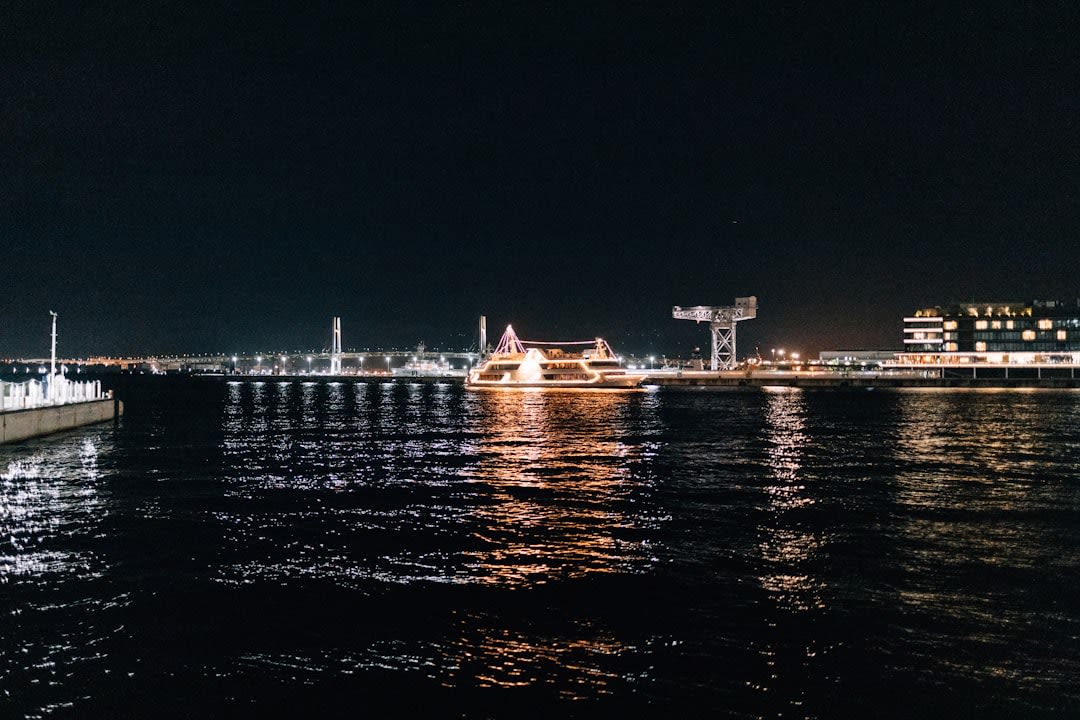
We rode the wheel, of course, our capsule rising over the bay until the whole city lay spread below — the container terminals, the arc of the Bay Bridge, the dark water stitched with ferry lights. Lia pointed out ships heading for open ocean. It struck me that Yokohama, more than anywhere else we went, felt connected to the wider world — a port that has always looked outward.
The Red Brick and the Old Port
Between the futuristic towers and the old town sit the Red Brick Warehouses, two handsome brick customs buildings from the early 1900s, now full of small shops and cafés, with an open plaza between them facing the water. This is where Yokohama keeps its memory. The port was the first in Japan forced open to foreign trade in 1859, and the city grew up as the country’s window onto the outside — which is why it has old Western-style streets, Japan’s oldest surviving foreign cemetery on the bluff above, and a general air of having seen the world.
We drank coffee at a window in one of the warehouses, watching a wedding party being photographed on the waterfront steps. Later we walked up to the bluff, the Yamate district, where the old foreign consuls and traders built their homes among gardens looking down over the harbor — a quiet, leafy, faintly European neighborhood that felt a world away from the towers below.
Chinatown and Dinner
By evening we were hungry, and there is only one place to be hungry in Yokohama: Chukagai, Japan’s largest Chinatown, entered under vivid painted gates and packed into a grid of narrow streets that blaze with red lanterns and neon. The air is thick with steam and the smell of pork buns. We wandered without a plan, which is the only sensible way, and ate standing up: fat nikuman steamed pork buns from a street window, then shrimp dumplings and sticky char siu at a tiny counter run by a shouting, laughing family.
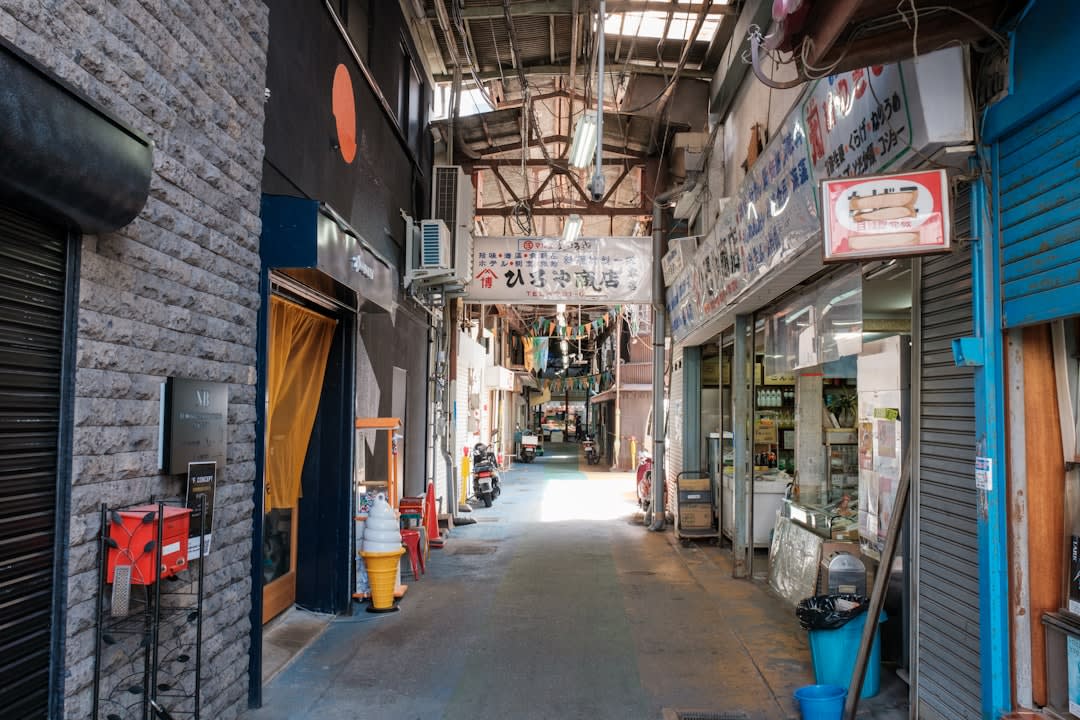
We finished with almond tofu and a walk back toward the water, full and happy, the neon of Chinatown giving way to the cool dark of the harbor. Lia said it felt like three cities in one evening — the future, the old port, and this loud bright pocket of somewhere else entirely. She was right, and that layering is the whole pleasure of the place.
Getting There
Yokohama could not be easier from Tokyo — the Tokyu Toyoko line runs direct from Shibuya to Yokohama Station in around 25 minutes, and JR lines connect it to Tokyo and Shinagawa just as quickly. For the waterfront, ride on to Minato Mirai Station on the dedicated Minatomirai line, which drops you a short walk from the wheel, the warehouses, and Chinatown, all of which are comfortably walkable from one another along the bay. It makes an effortless day trip, but the harbor is at its best after dark, so we’d say stay for dinner and the ferris wheel, and catch a late train back.
Keep exploring
More of Kantō