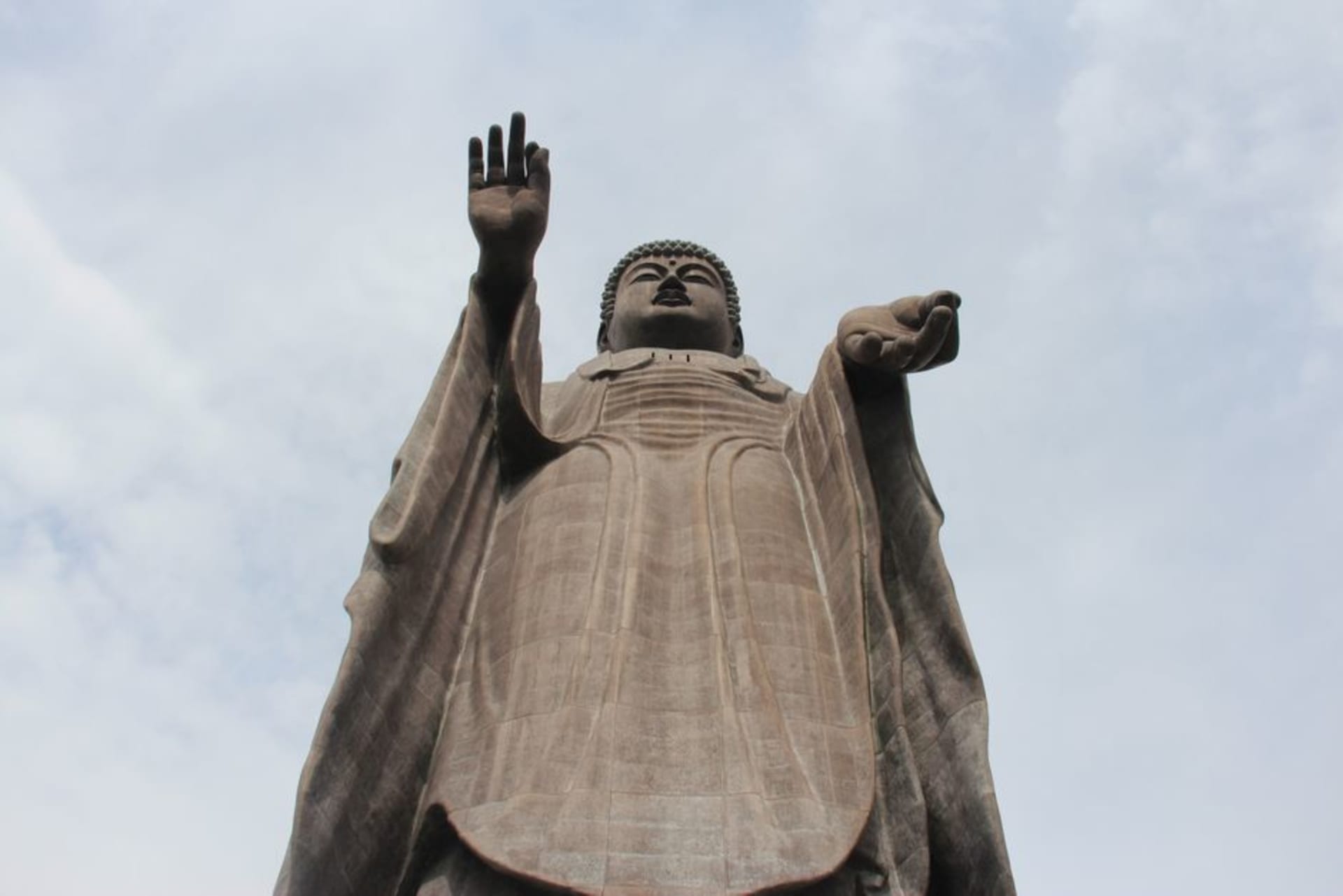
A quiet Ibaraki town on the Kanto plain whose flatness is broken by one staggering thing: the Ushiku Daibutsu, a bronze Buddha so tall it dwarfs the Statue of Liberty. Around its feet lie flower gardens, a small zoo, and a lotus pond, all in the shadow of a figure you can see from the highway miles away.
You see it before you believe it. We were on the train pulling out of Ushiku when Lia went very still and pointed out the window at what looked, across the flat farmland, like a distant grey tower shaped uncannily like a standing man. It was the Buddha, and it was still several kilometres away. Nothing quite prepares you for the scale of the Ushiku Daibutsu until you are standing at its bronze feet with your neck craned back and your sense of proportion quietly breaking. At 120 metres it was, when completed in 1993, the tallest statue in the world, and even now the number does nothing to convey how it feels to be that small beneath something that serene.
The Measure of a Giant
The plaques do their best to make you understand. The Buddha’s face alone is twenty metres tall; a full-size person could stand comfortably inside one of its nostrils, a fact Lia repeated to me at least three times with obvious delight. We walked the approach slowly, the figure growing more impossible with every step, its bronze skin greened by weather and shaped into robes that fall in folds each wider than a road. It represents Amida Buddha, and it belongs to a Jodo Shinshu temple, so there is genuine devotion here beneath the spectacle. But I will be honest: we came, as most people do, simply to feel dwarfed, and the Buddha obliged.
Inside the Buddha
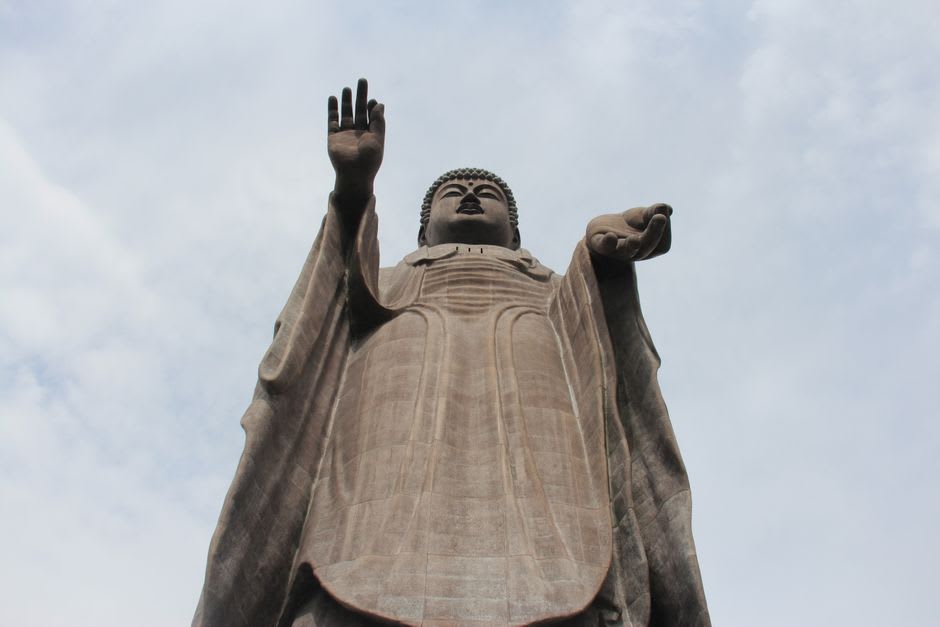
You can go in, which somehow I hadn’t expected. An elevator carries you up through the hollow interior to an observation deck at eighty-five metres, level with the Buddha’s chest, where slit windows let you look out over the plain toward Mount Tsukuba on a clear day. The inside is dim and strange and reverent, one floor a hall of thousands of small golden Buddha statues glowing in the low light, another devoted to sutra copying. Lia sat and copied a line of a sutra with a brush, tongue between her teeth in concentration, and I watched the plain through a window that happened to be inside a god’s ribcage. It is a peculiar and quietly moving hour.
Gardens, Rabbits, and a Lotus Pond
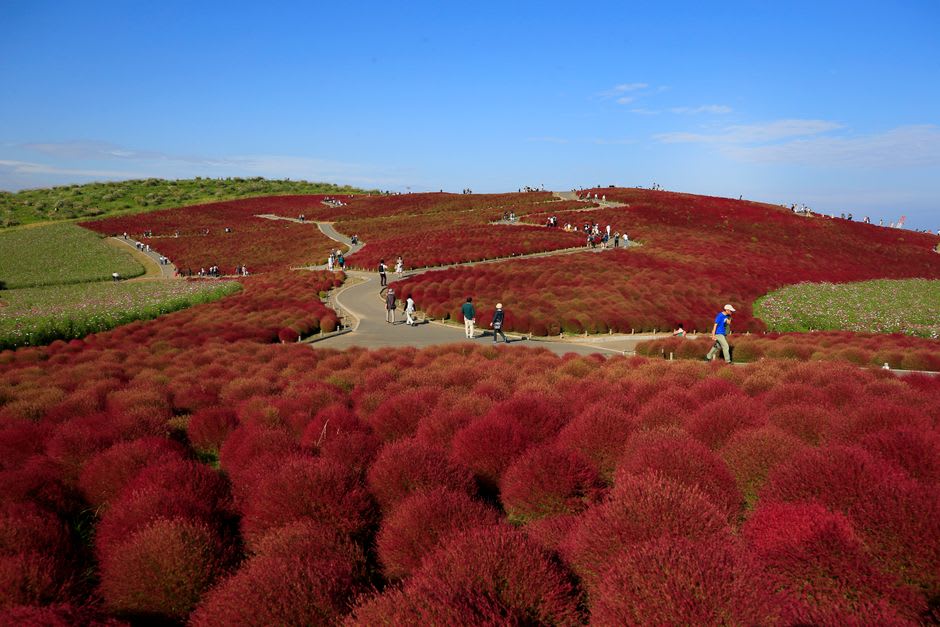
The grounds at the Buddha’s feet are gentler than the monument above them. Seasonal flower gardens roll out in bands of colour, and when we visited the beds were a haze of pink and white with the great bronze figure floating behind them like a backdrop that couldn’t possibly be real. There is a small petting zoo where Lia befriended a squadron of rabbits and a pair of very unbothered squirrels, and a lotus pond that, in high summer, opens into acres of pale blooms. We ate soft-serve on a bench, the Buddha watching over us with its half-closed eyes, and agreed the whole place had a warmth its sheer scale hadn’t led us to expect.
Getting There
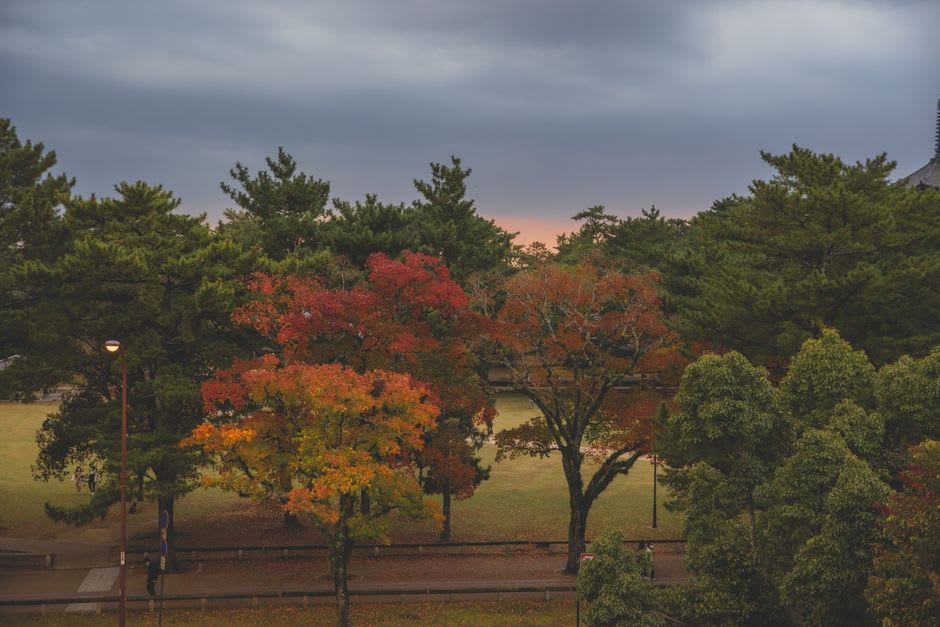
Ushiku is in Ibaraki Prefecture, about fifty minutes north of Tokyo on the JR Joban Line to Ushiku Station. From the station the Daibutsu is a short bus ride or a quick taxi; buses run more frequently on weekends, so a taxi can save waiting on a quiet weekday. Allow at least a couple of hours to include going up inside the statue, which closes late afternoon. It pairs naturally with Mount Tsukuba for a day out on the Kanto plain, and if you are chasing the flower gardens at their fullest, aim for spring or high summer.
Keep exploring
More of Kantō