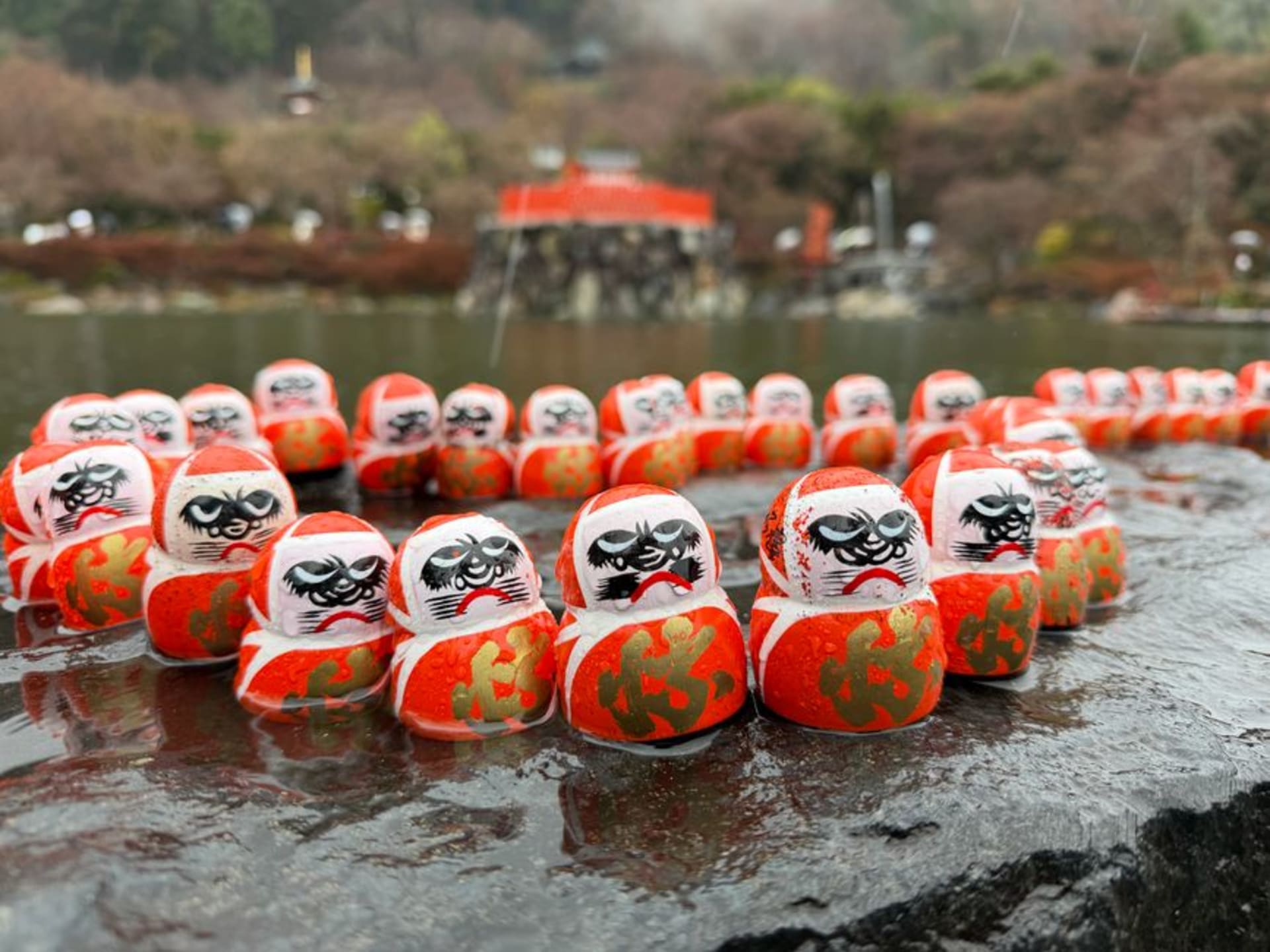
A working Gunma city where most of Japan's red daruma dolls are born, one painted eye at a time. Beneath its unglamorous surface lies a quiet devotion to luck, patience, and the long game. Come for the daruma, stay for the ramen and the giant white Kannon watching over the hills.
We almost skipped Takasaki. It was a name on the timetable between Tokyo and the mountains, the kind of place the bullet train slows for and no one gets off. But Lia had read that this was where the little red dolls came from — the round-bottomed ones that roll back upright no matter how you knock them — and she wanted to see them made. So we got off. The station spat us out into a grey, ordinary city, and I remember thinking we’d made a mistake. We had not.
Daruma-ji and the Doll Makers
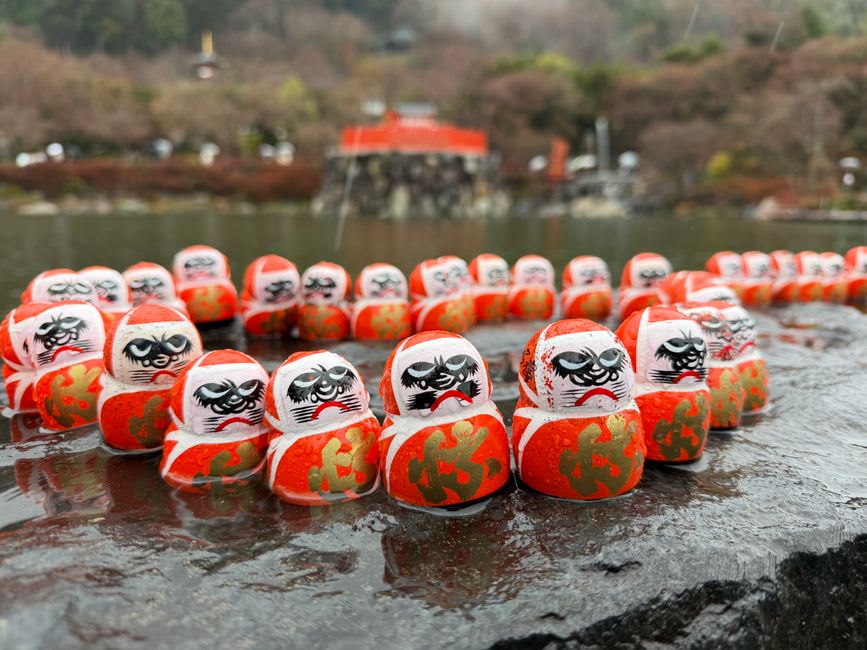
The dolls come from Shorinzan Daruma-ji, a temple on the northern edge of town, and from the family workshops clustered around it. We walked up on a cold morning, breath fogging, and found a workshop where an old man was painting eyebrows in single confident strokes — each one, he told us through a mix of gestures and Lia’s phrasebook Japanese, shaped like a crane, the body like a tortoise. Long life, both of them. The daruma is modelled on Bodhidharma, the monk who supposedly sat meditating so long his arms and legs withered away. You buy it with both eyes blank. You paint in one when you make a wish or set a goal, and the second only when it comes true. The doll sits there, half-blind and patient, reminding you of the promise you made.
The Wish We Couldn’t Decide On
We bought one. Small, palm-sized, fierce red. And then we stood outside in the cold and realised we had no idea what to wish for. That’s the trouble with being handed a ritual on a Tuesday morning — you haven’t earned the wish yet. Lia wanted to write down something about the book she was trying to finish. I wanted to wish for nothing in particular, which felt like cheating. In the end we painted one eye that evening in our ryokan, agreeing vaguely that it was “for the year,” and I have to admit the little thing has followed us since, one eye watching, the other still waiting. It’s on a shelf in Mexico now. The second eye is still blank. I think we both like it that way.
Byakue Dai-Kannon and a Bowl of Noodles
Above the city stands the Byakue Dai-Kannon, a forty-metre white goddess of mercy built in the 1930s, gazing out over Takasaki with an expression of enormous calm. You can climb up inside her — a narrow spiral of stairs, little windows at the shoulders and the crown — and look back down on the sprawl. It’s odd and wonderful and slightly vertiginous. Afterwards we came down hungry and Takasaki, it turns out, is quietly obsessed with food: it claims more ramen and pasta per head than almost anywhere, and we ate a bowl of shoyu ramen so honest and unfussy that I still think about the broth. No garnish theatre. Just a working city feeding its workers well.
Getting There
Takasaki is easy — that’s part of why it’s overlooked. The Joetsu and Hokuriku Shinkansen from Tokyo Station reach it in under an hour, and it’s a major junction, so you’ll likely pass through anyway on the way to Kusatsu, Nagano, or Niigata. Shorinzan Daruma-ji is a short bus ride or taxi from the station; the Byakue Dai-Kannon sits on Kannonyama hill, about fifteen minutes by taxi or a stiff local bus and walk. Give it half a day between trains, or better, a slow overnight. Buy the doll. Leave one eye blank.
Keep exploring
More of Kantō