Shima Onsen
"The river was a blue I had only ever seen in glacier melt, and here it was, warm."
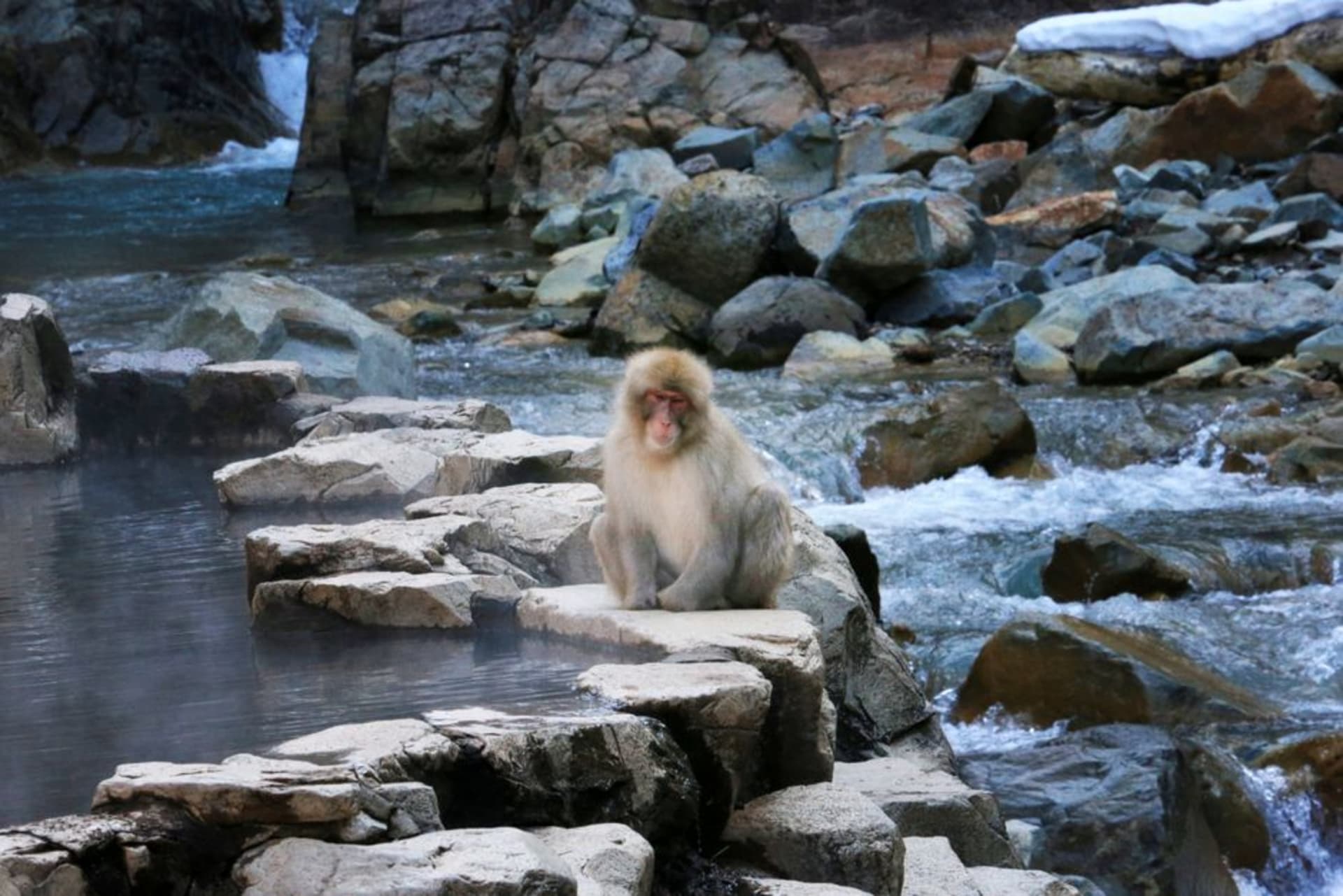
A hushed hot-spring village strung along a river gorge deep in the Gunma mountains, where the water runs an unearthly blue-green and legend says it cures forty thousand ailments. Shima is the onsen you go to when you want to hear the river and nothing else.
The name Shima is said to come from “forty thousand” — the number of ailments its water was believed to cure — and after two days there I was ready to believe every one of them. Lia and I had come looking for the opposite of a famous onsen: no crowds, no arcades, no queues. What we found was a narrow valley, a jade-colored river, and a silence so complete that the loudest sound was water over stone. The river was a blue I had only ever seen in glacier melt, and here it was, warm. We stood on a little bridge our first evening, saying nothing, watching it slide by.
The blue river and the famous inn
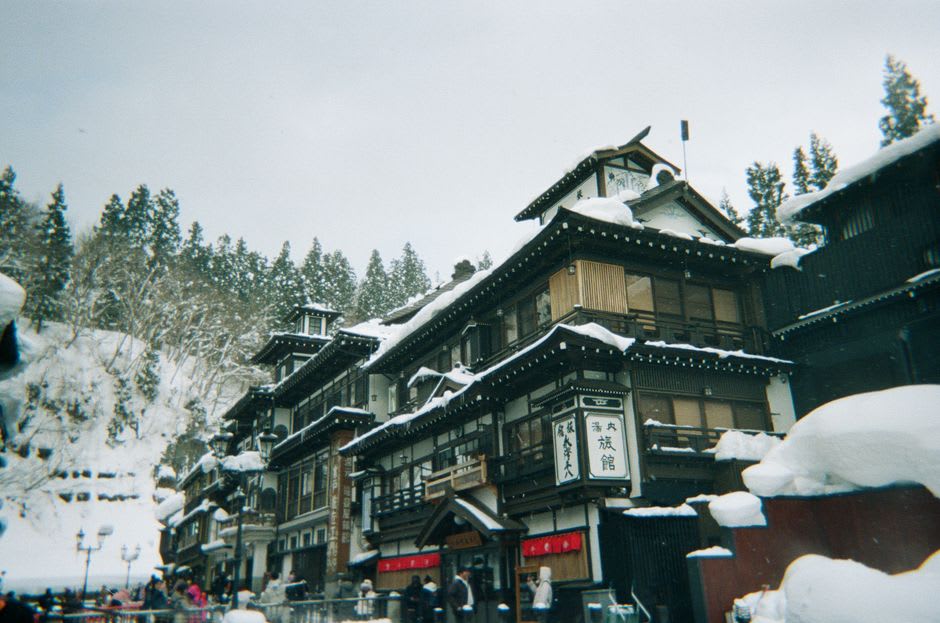
Shima curls along its river in a string of hamlets, and at its heart stands the Sekizenkan, an inn founded in 1691 and often called the oldest wooden hot-spring hotel in Japan. Its red arched bridge and lit windows are the image of the whole valley — locals will tell you, with a shrug and a smile, that it helped inspire the bathhouse in a certain famous animated film, and true or not, standing before it at dusk you can see why the story sticks. We didn’t stay there but crossed the bridge to peer inside, at the old Meiji-era bathing hall with its round-topped windows and rows of tiny stone tubs. The water throughout the valley runs clear, faintly saline, and endlessly, gloriously hot.
Drinking the water, and the free footbaths
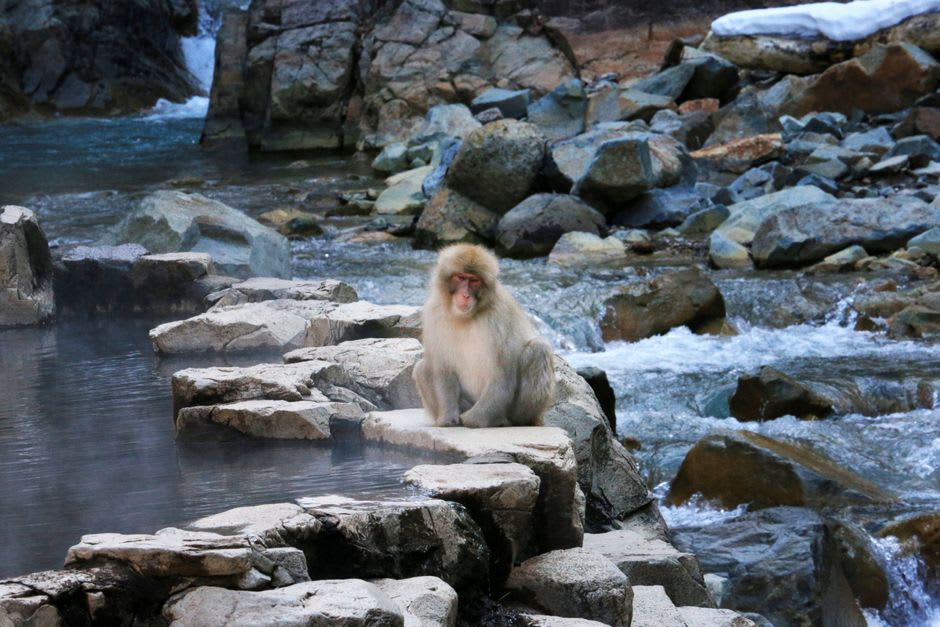
There’s a small ritual here that I came to love. At several spots along the village the spring water is piped to drinking fountains, and you’re meant to sip it — it’s said to be good for the stomach, and it tastes of warm iron and salt, not entirely pleasant and somehow reassuring for that. Lia made a face and drank hers anyway. Between the drinking spouts are free footbaths where you can sit and steam your feet while the river runs below, and we drifted from one to the next through the afternoon, unhurried, doing gloriously little. An old couple shared a footbath with us and, learning we’d come from France, mimed astonishment that we’d found their quiet valley at all.
The lake the color of the sky
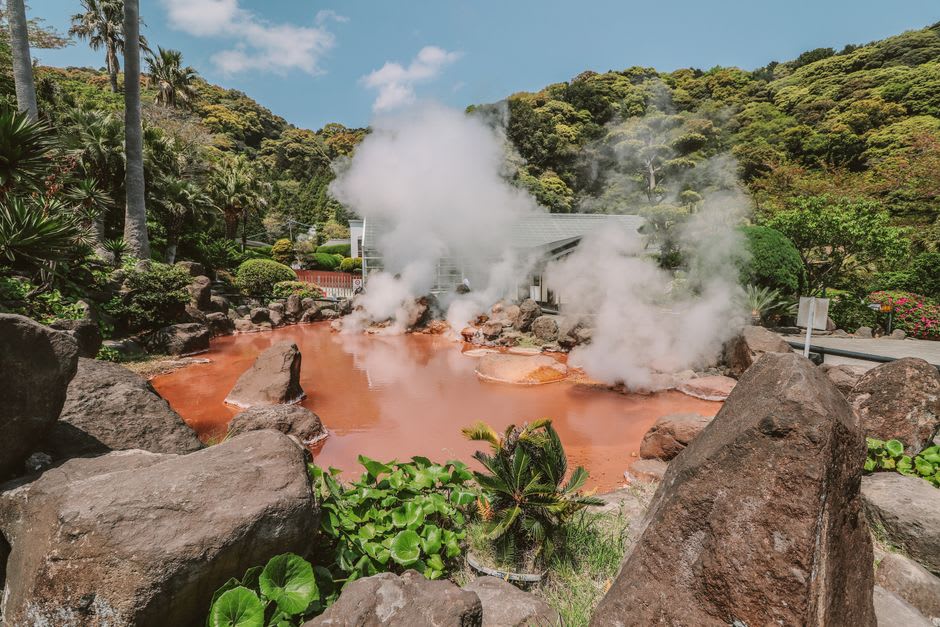
On our full day we walked upriver to Okushima Lake, a reservoir held back by a dam at the head of the valley, and the water there took the blue to an almost unreal extreme — a milky, luminous turquoise called “Shima blue” that shifts with the season and the light. A footpath and a suspension bridge let you cross above it, and Lia, who is not fond of heights, gripped the cable and refused to look down while I grinned at her. Beyond the lake the forest closed in, empty and wild, all beech and maple. We ate onigiri on a flat rock by the shore and I remember thinking that this was the kind of place you don’t tell too many people about, so I feel slightly guilty writing it down.
Getting There
Shima Onsen lies deep in northern Gunma, and its remoteness is the point. Lia and I took the Shinkansen from Tokyo to Takasaki, changed to a local line to Nakanojō, and caught a bus that climbed the last stretch up the valley — around three hours in all from the capital. Direct highway buses also run from Tokyo in season. There’s no train into the village itself, which keeps the crowds thin; once you arrive, everything is within an easy riverside walk. Autumn paints the gorge in fire, but the blue water and the hush are there in every season.
Keep exploring
More of Kantō