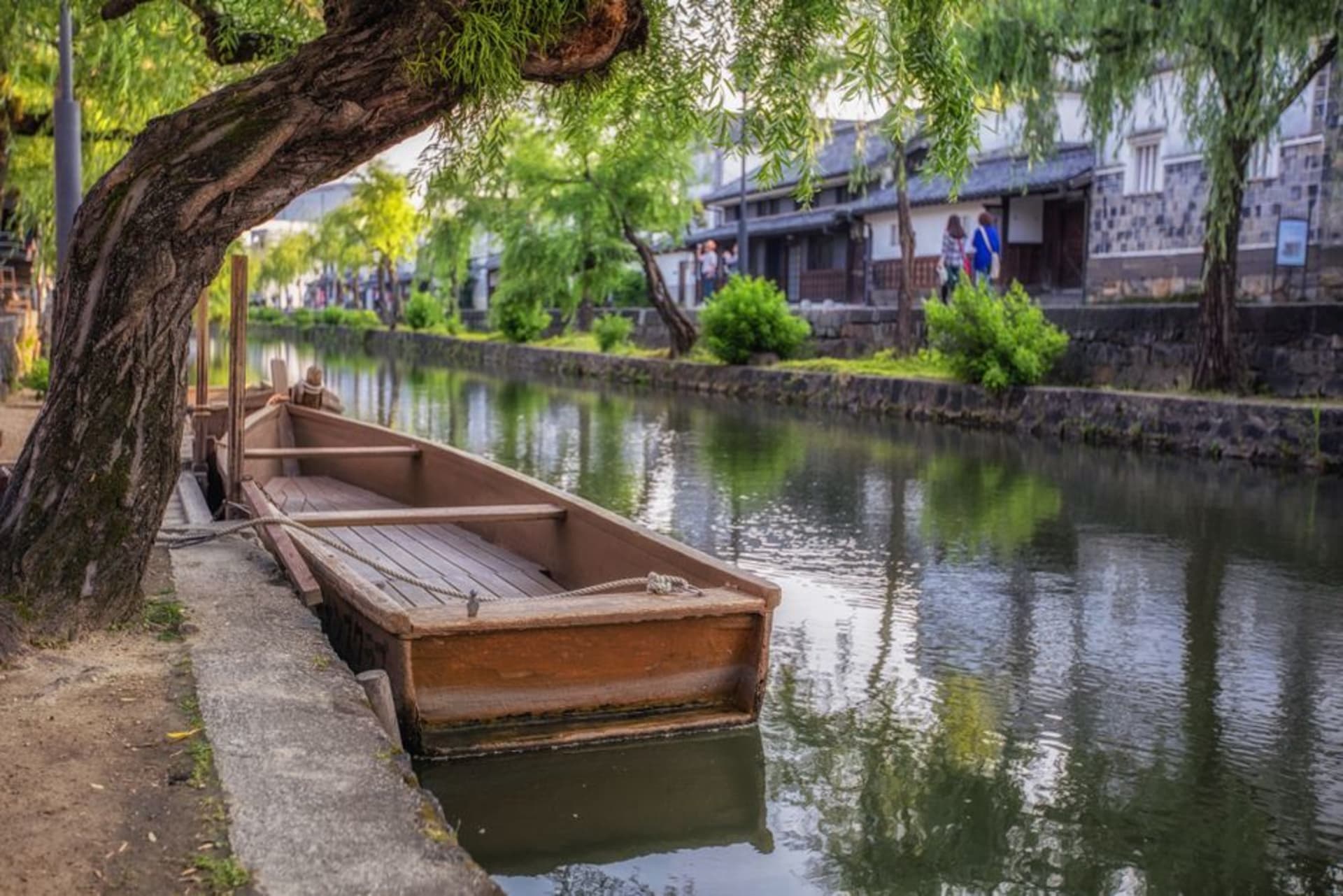
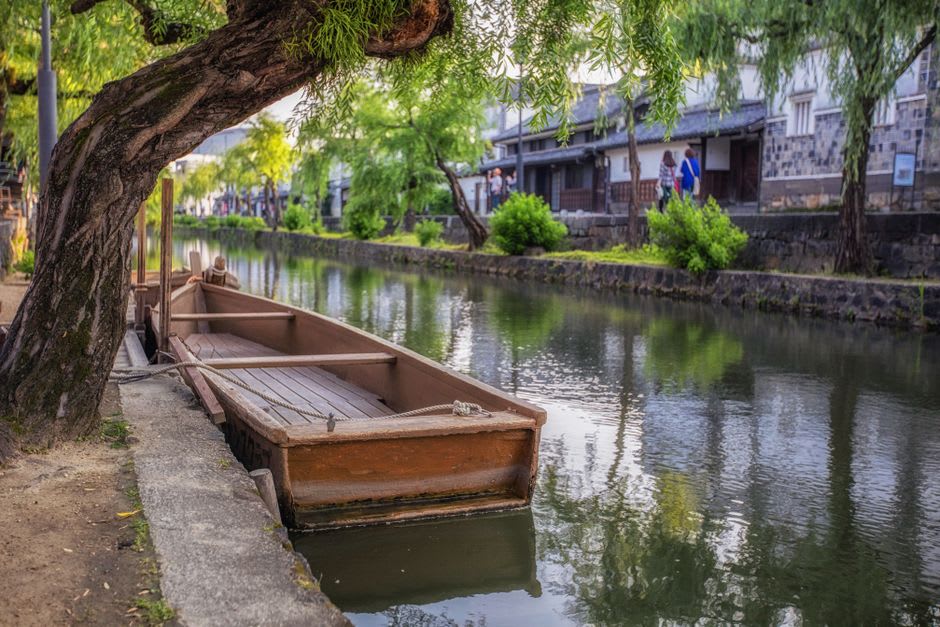
A Chiba 'Little Edo' where black-walled merchant houses lean over a willow-shaded canal still plied by wooden boats. Home to the great mapmaker Inō Tadataka and a thunderous float festival. Quietly nostalgic, and closer to Tokyo than its stillness suggests.
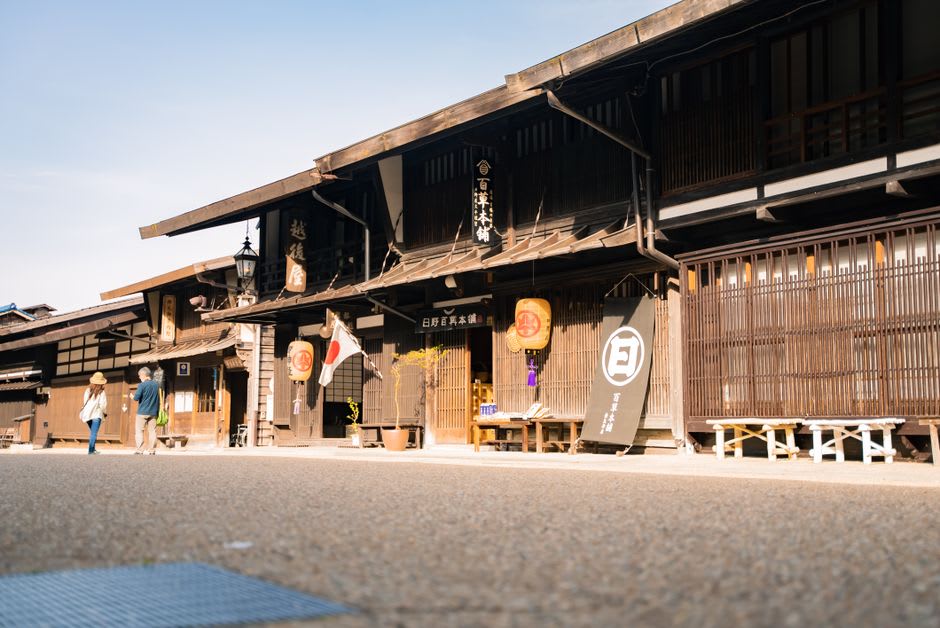
Sawara took us by surprise, which is the best way to be taken. We had a free day out of Tokyo and picked it half at random off a map of Chiba, drawn by a photograph of a canal, and we arrived with no real expectations to a town that seemed to have quietly declined to join the twentieth century. The Onogawa canal runs right through the old centre, willows trailing into it, and along both banks stand the black-walled, tile-roofed merchant houses of a place that grew rich two hundred years ago shipping rice and sake down to Edo. They call it Little Edo, and for once the nickname is earned. We spent the whole day walking beside water and did not once wish for anything more.
Along the Onogawa
The canal is the town, and the town knows it. Many of the old shophouses are still family businesses — a sake brewer, a maker of tsukudani, a shop selling brooms the same way it has for generations — and they open straight onto the water, with stone steps, the dashi, running down to the canal edge where boats once unloaded. We took a sappa-bune, a small wooden boat, and let a boatman pole us slowly under the low stone bridges while he pointed out which house sold what, in a Chiba accent I caught maybe half of. From the water the town looks exactly as it must have to a rice merchant in 1820.
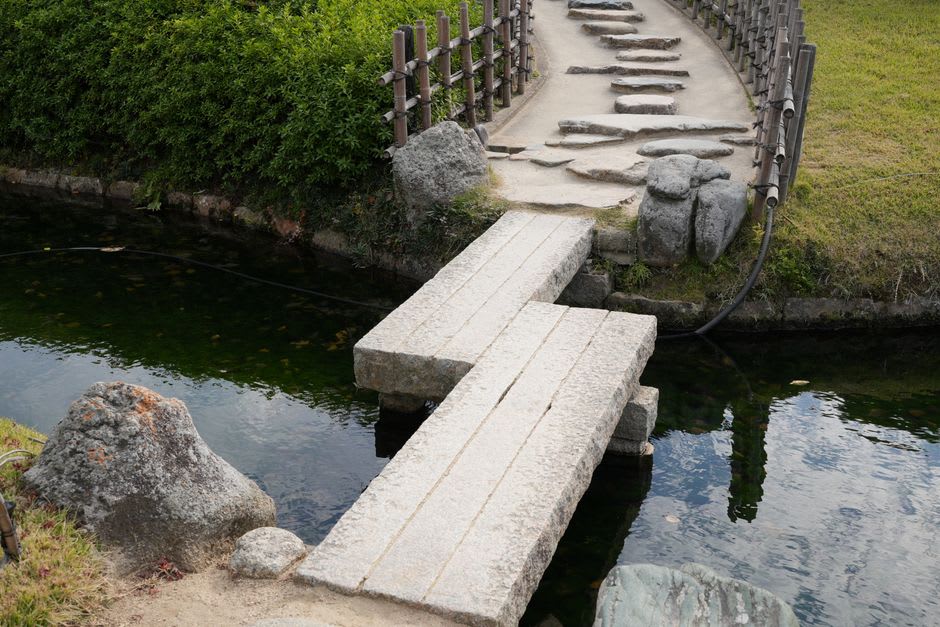
At the Jaja Bridge water spills over a small weir every half hour with a rushing sound the town is named for, and children gathered to watch it, and so, a little sheepishly, did we.
The Man Who Mapped Japan
Sawara’s most famous son is Inō Tadataka, a sake and rice merchant who, at the age of fifty — an age when most men of his day were done — took up surveying and spent the last seventeen years of his life walking the entire coastline of Japan on foot to make the first accurate map of the country. His former house stands right on the canal, and across the water the small Inō Tadataka Museum holds his instruments and the astonishing maps themselves, drawn by hand, accurate to a degree that stunned the Europeans who saw them decades later. Lia and I are both suckers for a late-blooming obsessive, and we came out of that museum quietly inspired.
That a small canal town produced the man who first drew the whole nation’s shape felt, standing there, entirely fitting. Sawara is a place that pays attention.
The Great Float Festival
We missed the festival by weeks, and I have regretted it ever since. Twice a year the Sawara no Taisai fills these narrow lanes with enormous wooden floats — some topped with towering figures of gods and historical heroes several storeys high — hauled through the town to the drums and flutes of Sawara-bayashi, music old enough to be listed as an intangible cultural treasure. At the Dashi Kaikan float hall we saw two of the great floats up close, out of season, and even parked and silent they were overwhelming: the scale of them, the age, the craftsmanship in the carved figures.
We promised each other we would come back in July, when the floats actually move and the whole nostalgic town wakes up and roars. I mean to keep that promise.
Getting There
Sawara sits in northern Chiba and is reached via Sawara Station on the JR Narita Line, a short hop from Narita and its airport, and around ninety minutes from central Tokyo with a change at Chiba or Narita. From the station it is a flat ten-minute walk down to the canal and the old merchant district, which is small enough to cover entirely on foot in a half-day. Pair it easily with Narita for a full day out of the capital. The boat rides run in the warmer months, and the festival — should you plan well, as we failed to — falls in July and October.
Keep exploring
More of Kantō