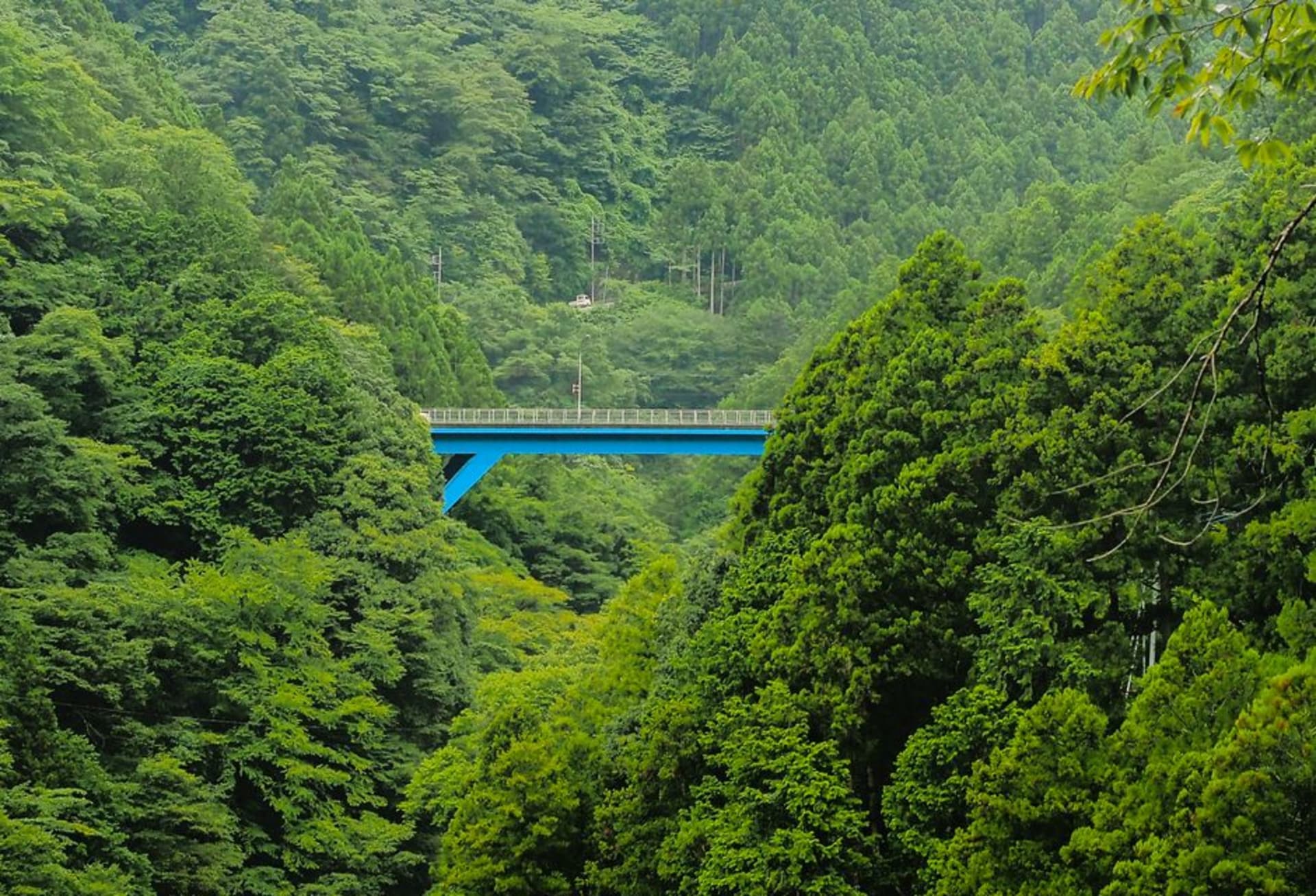
Tokyo's forgotten western edge, where the metropolis dissolves into cedar mountains and a jade-green reservoir. Lia and I came here to remember that the world's largest city keeps a wilderness in its back pocket. Two hours from Shinjuku and suddenly we could hear the river.
We nearly didn’t come. On the map Okutama sits inside the Tokyo prefecture line, and that felt like cheating somehow — you don’t take a train two hours to leave a city and end up in the same city. But the Ome Line thins out the way arteries thin into capillaries, the carriages emptying at each station until it was just us and an old man with a fishing rod, and then the doors opened onto air that smelled of wet cedar and cold stone. Lia stepped off the platform, breathed in, and laughed. “Still technically Tokyo,” she said, and neither of us quite believed it.
The Reservoir That Drowned a Village
Lake Okutama is not a lake. It’s Ogouchi Reservoir, built in the 1950s to slake Tokyo’s endless thirst, and beneath its green surface lies a village that was moved, stone by stone and grave by grave, before the water came. You feel that on the dam. We walked the long concrete crest of the Ogouchi Dam in the early afternoon, the wind funnelling up the valley hard enough to push us sideways, and the water below was the flat, secretive green of something very deep. Lia leaned on the railing and went quiet for a while. There’s a small memorial to the drowned village near the visitor centre, and reading it changed the colour of the whole view — that mirror-still water suddenly felt less like scenery and more like a held breath.
Nippara and the Cold Under the Mountain
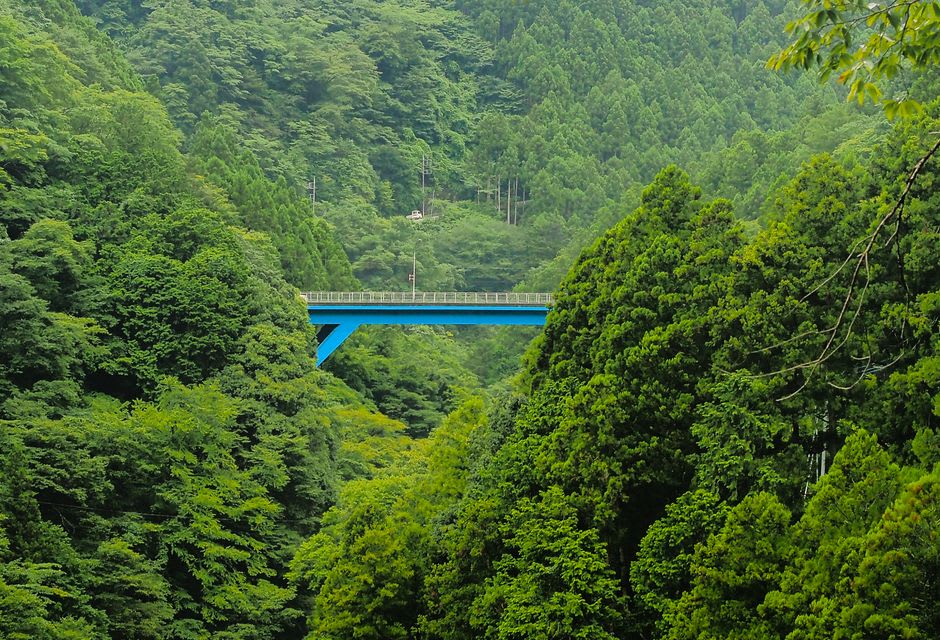
The limestone caves at Nippara were the reason Lia had circled Okutama in the guidebook. We took the rattling bus up a valley so narrow the road seemed to apologise for existing, and at the top climbed into Nippara Shonyudo with our breath already fogging. Inside it is a steady eleven degrees all year, and after the summer heat of the platform that first draught felt almost violent. The cave goes deep — lit pathways past stalactites the size of chandeliers, a chamber they call the Hall of Heaven where the ceiling vanishes into black. Lia trailed her fingers along the damp rock and whispered, the way everyone whispers in caves without deciding to. We emerged blinking, jumpers soaked with cave-sweat, into a green world that felt suddenly, blindingly loud with cicadas.
Mukashimichi, the Old Road
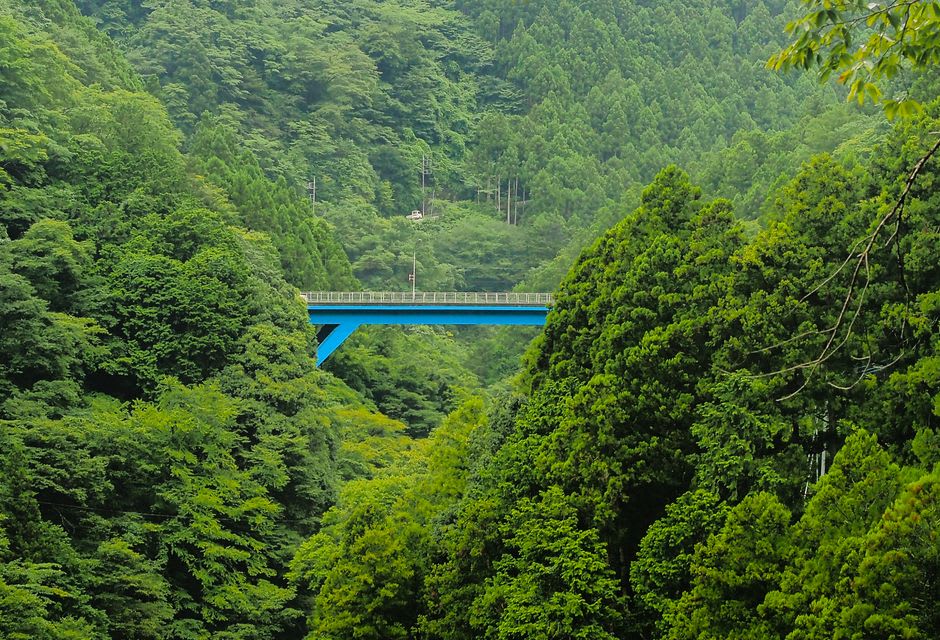
Our best hours here were on foot, on the Mukashimichi — the “old road” that once carried people and goods before the rail line was cut. It clings to the mountainside above the Tama River, past abandoned schoolhouses reclaimed by vine, over a swaying suspension bridge that Lia crossed with theatrical, gripping terror while I filmed her. We ate our konbini onigiri sitting on a warm boulder with our feet dangling over the gorge, the river below the impossible pale turquoise of glacier melt, though there’s no glacier — just clean mountain water over pale stone. An old woman tending a tea plot waved us over and pressed two cucumbers into our hands, refusing money, saying something we didn’t catch but understood completely.
Getting There
From Shinjuku, take the JR Chuo Line to Ome, then change to the Ome Line for Okutama Station — roughly two hours total, and covered by a standard IC card or the Tokyo Wide Pass. From Okutama Station, local buses run up the valleys to the Ogouchi Dam and, less frequently, toward Nippara for the caves; check the return times before you set off, because they stop early and the last bus down is not one you want to miss. We stayed overnight at a small riverside minshuku, which turned a rushed day trip into something that finally slowed to the pace the place deserves.
Keep exploring
More of Kantō