Ōarai
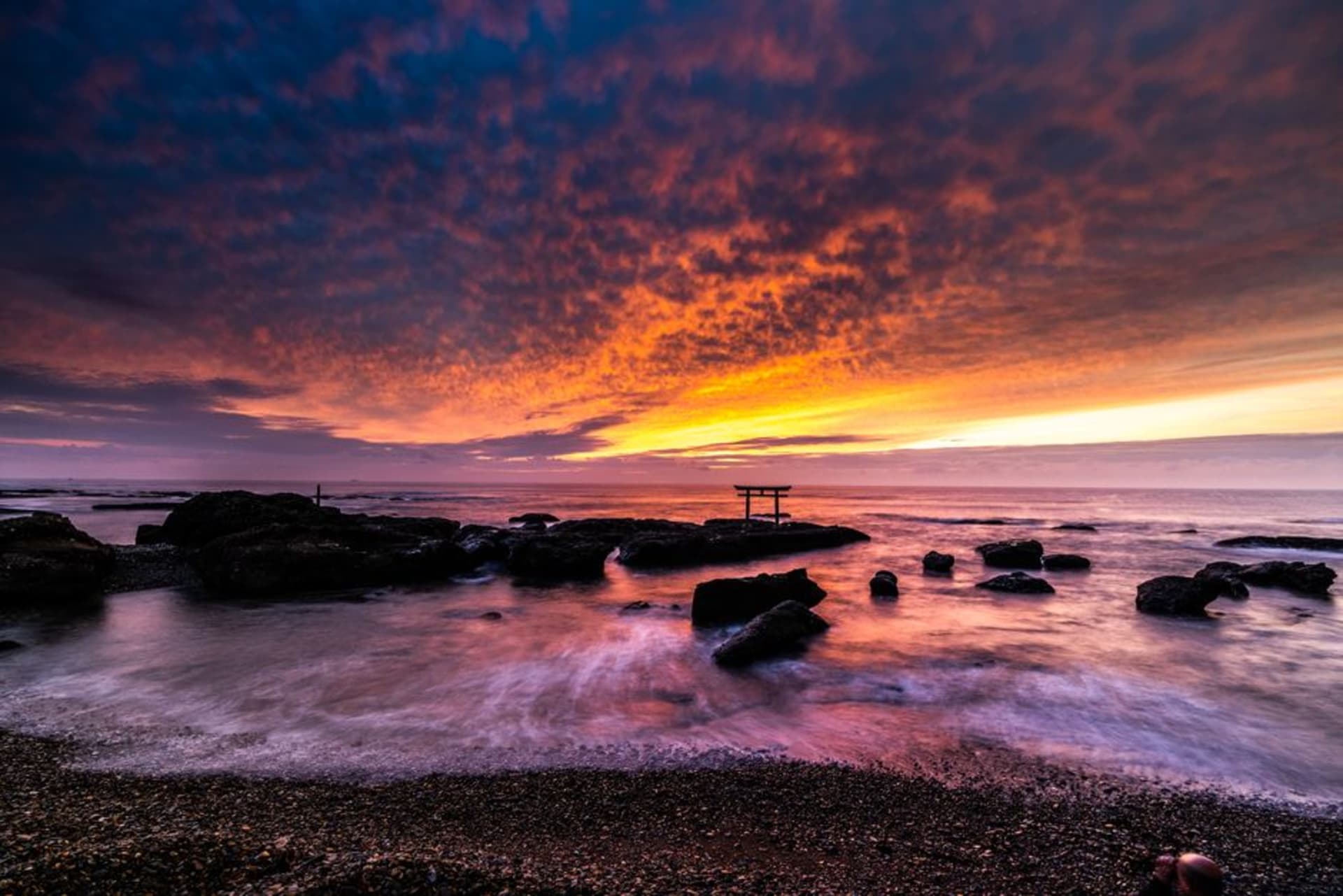
"We stood on cold rock in the dark and waited for the sea to catch fire behind a gate."
A working seaside town on the Ibaraki coast where a lone shrine gate stands out on the wave-battered rocks, catching fire with the sunrise. Add a great aquarium, ferries bound for Hokkaidō, and a devoted following of anime pilgrims, and you have a place that rewards early risers.
There are photographs that pull you halfway across a country, and for us Ōarai was one of them. Lia had seen an image of a torii gate standing alone on black rocks with the sun rising directly behind it, the whole sky on fire, and she wanted to be there in person more than she’d wanted almost anything on the trip. So we did the ridiculous thing: set an alarm for the deep dark of pre-dawn, walked out of a sleeping town to a cold stretch of shore, and stood on the rocks in the wind waiting for the sea to catch fire behind a gate. It could easily have been a disappointment. It was not.
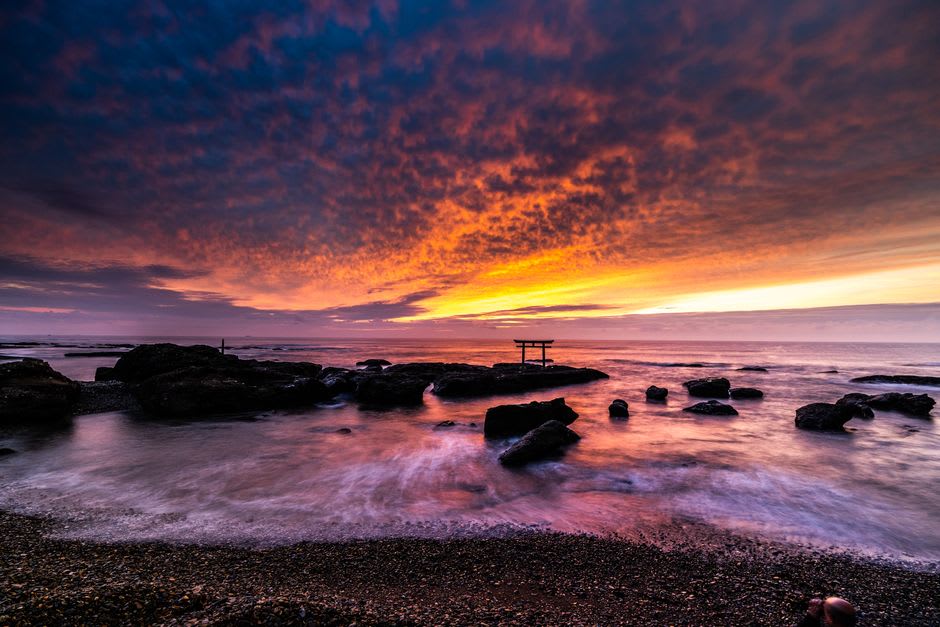
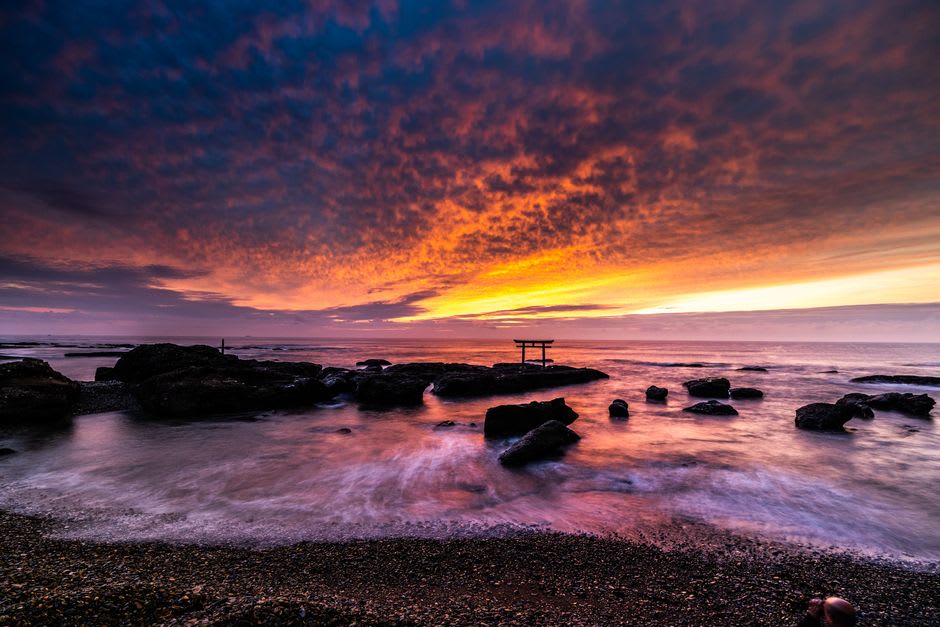
The Kamiiso-no-Torii at Sunrise
The Kamiiso-no-Torii belongs to Ōarai Isosaki Shrine, and it stands not on land but out on the reef itself, planted among rocks that the Pacific hammers without pause. At dawn on the right morning the sun rises directly through it, and for a few minutes the gate becomes a black silhouette in the middle of a burning sky while the waves explode white around its base. We arrived in darkness with a handful of quiet photographers already staking their spots, and we waited, cold to the bone, saying nothing. Then the horizon cracked open orange, the light poured through the gate, and a wave broke at exactly the right moment and threw spray up into the glow. Lia made a small sound. I have seen a lot of sunrises; this one earned its reputation. We stayed until the color drained and the ordinary blue day took over, and even then we didn’t want to leave.
The Aquarium and the Working Port
Warmed by coffee and daylight, we spent the rest of the morning at the Aqua World aquarium, one of the largest on this coast, and it turned out to be a genuinely good one. Its pride is sharks — dozens of species, more than almost anywhere in the country — but the tank that held us longest was the great cylinder of drifting sunfish and the sardine ball that turned and flashed like a single silver animal. There’s a moon-jelly wall lit soft blue that Lia photographed for twenty minutes. Afterward we walked the harbor itself, past fishing boats and the big ferry terminal where car ferries set out overnight for Tomakomai in Hokkaidō — Ōarai is a real port doing real work, and I liked that the town wasn’t only about its famous gate. We ate a bowl of anko-nabe, the local monkfish hotpot, at a market stall by the water, watching gulls wheel over the boats.
The Anime Pilgrims
Ōarai has a second, more unexpected fame. It is the real-world setting of a hugely popular anime about high-school tank crews, and over the years it has become a place of cheerful pilgrimage for fans from all over Japan and beyond. You notice it slowly at first, then everywhere: character portraits in shop windows, illustrated manhole covers underfoot, standees greeting you in the ferry terminal, a whole culture of local businesses that embraced the fandom and were repaid with a decade of visitors. We are not fans of the show, and it didn’t matter — what moved me was how a struggling seaside town, hit hard by the 2011 disaster up the coast, had turned a cartoon into a lifeline and a community. Lia bought a stamp-rally postcard just to join in. The shopkeeper beamed. It’s a strange, warm, very modern kind of tourism, and Ōarai wears it well.
Getting There
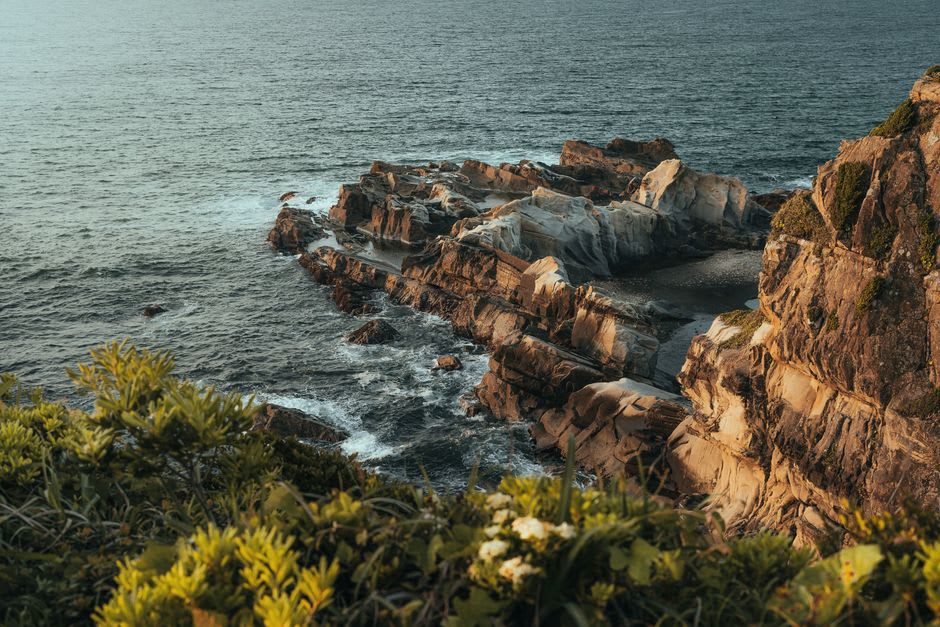
Ōarai sits on the Ibaraki coast, reached from Mito by the small Ōarai Kashima line in about fifteen minutes, and Mito itself is around ninety minutes from Tokyo by limited express on the Joban Line. The shrine gate is a walk or short taxi ride from Ōarai station along the shore — check a sunrise calendar and, ideally, the season when the sun aligns directly through the torii, and dress far warmer than the daytime suggests. The aquarium and ferry terminal are a little further along the same coast and easily combined. If you’re heading on to Hokkaidō, the overnight car ferry from Ōarai’s port is a slower, quieter alternative to flying.
Keep exploring
More of Kantō