Tokyo's beloved forested mountain at the western edge of the city, where cedar trails climb to a clifftop temple, tengu goblins watch from the shadows, and Mount Fuji floats on the horizon on a clear day. The capital's easiest true escape into nature.
It still amazes me how quickly Tokyo lets go of you if you head the right direction. Lia and I had spent a punishing week in the middle of the city, and one grey morning we simply got on a train at Shinjuku, and fifty minutes later stepped out at the foot of a mountain covered in cedar. Takao-san is Tokyo’s mountain — everyone here has climbed it, schoolchildren and pensioners and salarymen on their day off — and precisely because it’s so loved it never feels like wilderness. It feels like a green room the whole city shares. On a weekend it can be busy as a shopping street, but climb early on a weekday, as we did, and the forest hands you back the silence the city had been taking.
Up Through the Cedars
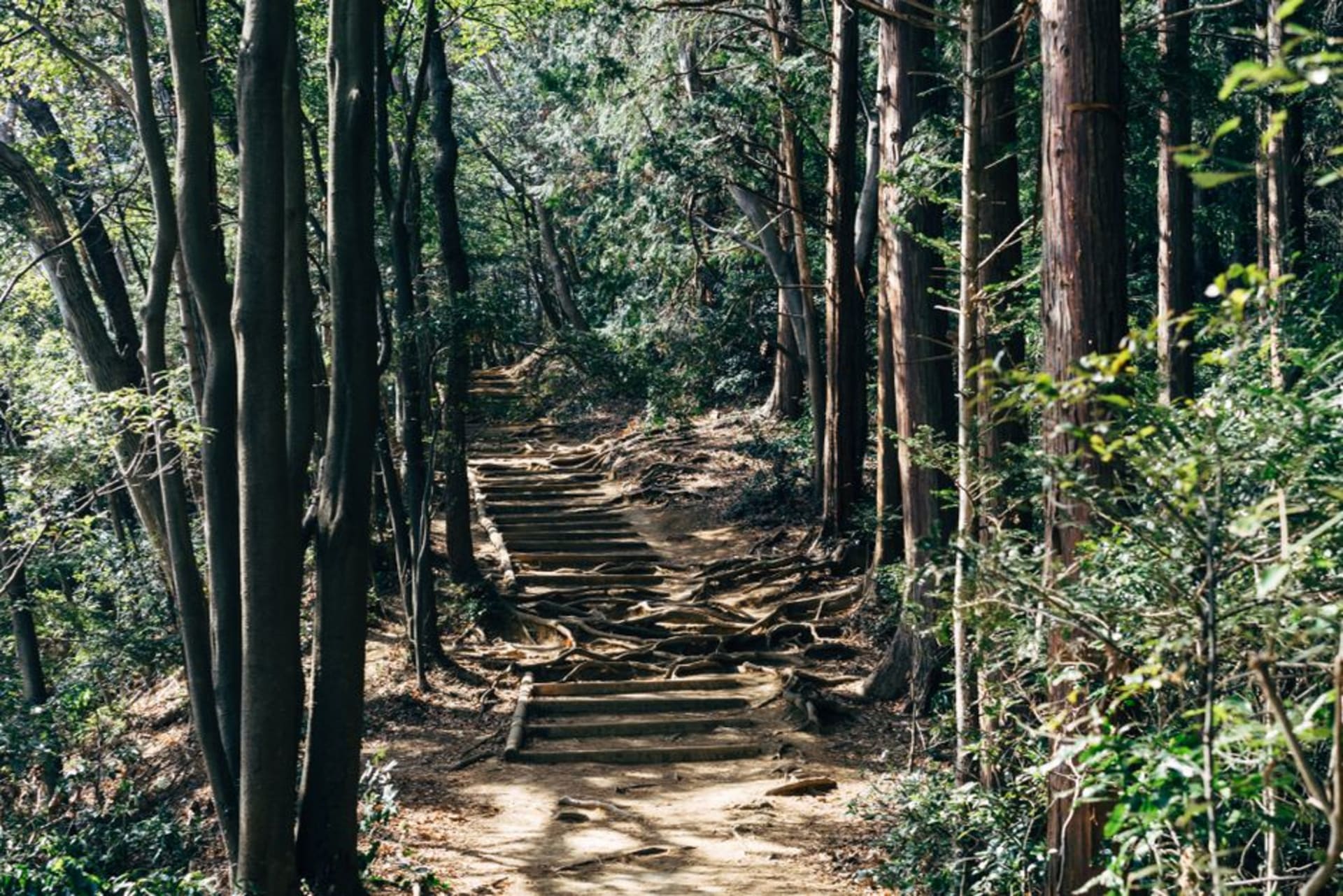
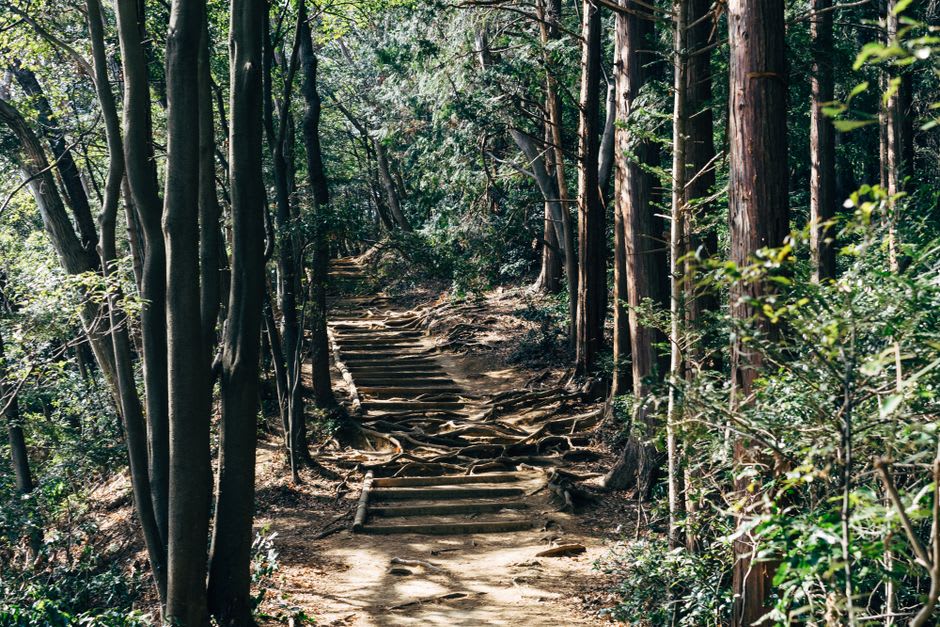
There are several trails, and we took the main one on the way up, a paved path that climbs steadily through tall cedars past small shrines and mossy stone. About halfway you reach Yakuō-in, a mountain temple that’s been here more than a thousand years, its halls red and gold and smelling of incense, its eaves crowded with carvings. What I hadn’t expected were the tengu — the long-nosed, red-faced mountain goblins of Japanese folklore, who are said to guard Takao. Statues of them stand about the temple grounds, fierce and comic at once, one wielding a feathered fan. Lia bought a little tengu charm and has kept it on her bag ever since. We lit incense, listened to a monk’s bell somewhere above us, and kept climbing.
Fuji on the Horizon
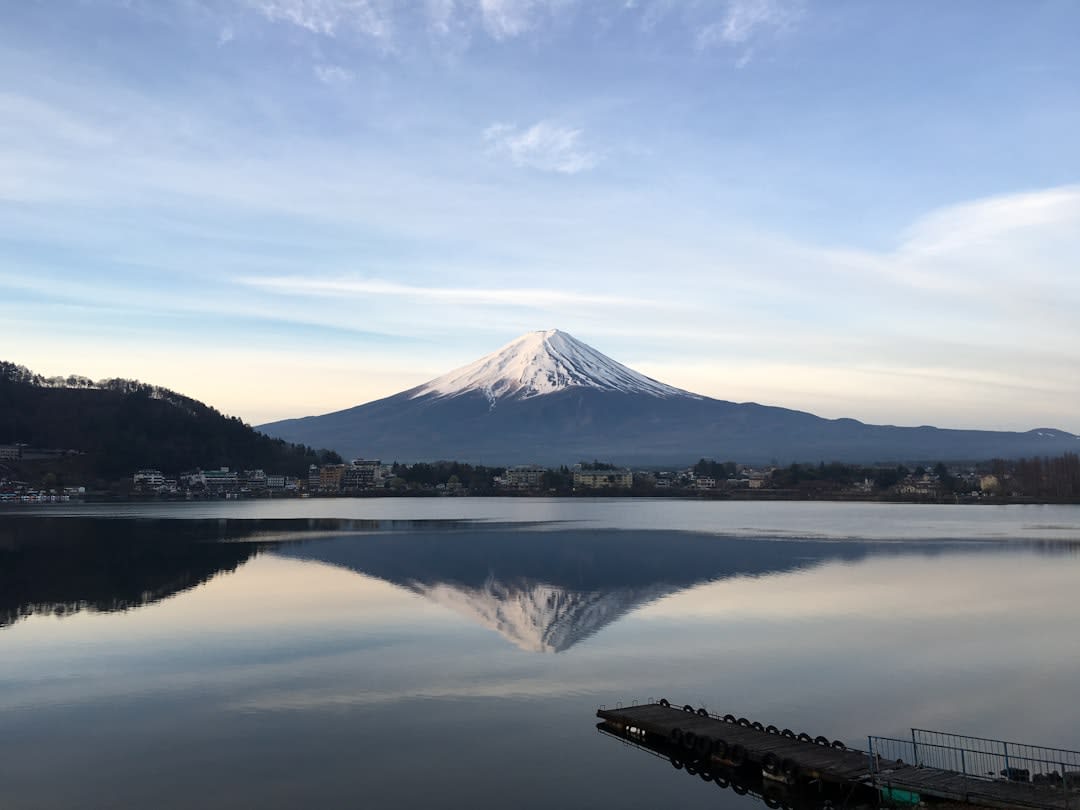
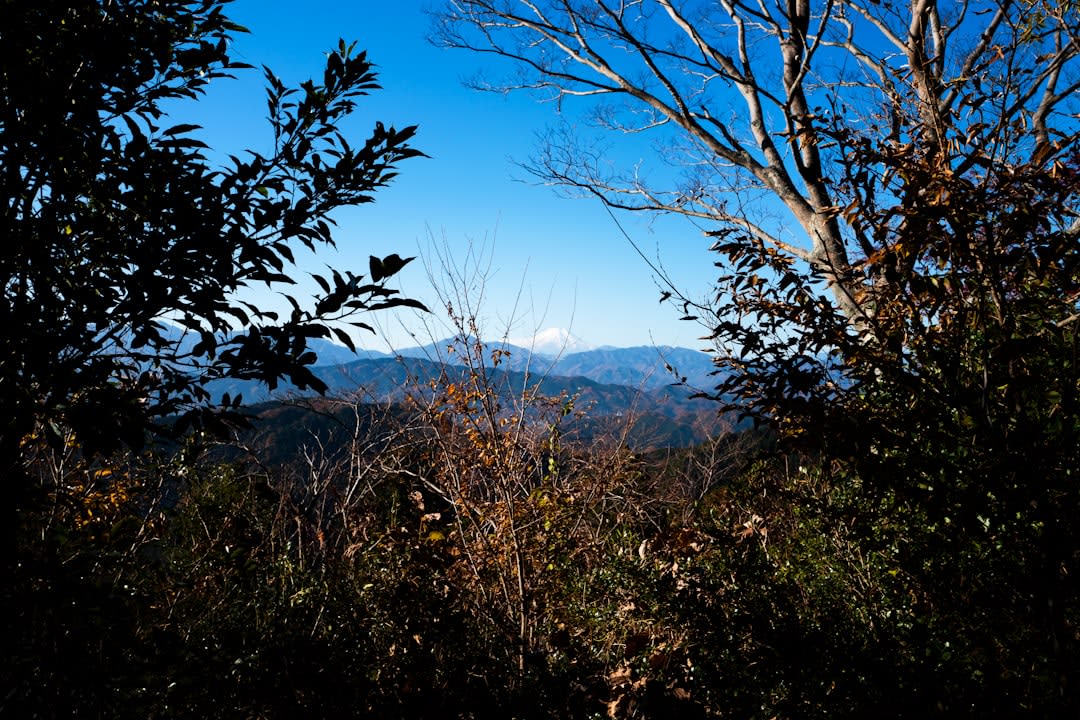
The summit is a modest 599 metres, with a clearing, a few benches, and a signboard — and, if the air is kind, the reward that draws everyone up here. That morning the sky had scrubbed itself clean overnight, and there it was: Mount Fuji, floating pale and perfect above a whole sea of lesser ridges to the southwest. We hadn’t planned it and I actually laughed out loud. A row of strangers stood along the viewpoint, all of us pointing our cameras at the same distant cone, all grinning at each other. Lia said it was the first time Fuji had looked to her the way it looks in the old woodblock prints — remote, singular, faintly unreal. We ate our convenience-store lunch on a bench with that view and didn’t want to leave.
Down the Quiet Way
For the descent we took a rougher, quieter trail down the far side, and this was where Takao truly delivered. Away from the cable-car crowds the path narrowed to earth and root, dropping through deep cedar and stands of beech, and for long stretches we met no one at all. A woodpecker knocked somewhere overhead; a stream ran alongside. At the bottom, back near the station, we soothed our legs in a hot-spring bathhouse built right at the trailhead, then ate a bowl of the local tororo soba — buckwheat noodles under grated mountain yam — at a wooden shop full of tired, happy hikers. It had been half a day out of Tokyo and it felt like a proper journey.
Getting There
Mount Takao is astonishingly easy to reach, which is the whole point of it. The Keiō Line runs direct from Shinjuku to Takaosanguchi station in under an hour, and the trailhead is a two-minute walk from there; you can also come via the JR Chūō Line to Takao station and change. From the base, a cable car and a chair lift climb partway for anyone who wants to skip the first stretch, but the walking trails are well-marked and range from paved and gentle to steep and rooty. Go early to beat the crowds, and go on a crisp, clear day — ideally in autumn, when the maples turn the slopes red, or on a bright winter morning when Fuji shows most reliably.
Keep exploring
More of Kantō