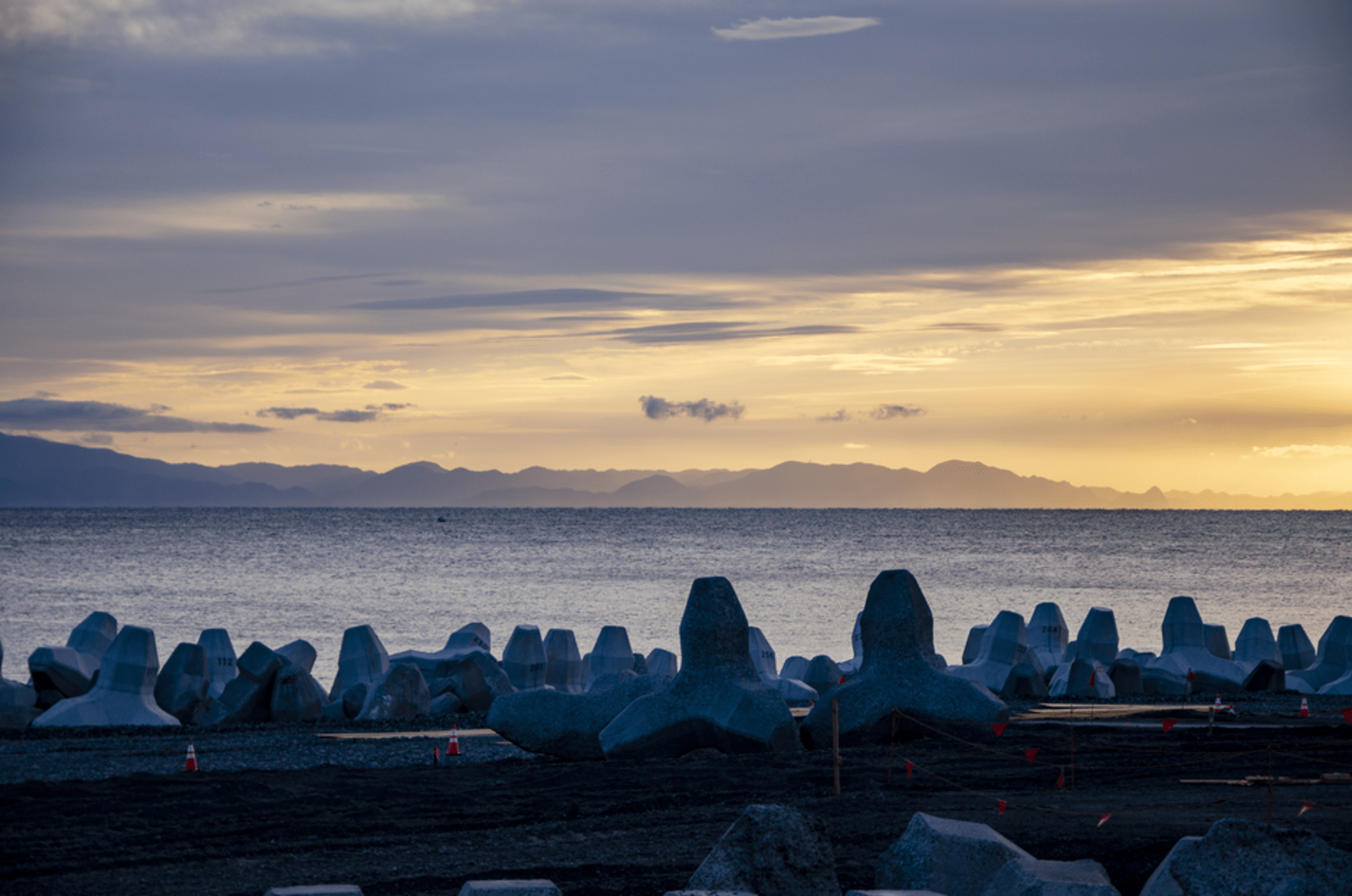
A weather-softened fishing town on the Pacific side of Chiba, home to one of Japan's three oldest morning markets, going strong for more than four centuries. Grandmothers selling seaweed off blue tarps, a coastline of tide pools, and tuna hauled in fresh enough to shame the city. Slow, salt-stained, and utterly unbothered by trends.
We got to the Katsuura morning market later than we should have, closer to eight than seven, and Lia was convinced we had ruined it. We hadn’t. The street was still lined with low tables and blue tarps, old women sitting behind mounds of dried fish and pickles and tangerines, calling out prices to nobody in particular. One of them, tiny and folded like a paper crane, sold us a bag of clams and weighed them in her cupped hand rather than on a scale, naming a price before I could argue. Back at our inn the owner steamed them in sake and they were sweet and briny and gone in minutes. Katsuura’s market has run in some form since 1591, and standing in it you feel less like a tourist than a very late link in a long chain.
The Oldest Market on the Coast
They say there are only three morning markets in Japan this old, and Katsuura’s is the salt-crusted, unglamorous one, which is precisely its charm. It moves between two streets depending on the day, and the sellers are mostly farmers and fishermen’s wives who have done this their whole lives. We drank hot tea from a stall run by a man who insisted we try his pickled plums, then his wife’s, then compared them for us with total seriousness. Lia bought dried wakame we carried around for the rest of the trip. Nobody was performing. Nobody was posing. It was just a town feeding itself the way it always has.
Tuna, Tantanmen, and a Bowl That Fights Back
Katsuura lands a serious amount of tuna, and the town has an unexpected second obsession: a fiery, chilli-red ramen called Katsuura tantanmen, invented, they say, to warm fishermen and divers coming off cold water. We found a cramped shop with six stools and a queue, and the bowl arrived a colour I associate with warning signs. It was ferociously good, the broth slick with chilli oil and minced pork, and Lia’s eyes watered while she refused to admit defeat. Afterward we walked it off along the harbour, watching men mend nets and gulls squabble over the offcuts. A cold beer from a vending machine has rarely been so earned.
Killer Cliffs and a Glass-Floor Pier
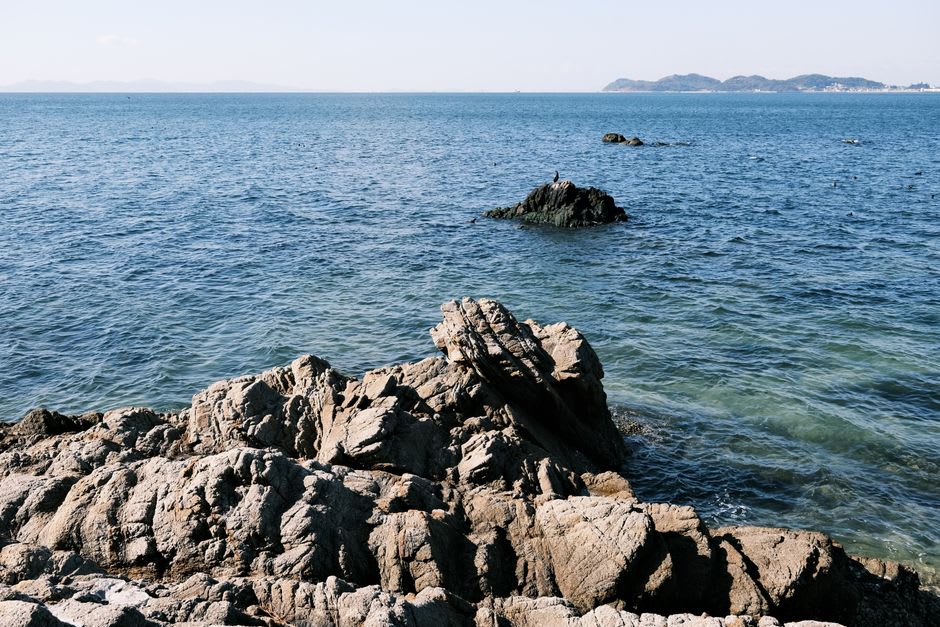
South of town the coast turns dramatic at Katsuura Kaichu Park, where a walkway runs out over the tide pools to an undersea observation tower. We climbed down its spiral stair below the waterline and watched shoals of fish drift past the portholes, sunlight coming through the surface in shifting sheets. Lia found it faintly hypnotic; I found it faintly alarming when a wave slapped the glass. Nearby the rocks are called, cheerfully, the “killer cliffs,” and at low tide we picked our way across the flats spotting anemones and hermit crabs like children. The Pacific here is not gentle, but it is generous with what it shows you if you look down.
Getting There
Katsuura is on the outer, ocean-facing coast of the Boso Peninsula, roughly ninety minutes to two hours from Tokyo. The JR Wakashio limited express runs from Tokyo Station down to Katsuura Station, and it is the painless option. The morning market is a short walk from the station and runs from around six until eleven, closed on Wednesdays and around the New Year, so check before you set an alarm. Katsuura Kaichu Park is a bus or short taxi ride south. Stay a night if you can; the town after the day-trippers leave is the town at its best.
Keep exploring
More of Kantō