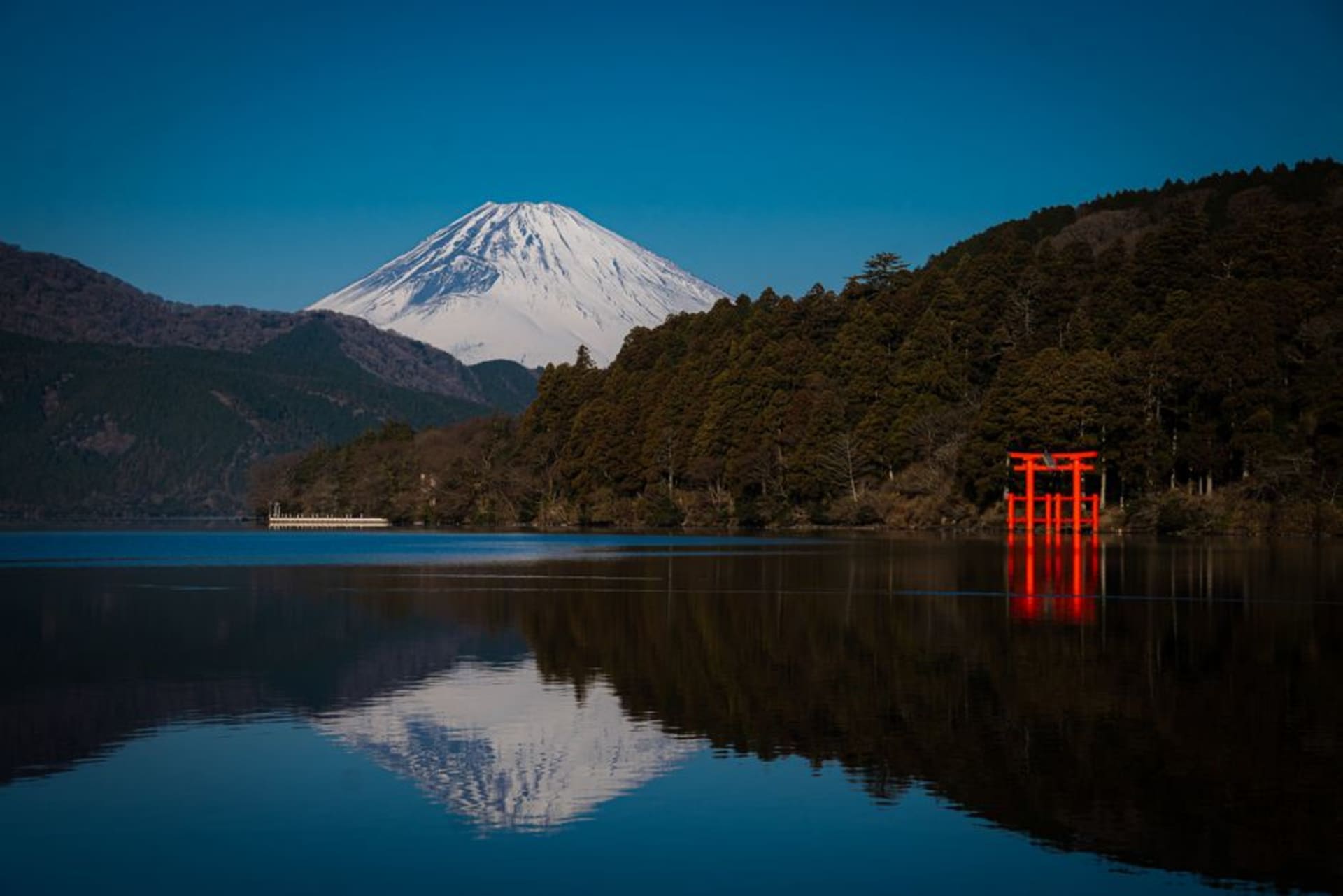
Mount Haruna
"The lake didn't ripple once, Lia whispered. Like it was holding still on purpose."
A collapsed Gunma volcano cradling a still crater lake and a shrine older than most nations. Lia and I climbed here for the quiet and found something stranger — a place where the mountain itself seems to be watching. The kind of stillness that makes you lower your voice.
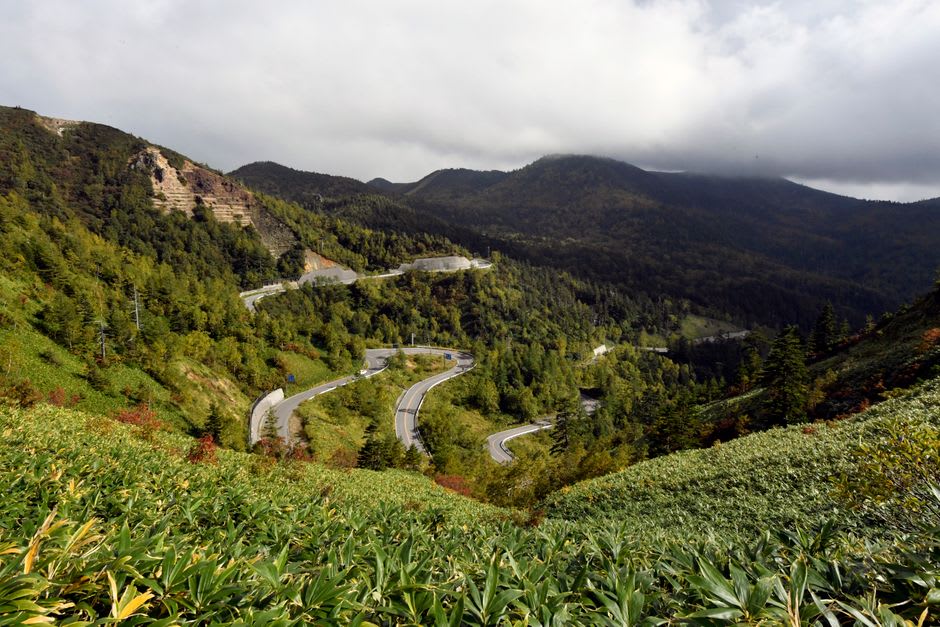
The bus up from Takasaki took the switchbacks slowly, and with each hairpin the temperature dropped and the conversation in the seats around us died down, until by the time we crested the caldera rim nobody was talking at all. Then the road levelled and there it was: Lake Haruna, a sheet of dark water inside the ring of the old volcano, and rising straight out of the far shore the perfect little cone they call Haruna-Fuji. Lia pressed her forehead to the glass. “The lake didn’t ripple once,” she whispered later, on the shore. “Like it was holding still on purpose.” I knew what she meant. Some places perform their calm. Haruna just is calm, ancient and indifferent, and you feel small in a way that is oddly comforting.
The Shrine in the Rocks
Haruna Shrine is the reason people have been coming here for fourteen hundred years, and the walk in tells you why. The approach follows a mountain stream up a gorge, under cedar trees so tall and old the light comes down green and filtered, past a gate and a waterfall and then — the thing that stops you — a hall built directly against a colossal fist of rock, the stone leaning over the shrine roof as though frozen mid-fall. Lia and I stood under it longer than was reasonable. There’s a boulder here so precariously balanced it looks like a strong sneeze would send it down, and the priests have simply built the sacred everything around it for a millennium, trusting the mountain. That trust is the whole feeling of the place. We bought a small wooden ema and Lia wrote something on it she wouldn’t show me.
Rowing Nowhere on the Crater Lake
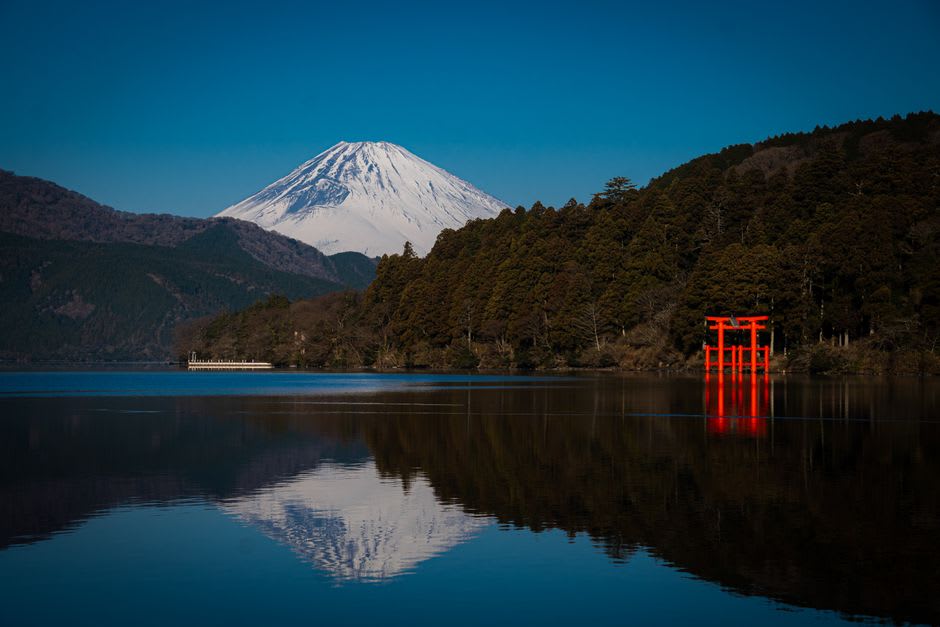
By midday the tour buses had gone and we had the lakeshore nearly to ourselves. There’s a boathouse renting swan-shaped pedalos and, thank god, a few plain rowboats, and we took a rowboat out toward the middle of the caldera where the water is deepest and the reflection of Haruna-Fuji lay unbroken across the surface. I rowed badly, we went in a circle, Lia laughed until she had to wipe her eyes. Then we just let the boat drift and stopped talking. The only sound was water tapping the hull. A hawk turned slow circles over the cone. Out there, ringed by the collapsed rim of a volcano that once tore itself apart, floating on the flooded scar of that violence, the peace felt earned somehow — the reward at the end of something enormous and long finished.
The Ropeway and the Whole Kanto Plain
Late in the afternoon we took the Haruna-Fuji ropeway to the summit of the cone. It’s a short, steep ride in a small red car, and the doors open onto a viewing platform where, on the clear day we were lucky to get, the entire Kanto plain unrolled to the horizon — a hazy grey grid of towns fading toward the invisible smudge that was Tokyo, and on the far side the real Mount Fuji floating detached above the haze like a second, larger idea of a mountain. Lia found the little summit shrine and rang the bell. We stayed until the light went amber and the wind got its edge back, then rode down into the cooling caldera as the lake below turned from green to pewter to black.
Getting There
Haruna is reached from Takasaki, itself about fifty minutes from Tokyo on the Joetsu or Hokuriku Shinkansen. From Takasaki Station, take the bus bound for Haruna-ko (Lake Haruna); it’s roughly ninety minutes and runs less often than you’d hope, so photograph the timetable. The shrine has its own earlier bus stop, Haruna-jinja-mae, a few minutes before the lake — we got off there first, walked up to the shrine, then rode a later bus the short remaining distance to the water. A car makes it far easier if you can manage one, but the bus, slow as it is, delivers you into the quiet in exactly the right frame of mind.
Keep exploring
More of Kantō